444 8 440Request a review
Double girder gantry crane on ground rails in an open yard, manufactured by ABRA

Gantry Cranes

Up to 12 t on a single girder and 160 t on a double girder, over spans of 32 m as standard. Send us your load, your span and your site conditions, and our engineering team sizes the structure and the duty class to them.

12 t · 160 tsingle / double girder capacity
32 mspan as standard
Since 2004manufacturing in İzmir
Founded 2004In-house manufacturingEN · FEM · ISO designCE marked2,500+ cranes installed

What is a gantry crane?

A gantry crane, also called a portal crane, carries its bridge on legs that travel on rails at ground level. Because the load path runs down the legs to the rails, no runway is needed on the building structure. That makes it the usual choice for open yards and for long spans.

A gantry with both legs on the floor is a full gantry; heavy shipyard machines of this type are often called Goliath cranes.

Type selection

Gantry crane or overhead crane? Where the load path goes

Start with the building. An overhead travelling crane (EOT crane) runs on a runway carried by the columns and the roof steel, so that structure has to be designed, or verified, for the crane's wheel loads. A gantry crane takes the same bridge and stands it on legs that run on rails in the ground.

Three situations point to a gantry:

  • The work is outdoors, and there is nothing overhead to build on.
  • The building exists, but its steelwork was never sized for a crane runway, and reinforcing it costs more than adding legs.
  • The lift is heavy over a long span, and a ground rail is the more economical load path.

It is not free. The legs sweep a corridor at floor level, and the rails have to stay aligned on a foundation that carries the wheel loads for the crane's whole life. Where the space problem sits on one side of the building only, a semi-gantry usually answers it with less structure.

Overhead crane — into the building steelFull gantry — down two legs to ground railsSemi-gantry — one leg, one existing runway

Diagram comparing gantry, overhead travelling and semi-gantry crane load paths.

Gantry vs overhead vs semi-gantry

CriterionGantry crane (this page)Overhead travelling crane (EOT)Semi-gantry crane
Where the load path goesDown two legs to ground railsInto the building columns and roof steelOne leg to a ground rail, one side to an existing runway
Building requirementNo crane runway needed on the structureRunway and structure sized for the craneRunway needed on one side only
Typical siteOpen yard, or a building that cannot carry a runwayEnclosed building with crane-rated steelworkBuilding with a runway on one side, floor traffic on the other
Floor spaceLegs sweep a corridor at floor levelFloor left clearOne leg only
ABRA capacity12 t single girder · 160 t double girder250 kg – 12 t single girder · 250 kg–160 t double girdersee semi-gantry
ABRA span32 m as standard~30 m (single) / ~32 m (double) as standardsee semi-gantry
ABRA pageThis pageDouble girder · Single girderSemi-gantry crane

If the building can carry a runway, compare the double girder overhead crane and the single girder overhead crane first. If it cannot, or if the work is outdoors, send us your load, span and site and an engineer will confirm the structure with you.

Our approach

How we engineer a gantry crane for your site

Two things outside the crane decide how a gantry behaves: the rail it runs on and the ground under it.

So we start from the site. Capacity, span and duty class come from your load and your cycle, and the wheel and foundation loads that follow are calculated and issued per project. Getting that exchange right at the start is what keeps a rail straight long after handover.

Where the crane works outdoors, the duty is engineered around the conditions at your site. Temperature, wind and ground conditions go into the calculation, and the outdoor protection package is agreed with you before manufacturing starts.

The hoist unit is built in our own plant in İzmir, along with the steel structure and the end carriages and wheel groups — and an operator cabin where the project calls for one. The machine and the structure are built together, so the lifting characteristic and the structure carrying it come out of one engineering office. It also settles a quieter question: years from now, whose door do you knock on for a wheel group?

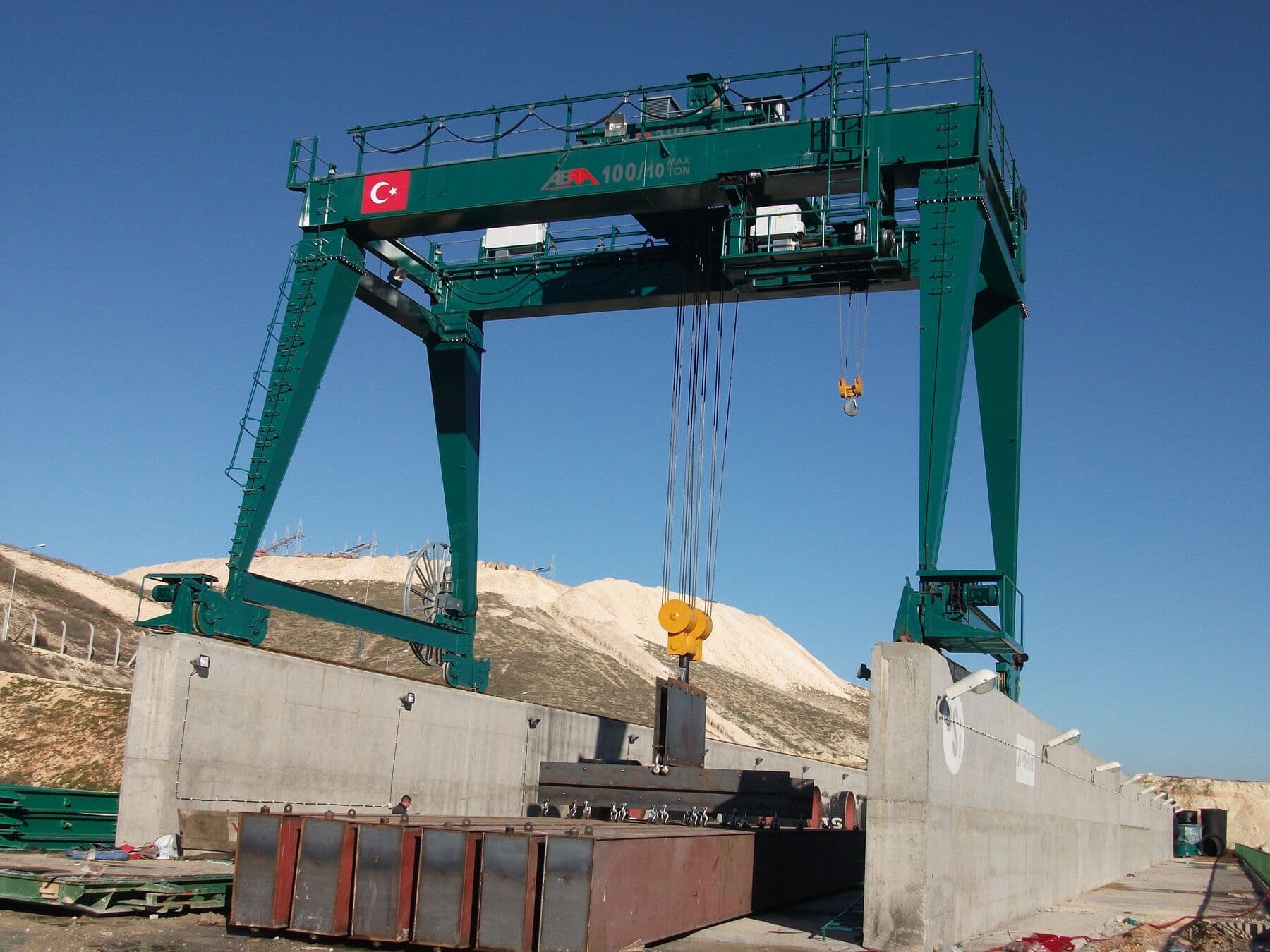
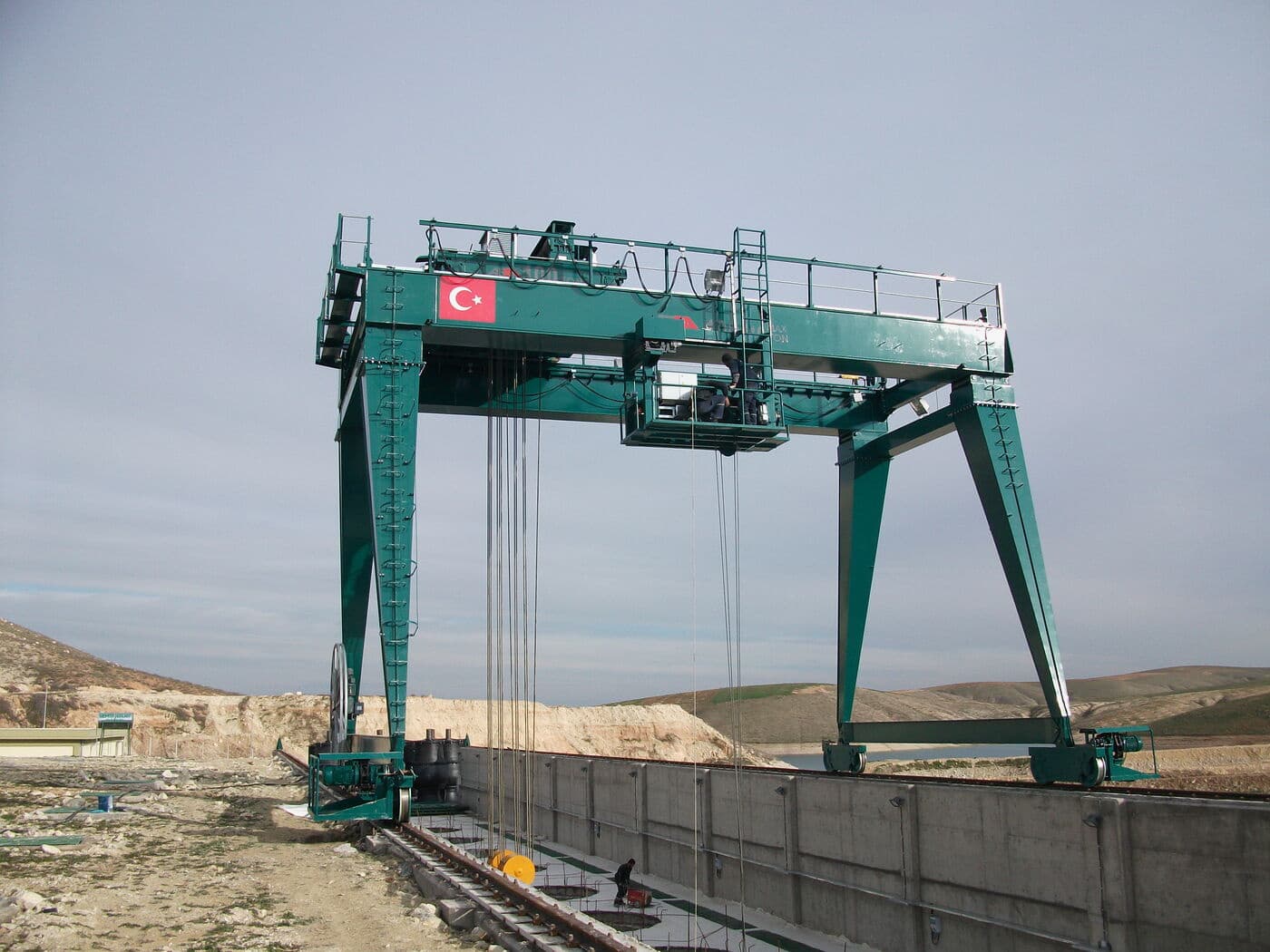
ABRA double girder gantry crane travelling on its ground rail line in an open yard
The load path ends at the rail and the ground under it — ABRA gantry installation.

Manufacturing

“From our plant ” to your yard.

Plate cutting during crane girder and leg manufacturing at the ABRA plant
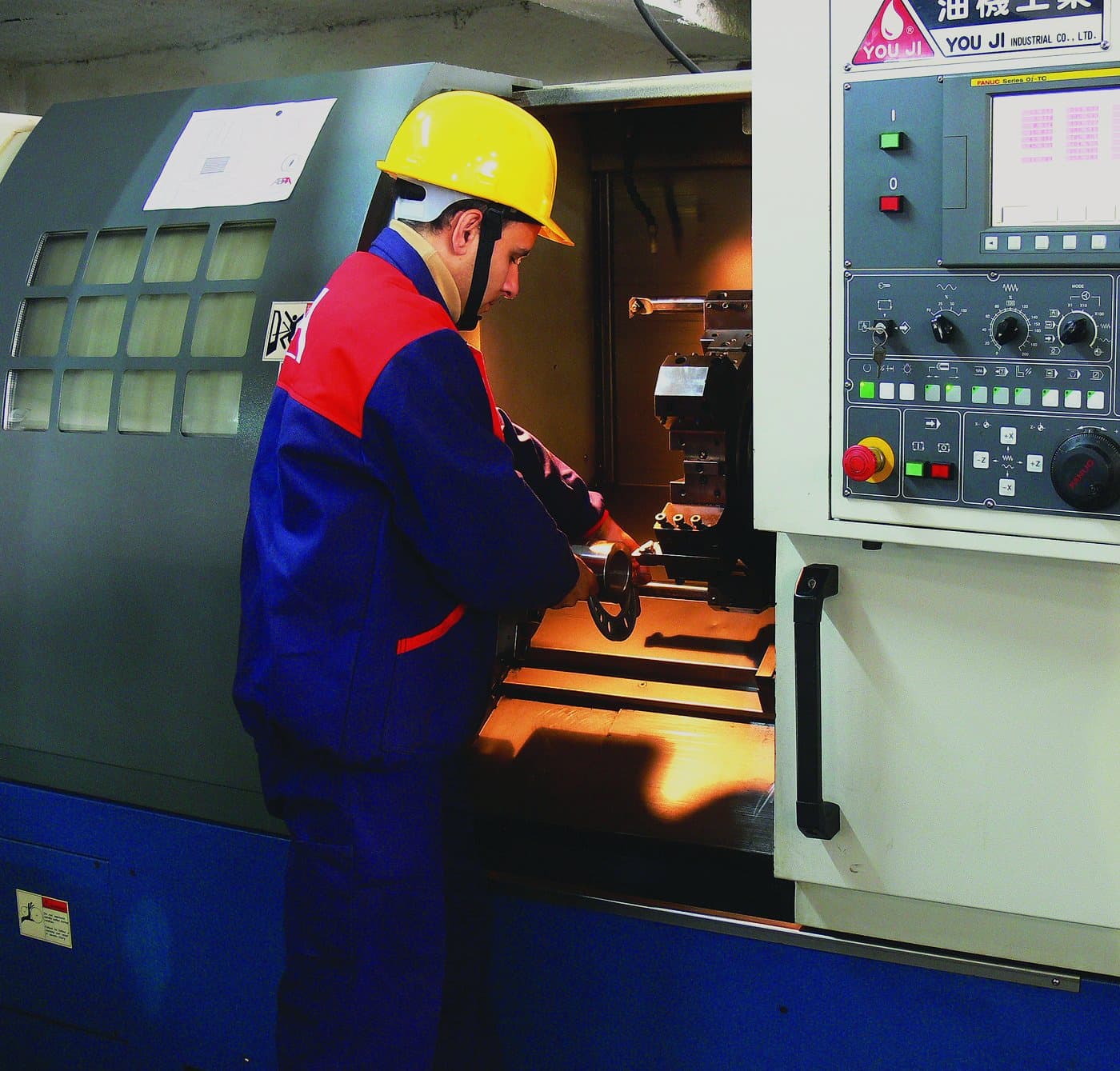
Crane end carriage wheels machined in-house at the ABRA plant
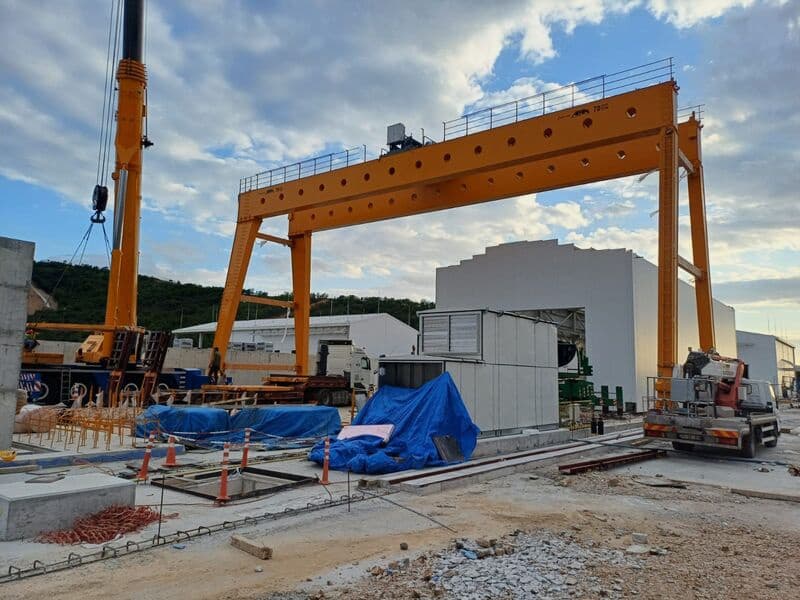
ABRA double girder gantry crane erected at rail level on a customer site

Girder and leg manufacturing, end-carriage and wheel-group machining, and rail-level installation on site.

Technical data

Gantry crane specifications, capacity and span

Read each value with what it does for the lift — that is how the crane is actually sized for your yard.

Our gantry cranes reach 12 t on a single girder and 160 t on a double girder as a standard selection — above 160 t we engineer per project — over spans of 32 m as standard — longer spans are engineered as a special project. The exact capacity-to-span pairing is calculated per project, because a longer span lowers what a given girder can carry.

Motion runs on inverter (VFD) control for soft starts and low-sway positioning. Hoisting is stepless with micro-speed positioning: 0–4 m/min as the standard speed, coming down to about 0–2.3 m/min at the top of the range. Lifting height, leg height and travel length are set from the dimensions of your site.

ParameterValueConsequence / note
Lifting capacity — single girderup to 12 tCovers yard handling, workshop and stock work
Lifting capacity — double girderup to 160 tHeavy and long-span work; structure sized per project
Span32 m as standardLonger spans engineered as a special project; a longer span lowers capacity — exact pairing per project
Lifting height / hook pathper projectSet from your stack height, berth or building clearance
Leg height / clear headroom under the bridgeper projectSets what can pass under and between the legs
Girder typeSingle or double girderDouble girder for higher capacity and hook height
Duty classFEM 1Bm–5m (ISO M3–M8), per projectSized to your load spectrum × running hours; multi-shift or continuous process work raises the class
Hoisting speedStepless, inverter-controlled — 0–4 m/min standard; 0–3.5 / 0–3.6 at 6.3 · 12 · 12.5 · 16 t; 0–2.3 … 0–3.4 from 30 t to 160 tStandard crane speeds; micro-speed for accurate positioning
Trolley travel speed4–16 m/min to 2 t · 5–20 from 3.2 to 20 t · 5–20/25 at 25–32 t · 5–20/25/30 from 40 tMatched to span and cycle; soft start protects rail and legs
Bridge travel speed5–20 m/min to 20 t · 5–20/25/30 from 25 tSet with the span and the cycle
Motion controlInverter (VFD)Soft start/stop, reduced load sway, gentler on structure and rail
Power supply380–415 V / 50 Hz (60 Hz for export)Matches local and export grids
Protection classIP54 / IP55 (motor and panel)Dust and moisture protection
Ambient temperature−10 … +50 °CStandard band; outdoor duty engineered per project
Max wheel load / foundation loadsCalculated and issued per projectNeeded before the rail and its foundation are designed
ControlRadio remote / pendant / operator cabinOperator cabin made in-house
SafetyOverload switch + load cell (standard) · travel limit switchesOverload protection under EN 14492-2
StandardsEN 13001 series · EN 15011 · EN 14492-2 · EN ISO 13849-1 / -2 · EN IEC 60204-32 · FEM 9.511 (complementary) · CE · ISO 9001Duty class stated per project

The speeds shown are standard values; other speeds are provided on request. Where a value depends on your site, it is written “per project” and confirmed with you.

Duty class reference

FEM (mechanism)ISO MTypical use
1BmM3Light, single shift
2mM5Medium/heavy, 1–2 shifts
4mM7Very heavy, 2–3 shifts
5mM8Continuous / severe duty

ABRA gantry range: FEM 1Bm–5m (ISO M3–M8), per project — see the duty class guide.

Send us your load, span and site — we will come back with a structure, not a brochure.Request a site review →

Equipment

Gantry crane equipment and options: cabin, controls, ATEX

Each option below answers a specific problem that shows up on a gantry:

Operator cabin

Over long spans and outdoor work, the operator needs a view of the load from above. Fixed, or travelling with the trolley. Radio remote and pendant push-button are the alternatives; see operator cabins.

Inverter (VFD) drives with inverter-based sway control

A long-span bridge on ground rails punishes hard starts. Soft acceleration keeps the load steady and takes the shock out of the rail and the legs.

Overload protection (EN 14492-2)

An overload switch and a load cell are standard, so the crane refuses a lift beyond its rating.

Ground-level travel safety

The legs move where people walk, so travel limit switches are specified with the crane.

Assisted automation

Position memory, target positioning and repeat moves for a yard that runs the same route all day. The operator stays in control; this is assisted automation. ABRA Crane Tracking can be added as the data layer for usage, condition and maintenance.

Redundant brake

A second brake circuit holds the load if the first fails; specified for critical lifts.

ATEX option

Where the yard or the building is a classified area, the same crane is engineered as an explosion-protected system for gas Zone 1–2 or dust Zone 21–22; see Explosion-protected cranes.

Applications

Where gantry cranes work: yards, quarries, shipyards and precast plants

Each of these sites has the same thing in common: the lift happens where a roof cannot carry it, or where the span is too wide for one.

  • Shipyards and ship building — long spans over a building berth, with sections handled outdoors.
  • Foundries and metallurgy — heavy loads on high-duty cycles, where the whole day's load spectrum drives the duty class. See steel and metal.
  • Steel service and scrap yards — outdoor stock handling over long runs of rail.
  • Marble and stone quarries — block loads handled outdoors on a fixed rail line, with the rail set on ground prepared for the wheel loads we issue.
  • Precast concrete plants — moulds, panels and beams moved between casting, curing and the stock yard on a route that repeats all day.
  • Open-yard and general cargo stacking — a fixed rail line serving a stack, where the same route repeats all day.
  • Timber, pipe and profile yards — long stock handled outdoors, where the load is awkward rather than heavy.
  • Waste and recycling transfer — bulk handling in the open, at the demanding end of the duty range.
  • Water and wastewater treatment — gate, screen and pump handling over open basins.
  • Heavy manufacturing and machine building — long components that will not fit under a building runway.
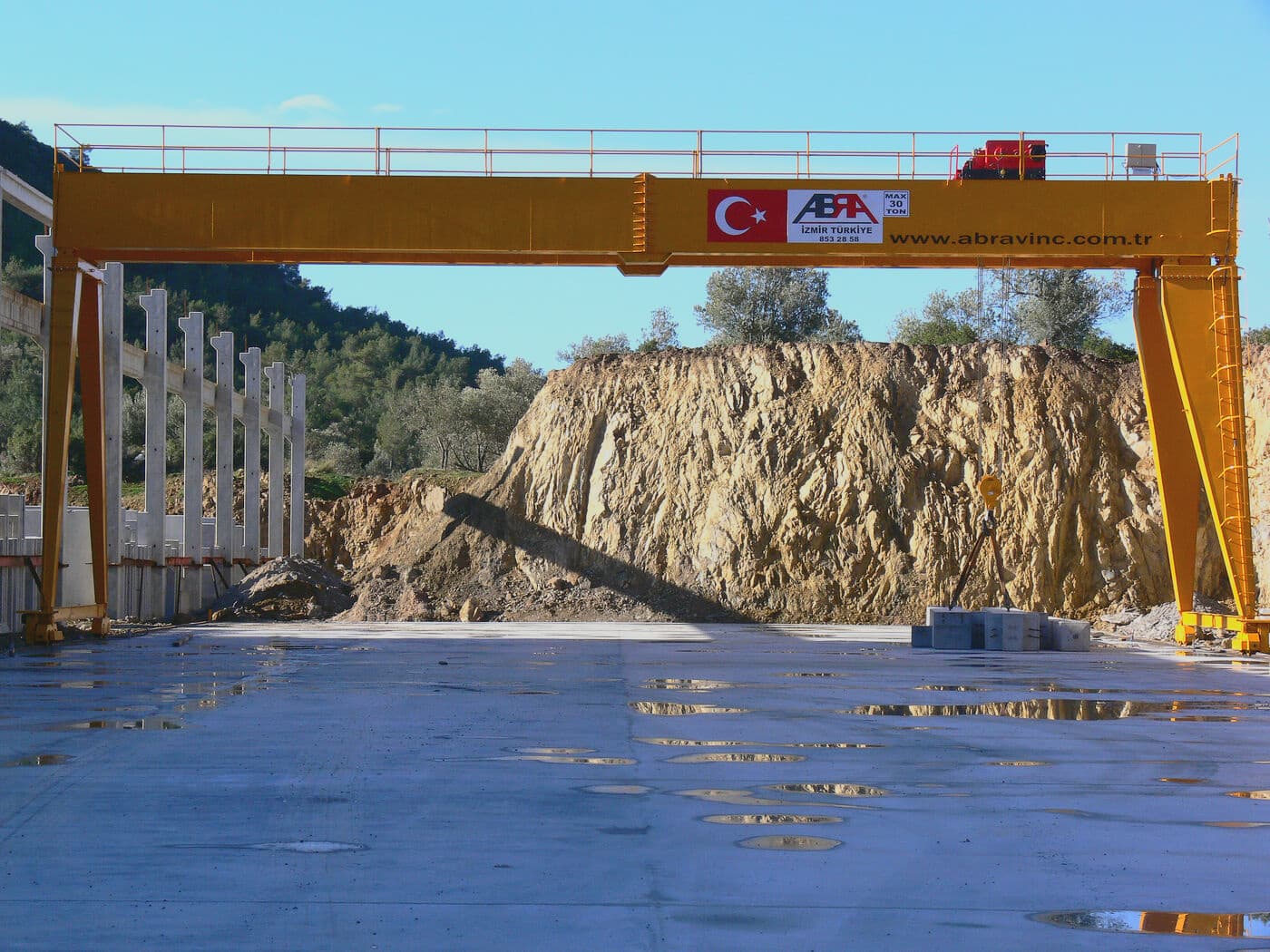
ABRA gantry crane spanning an open precast yard beside a rock face
ABRA gantry crane over an open working yard — block and precast handling.

Type routing

Gantry or semi-gantry crane?

A full gantry runs on two legs, both on ground rails. A semi-gantry runs on one leg at floor level while the other side travels on an existing runway on a wall or a column line. Where one side of the building already has a runway, or where floor traffic on that side cannot be given up, the semi-gantry recovers the space a second leg would take.

The choice is usually decided by what already exists in the building. Compare both on the semi-gantry crane page, or send us a general arrangement drawing and an engineer will mark the options on it.

Project process

How we work: from site survey to commissioning and service

Four steps, so a committee can see the whole route before committing:

STEP 1

Site review

Load, span, cycle, indoor or outdoor, and the ground the rail will sit on.

STEP 2

Engineering and quotation

We confirm the duty class, calculate and issue the wheel and foundation loads the crane transfers, and flag any spec deviation before you sign.

STEP 3

Manufacture and installation

Hoist unit and steel structure built in our own plant, then erected and commissioned on your rail.

STEP 4

Maintenance and service

Scheduled maintenance under an annual contract, spare parts and modernisation.

After-sales

Maintenance, parts and service

A gantry lives outdoors more often than not, and what wears first is usually down at rail level: the wheel groups and the travel drives. We build the end carriages and wheel groups ourselves, so we know what to look at and when. Maintenance is agreed under an annual contract covering 4 visits a year, with on-site response within 48 hours of a call, anywhere in Türkiye. Warranty is 2 years. Crane Contact Center 444 8 440.

We also service, supply parts for and modernise cranes we did not build, so a mixed yard can be maintained under one contract. See after-sales service.

48 hoursOn-site response, anywhere in Türkiye
2 yearsWarranty, fixed term
4 visits / yearAnnual maintenance contract
Any brandService, spares, modernisation and crane tracking retrofit

FAQ

Frequently asked questions

What is the difference between a gantry crane and an overhead crane?

An overhead travelling crane runs on a runway carried by the building, so the columns and roof steel take the crane's wheel loads. A gantry crane carries the same bridge on legs that travel on ground rails, so nothing is carried by the building. That is why a gantry is chosen for open yards, and for buildings whose steelwork was never sized for a crane.

How much can a gantry crane lift?

Our gantry cranes reach 12 t on a single girder and 160 t on a double girder, over spans of 32 m as standard; longer spans are engineered as a special project. The capacity you can run at a given span is calculated per project, because a longer span lowers what a girder can carry. Send us your load and span and an engineer will confirm the combination.

What is the difference between a gantry and a semi-gantry crane?

A full gantry stands on two legs, both on ground rails. A semi-gantry has one leg at floor level and runs the other side on an existing runway on a wall or column line, which frees the floor on that side. If one side of your building already has a runway, the semi-gantry is usually the more economical structure; the comparison is on the semi-gantry crane page.

Can a gantry crane work outdoors?

Yes, and outdoor work is the most common reason to choose one. The standard ambient band is −10 to +50 °C, and outdoor duty is engineered per project: your site's temperature, wind and ground conditions go into the structural calculation, and the protection package is defined with you before manufacturing. Tell us where the crane will stand and we will size it for that site.

Get a recommendation

Let’s read your site conditions together

Send us the load, the span, the cycle and where the crane will stand. An engineer confirms the structure, the duty class and the foundation loads with you — no obligation.

Compare gantry and semi-gantry →
Or call 444 8 440

Request a site review

Your details are used only to answer your request

Designed and built to EN, FEM and ISO standards · CE marked · duty class defined per project (our build range: FEM 1Bm–5m / ISO M3–M8) · manufacturing in İzmir since 2004