444 8 440Request a review
Automated Crane Systems manufactured by ABRA Crane
Home › Industrial Cranes and Lifting Equipment › Automated Crane Systems

Automated Crane Systems

When the same move has to come out the same way on every shift, assisted automation does it: position memory, target positioning and anti-sway, with your operator still in control of the crane.

Assisted automation
Operator in control
Built in-house
Founded 2004In-house manufacturingEN · FEM · ISO designCE marked2,500+ cranes installed

What is an automated crane system?

An automated crane system is an overhead crane whose movements are partly handled by the control system rather than entirely by hand. The crane can remember positions, drive itself to a defined target, and damp the swing of the load. In an assisted system the operator selects the move and keeps control of the crane throughout.

What our automation actually does

We would rather list the four functions than describe a category. Each one exists because a specific thing goes wrong without it.

  • Position memory — the crane stores the points it works between, so the same building locations are reached the same way rather than found again by eye on every cycle.
  • Target positioning — the operator selects a stored point and the crane drives to it under control, which takes the hunting out of long travel moves.
  • Anti-sway — the drive profile is shaped so the load stops when the crane stops, instead of swinging on for another few seconds before it settles.
  • Repeatable movement — a sequence that runs the same way each time it is called, which is what makes a handling step predictable enough to plan a line around.

Assisted, not unattended: where the operator sits

This is the part we prefer to be plain about, because it is where a lot of automation conversations go wrong.

Our automation is assisted. The operator selects the move, keeps command of the crane and can stop it at any point. The control system takes over the parts that machines are better at — holding a position, damping a swing, repeating a path — and leaves the judgement with the person who can see the load and the floor.

We build it that way deliberately. On a live production floor, the conditions that make a move safe change constantly: a pallet in the wrong place, a maintenance team in the building, a load that is not sitting the way it should. A person reads that in a second. So the scope we build is the scope we can stand behind, and if your process needs something beyond it, we would rather scope that honestly with you than sell a description of it.

Manufacturing

“Built, wired and commissioned by the same team”

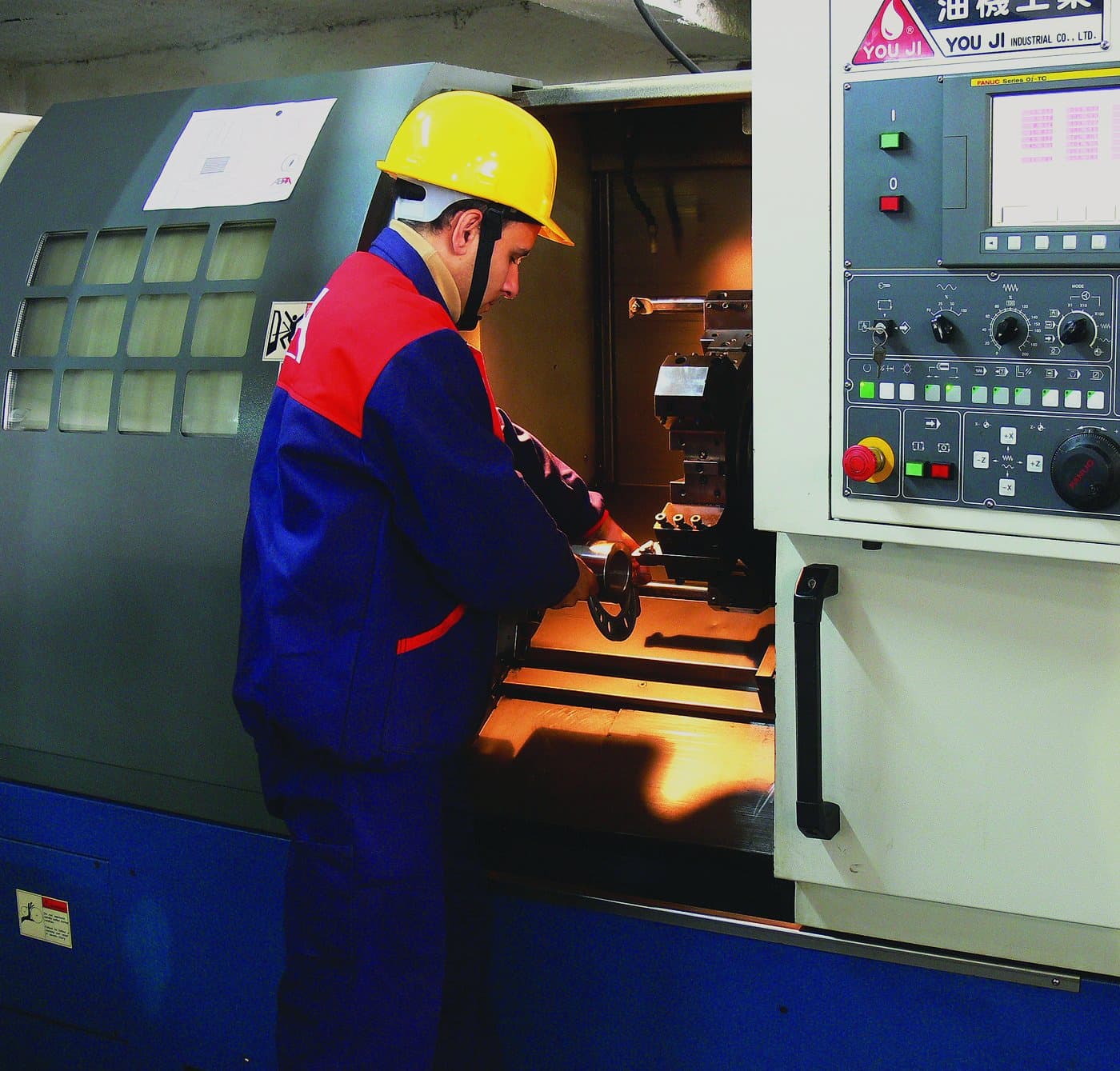
Machining at the ABRA plant in İzmir
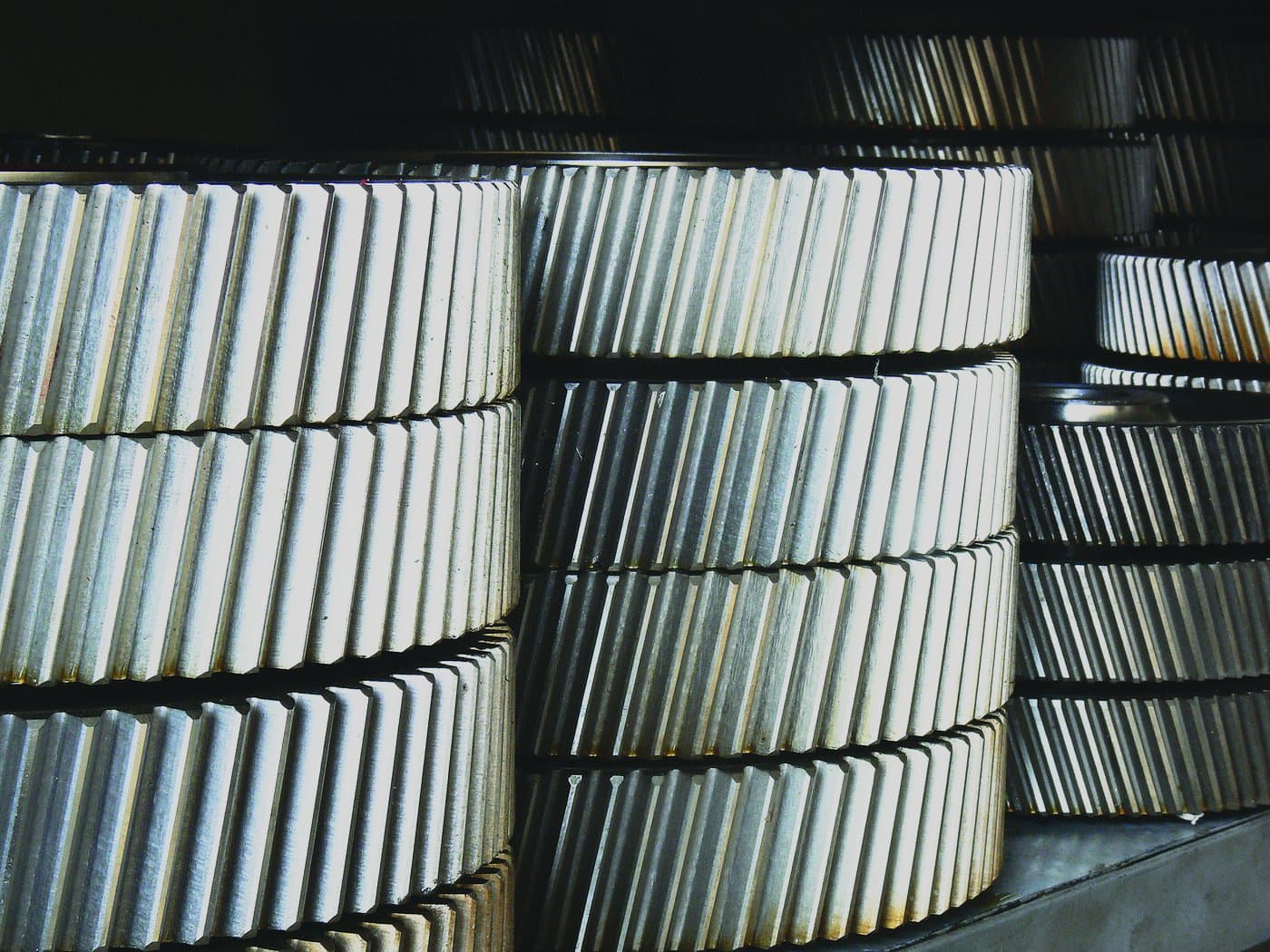
End carriage wheel groups machined at the ABRA plant
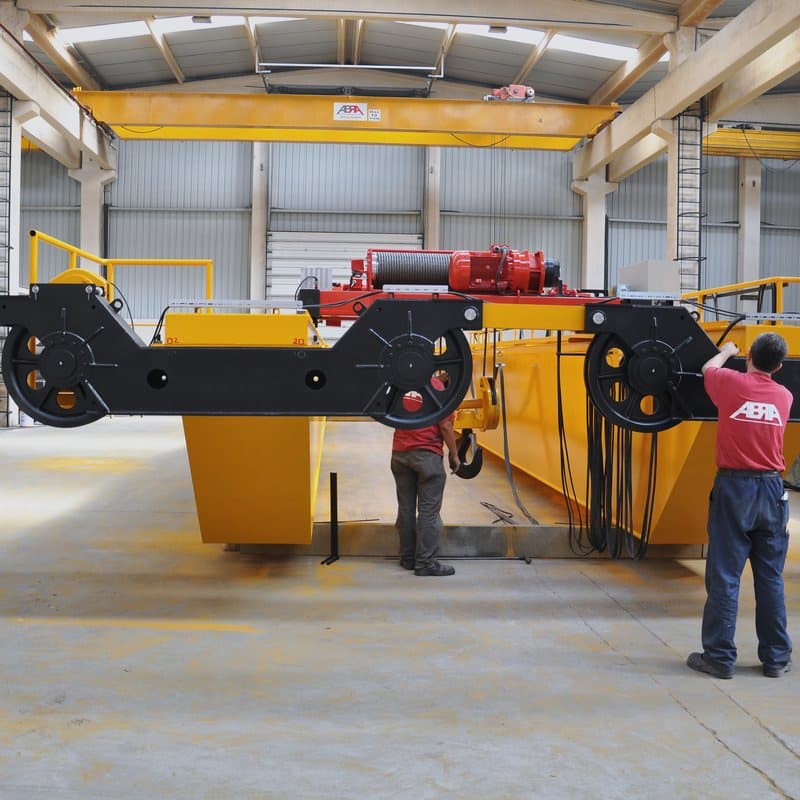
Hoist unit on test at the ABRA plant

Anti-sway and how it works

A hanging load is a pendulum, and the swing comes from how the crane accelerates and stops rather than from the load itself. Our anti-sway is inverter-based: the drive shapes the acceleration and deceleration profile so the motion it puts into the load is taken back out again before the crane stops. There is no camera or external sensor array to keep calibrated and to fail; the control that already drives the crane is the control that damps it.

What you get from it is practical rather than dramatic. The operator can approach a target and set down without waiting for the load to settle, long travel moves stop being a compromise between speed and control, and the shock that a swinging load puts into the structure and the runway comes down.

Technical data

Technical specifications & integration

Assisted automation is built on top of a crane, not sold apart from one, so the crane specification comes first and the automation scope sits on it. (Full tables in §Spec tables.)

  • Motion control — inverter (VFD) on hoisting and travel; this is what both the smooth motion and the anti-sway are built on.
  • Overload protection — overload switch and load cell, standard on every product we build, under EN 14492-2.
  • Control options — radio remote, pendant or operator cab; the automation functions are available from the control the operator actually uses.
  • Duty class — FEM 1Bm–5m (ISO M3–M8), set per project. An automated crane usually runs a tighter cycle than a manual one, and the class has to be sized for the cycle you will actually run.
  • Data layer — ABRA Crane Tracking can be added for usage, condition and maintenance data.
  • Existing cranes — automation functions can be considered as part of a modernisation on a crane already in your building, including other makes; the scope is assessed on site first.

What changes with assisted automation

FunctionManual craneWith assisted automationWhat it is not
Finding a positionLocated by eye each cycleStored point, driven to under controlThe operator still selects and commands the move
Load swingSettles in its own timeDamped by the drive profileNo published percentage; confirmed at commissioning
Repeating a sequenceDepends on who is on shiftRuns the same way each time it is calledThe operator can stop it at any point
Long travelTrade-off between speed and controlControlled approach to the targetThe crane is not left to run unattended
Usage and condition dataNot recordedAvailable via Crane TrackingPosition tracking (RTLS) is not part of it

Automated crane system — technical spec

ParameterValueConsequence / note
Automation scopeAssisted: position memory · target positioning · anti-sway · repeatable movementOperator selects the move and stays in control
Anti-sway methodInverter-based (drive profile)No camera or external sensor array to calibrate
Motion controlInverter (VFD) on hoisting and travelSoft start/stop; the basis for both smooth motion and anti-sway
Overload protectionOverload switch + load cell, standard (EN 14492-2)The crane refuses a lift beyond its rating
ControlRadio remote / pendant / operator cabAutomation functions available from the operator's own control
Duty classFEM 1Bm–5m (ISO M3–M8), per projectAn automated cycle is usually tighter — the class is sized for it
Data layerABRA Crane Tracking (option)Usage, condition and maintenance data from the crane
Power supply380–415 V / 50 Hz (60 Hz for export)Matches local and export grids
Protection classIP54 / IP55 (motor + panel)Dust and moisture protection for industrial environments
Ambient temperature−10 … +50 °CCold-store to hot-process ranges
Retrofit to an existing craneAssessed on siteScope depends on the drives and structure already there
Functional safety levelAt least PL c to EN ISO 13849-1; PL d or PL e where the project requires itStated per safety function; category and SIL are not claimed
Standard safety equipmentEmergency stop · hoisting and travel limits · overload switch with load cell · buffers and end stops · audible and visual warningOn every crane we build
OptionsInverter-based sway control · anti-collision with a reflective photoelectric sensorSpecified with the cycle
BrakeSpring-applied electromagnetic brake — closes when power is cutHolds the load on power loss; release ≈ 0.3 s
StandardsEN 13001 series · EN 15011 · EN 14492-2 · EN ISO 13849-1 / -2 · EN IEC 60204-32 · FEM 9.511 (complementary) · CE · ISO 9001Duty class stated per project

The speeds shown are standard values; other speeds are provided on request. Where a value depends on your site, it is written “per project” and confirmed with you.

Applications

Where assisted automation earns its place

Automation is worth the money where the same move repeats. Packaging and converting lines feed and remove at fixed points across shifts. Steel and metal service handles coil and billet between the same stations. Foundries and process lines move between charge, pour and cooling positions on a cycle. Machine building and automotive load fixtures where hook accuracy decides whether a part seats first time.

Project process

How we work: from enquiry to commissioning and service

STEP 1

Tell us the process

(the points the crane works between, the cycle, the load, who operates and what the building looks like) → 2. Engineering & quotation (we define which functions actually help your process, confirm the duty class for the cycle, and say plainly what is out of scope) → 3. Manufacturing, integration & commissioning (the crane and the control are built in-house, then the stored points and the drive profile are tuned on your floor with your operators) → 4. Maintenance & service (scheduled maintenance under an annual contract, spare parts and modernisation).

After-sales

Maintenance, parts and service and the control, we service both: scheduled maintenance (4 visits a year under contract), spare parts, modernisation and breakdown support across Türkiye within 48 hours of a call, and a 2-year warranty. Crane Contact Center 444 8 440.

48 hoursOn-site response, anywhere in Türkiye
2 yearsWarranty, fixed term
4 visits / yearAnnual maintenance contract
Any brandService, spares and modernisation

FAQ

Frequently asked questions

What is the difference between an automated and a semi-automated crane?

The difference is where the decision sits. In an assisted (semi-automated) system, the operator selects the move and keeps command of the crane while the control handles position, path and swing. In a fully autonomous system the crane would run a work queue on its own. What we build and support is assisted automation, with the operator in control.

Does crane automation replace the operator?

No. The operator stays in control of the crane. What changes is the workload: the control system holds positions, damps the swing and repeats defined paths, so the operator is judging the situation rather than fighting the load. On a live floor that judgement is the part that keeps a lift safe.

Can an existing overhead crane be automated?

Sometimes, and it is assessed on site before anything is promised. It depends on the drives, the control system and the structure already in your building — a crane already running on inverter control is a different starting point from one on contactor control. We service and modernise cranes of other makes as well as our own, so the assessment is not limited to cranes we built.

What is anti-sway, and do you need sensors for it?

Anti-sway means shaping how the crane accelerates and stops so the load stops when the crane does, instead of swinging on afterwards. Ours is inverter-based: the drive that already moves the crane also damps it, so there is no camera or external sensor array to keep calibrated. How much difference it makes depends on your hook path and cycle, and it is confirmed during commissioning.

Get a recommendation

Talk to an engineer about automating your handling

Tell us the points the crane works between, the cycle and the load. An engineer will say which functions actually help your process — and which do not — before anything is quoted.

Or call 444 8 440

Request a technical review

Your details are used only to answer your request

Designed and built to EN, FEM and ISO standards · CE marked · duty class defined per project (our build range: FEM 1Bm–5m / ISO M3–M8) · manufacturing in İzmir since 2004