444 8 440Request a review
Crane Spare Parts manufactured by ABRA Crane

Crane Spare Parts

The crane is down and the part has no number on it. Send us a photo of the nameplate and a photo of the part, and we will identify it with you — on our cranes and on other makes.

Any make
Mechanical, electrical, control
ATEX parts per project
Founded 2004In-house manufacturingEN · FEM · ISO designCE marked2,500+ cranes installed

What we supply, and for whose cranes

We supply mechanical, electrical, control and ATEX spare parts for overhead cranes, gantry cranes and hoists — for the cranes we manufacture and for cranes built by other manufacturers. Where a part is one we make ourselves, it comes from the same drawing and the same plant as the original.

How to identify the part you need

Most delays in a parts request are identification, not supply. Send us as much of this as you have, and start at the top of the list.

  1. The crane or hoist nameplate. A phone photo is enough. We need the complete model code, the serial number and the year of manufacture — the code encodes capacity, hook path, reeving and speed, and internal components changed across production years.
  2. Which plate it is. The motor, the hoist and the electrification each carry their own plate. Tell us where on the crane you photographed it.
  3. A photo of the part in place, with something in frame for scale.
  4. Measurements, if the part is already off the crane: bore and shaft diameters, bolt pattern, rope diameter and construction, chain pitch.
  5. Any drawing or documentation that came with the crane.

Each step down that list is slower and less certain than the one above it, which is the argument for photographing the nameplates now, before a breakdown. If you have no number at all, that is a normal request and we handle it — it is why the photographs matter.

The parts we supply

  • Mechanical — hooks, drums, wire rope and chain, wheels, gears, shafts, bearings and brakes.
  • Electrical and power supply — conductor bar (busbar) systems from 50 A to 200 A, supplied in continuous lengths from reel up to 800 m, cable trays and festoon, motors, gearboxes and variable speed drives. Adding a second crane to an existing conductor line normally needs only a new collector set rather than a new line.
  • Control — radio remote transmitters and receivers, pendant control, emergency stop systems and control panels.
  • Safety — overload switches and load cells.
  • Specialised — components for confined installations, heat-resistant parts for areas running at up to 85 °C, and ATEX-certified components for classified areas. See Explosion-protected cranes.

Type routing

Genuine or equivalent: which parts must be original

The industry argues this as one question. It is really two, and the answer depends on what the part does.

For load-bearing and safety-related items — hooks, wire rope, brakes, limit switches, load cells and anything in the safety circuit — the original specification is what the crane was calculated and certified around. Material grade, tolerances and fatigue behaviour are part of the design, not details of the purchase, and a part that looks identical can change how the components around it wear. On these we supply original specification.

For commodity items — bearings, contactors, festoon trolleys, collector shoes, buffers and cable — the "original" part was bought from a component supplier in the first place. Here an equivalent part of the correct rating is the same part, and we will say so rather than sell you a badge.

Where a crane is old enough that the original item is no longer made, we say what can be supplied to the original specification and what would have to be produced to drawing, before you commit to anything.

What we hold, and what we advise you to hold

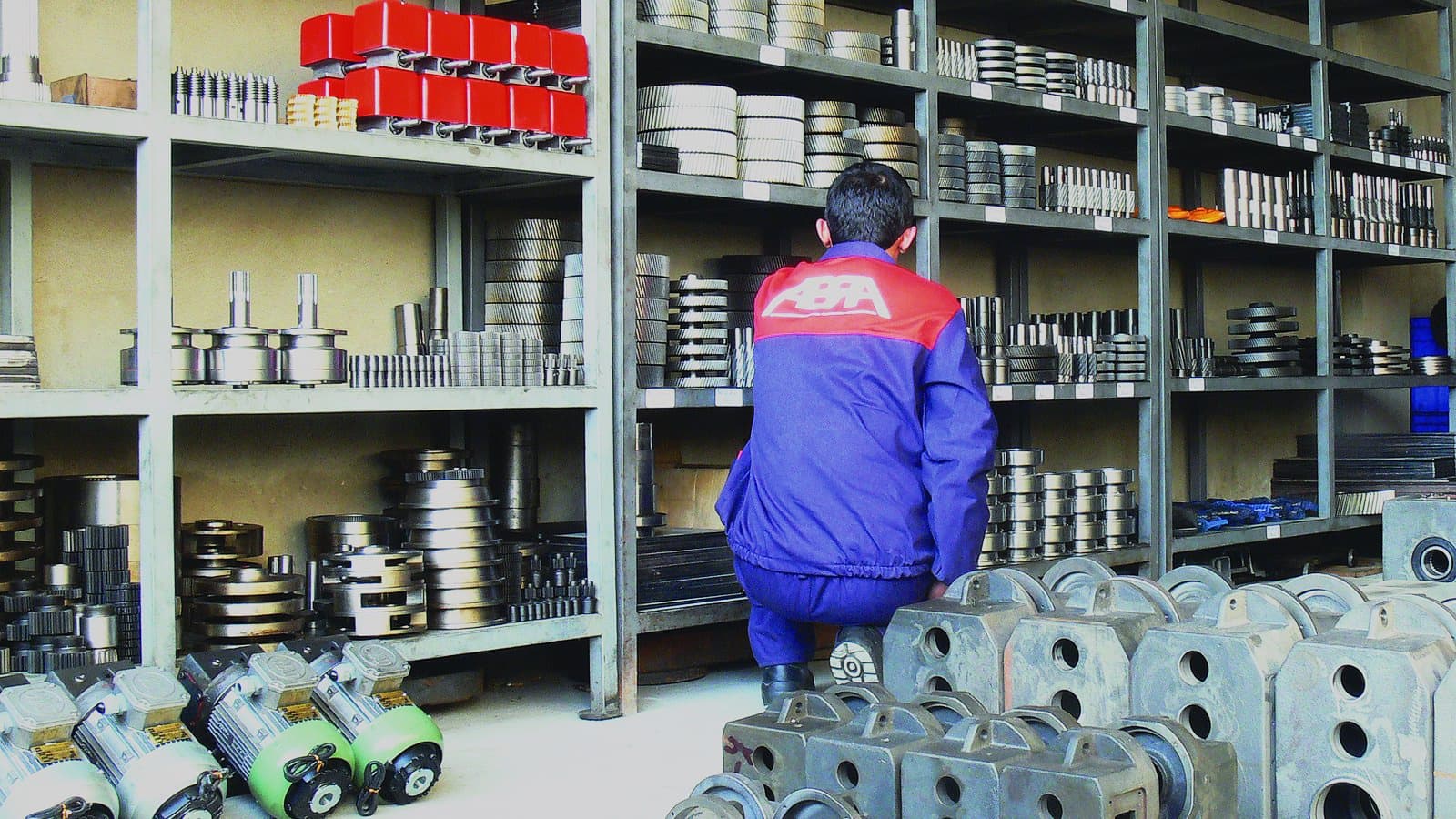
For our standard products and the items we manufacture — hoist units, end carriages and wheel groups among them — parts are stocked here, and the fact that we build them means the drawing does not have to be found before anything can happen.

For custom-built equipment the honest advice is different: hold your own stock of the critical parts. Special items are produced rather than picked, and the sensible time to decide which ones you want on your shelf is at the order, not at the breakdown. We put that list in writing in the quotation for every custom build.

Availability for any specific item is confirmed when we quote it.

How a parts request works

STEP 1

Send what you have

— nameplate photo, part photo, or the part number if you know it, to the form below or to CCC 444 8 440. → 2. We identify the part with you and come back on what it is, whether it is an original-specification item or an equivalent, and what it costs. → 3. Supply, with availability confirmed at quotation. → 4. Fitting and support where you want it, alongside maintenance or modernisation if the part turns out to be a symptom rather than the problem.

Parts for cranes we did not build

We supply parts for, service and modernise cranes of other manufacturers — that is ordinary work here, not an exception. ABRA Crane Tracking can also be fitted to another manufacturer's crane.

What we ask for is the same as for our own cranes: the nameplate, the serial number and a photograph. Where the original manufacturer's part is still available we say so; where it is not, we say what can be supplied to the original specification and what cannot, before you commit.

Technical data

Technical data

Table A — Component groups

GroupPartsNote
MechanicalHook · wire rope · chain · drum · brake · wheel · gear · shaft · bearingHooks, rope and brakes supplied to original specification
Electrical / power supplyConductor bar (busbar) 50–200 A · reel supply up to 800 m · cable tray · festoon · motor · gearbox · inverter (VFD)Adding a crane to an existing line normally needs only a collector set
ControlRadio remote · pendant · emergency stop · control panelSee crane control systems
SafetyOverload switch · load cellStandard equipment on every crane we build
SpecialisedConfined-installation components · heat-resistant parts to 85 °C · ATEX componentsATEX per project, third-party certified

Table B — Radio remote transmitter

ParameterValue
Operating temperature−35 … +80 °C
Transmission distance100 m
Protection classIP65
Speed steps / programmingSingle or dual speed, software-configurable

Table C — What to send us

You haveSendWhat it gives us
The part numberThe numberDirect identification
The crane, not the numberPhoto of the nameplate: complete model code, serial number, yearModel, build year and configuration
NeitherPhoto of the part in place, with scaleIdentification by type and mounting
The part in your handBore, shaft, bolt pattern, rope diameter and construction, chain pitchIdentification by measurement
DocumentationDrawings or the crane fileThe fastest route of all

FAQ

Frequently asked questions

Can you supply parts for a crane another manufacturer built?

Yes — parts, service and modernisation on other makes are ordinary work here. Send the nameplate photograph with the model code, serial number and year of manufacture, plus a photograph of the part. Where the original manufacturer's item is still available we say so; where it is not, we say what can be supplied to the original specification before you commit.

How do I identify a part when there is no number on it?

Photograph the crane's nameplate and the part in place with something in frame for scale, and tell us which plate you photographed — the motor, the hoist and the electrification each carry their own. If the part is already off the crane, measurements help: bore and shaft diameters, bolt pattern, rope diameter and construction. Requests with no part number are normal.

Do I need original parts, or will an equivalent do?

It depends on what the part does. Hooks, wire rope, brakes, limit switches, load cells and anything in the safety circuit are supplied to original specification, because the crane was calculated and certified around them. Bearings, contactors, festoon trolleys, collector shoes and cable were bought from component suppliers in the first place, and an equivalent of the correct rating is the same part.

My crane is old and the model is out of production. Can I still get parts?

Often. For the components we manufacture ourselves the drawing is here, which is the simplest case. For everything else we tell you what is still available to the original specification, what would have to be produced to drawing, and where replacing a component is the better answer than repeating a repair — which is usually a modernisation conversation rather than a parts one.

Get a recommendation

Send us the nameplate

A photo of the crane's nameplate and a photo of the part are enough to start. Tell us where on the crane you took them, and we will come back with what the part is, what it costs and when it can be with you.

Or call 444 8 440

Send us the nameplate

Your details are used only to answer your request

Designed and built to EN, FEM and ISO standards · CE marked · duty class defined per project (our build range: FEM 1Bm–5m / ISO M3–M8) · manufacturing in İzmir since 2004