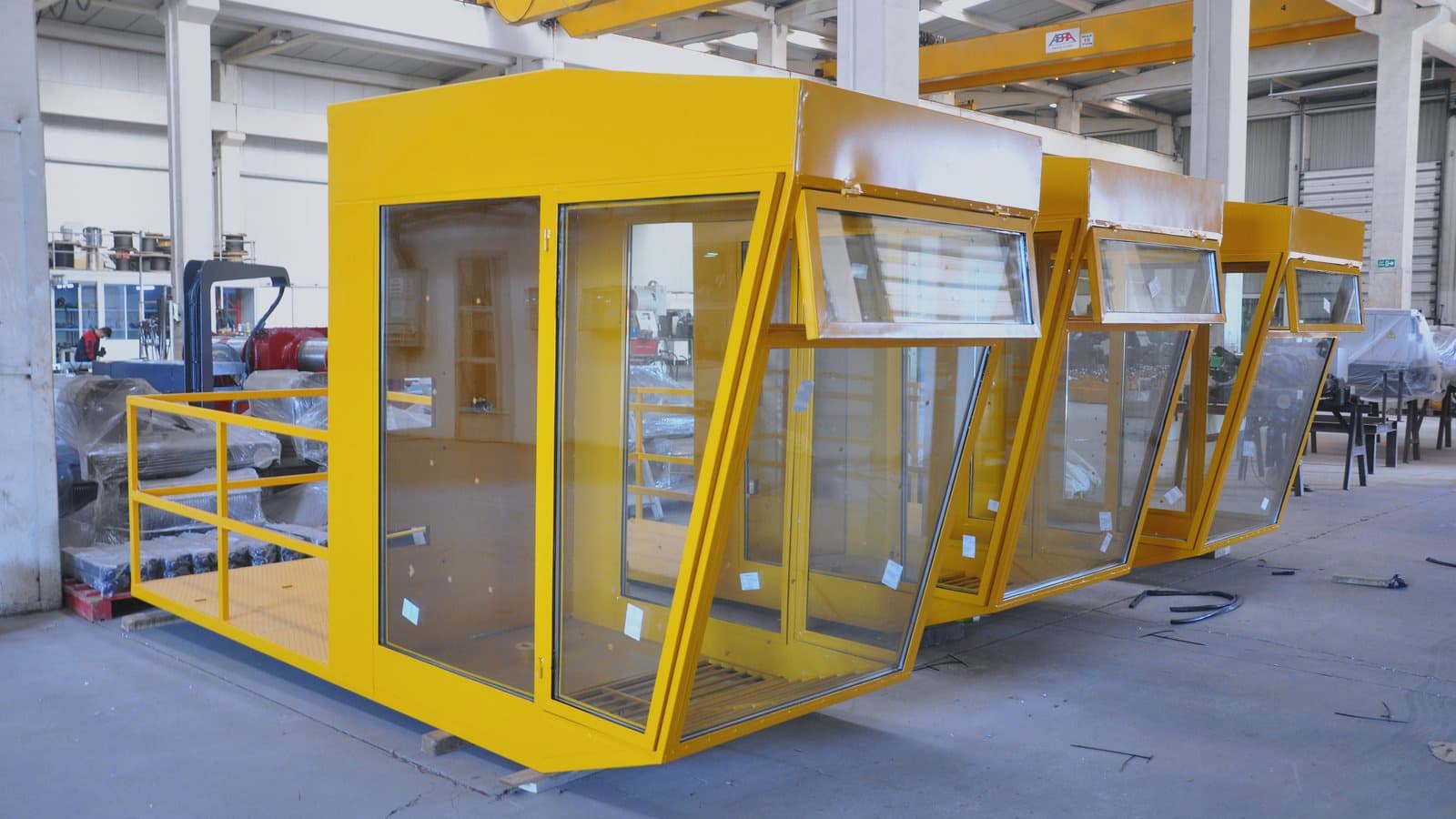
Five conditions push a crane towards a cabin, and any one of them can be enough.
The span is long, so an operator working from the floor spends the cycle walking rather than lifting. The crane runs continuously through a shift, which makes standing under it for eight hours the wrong plan. The duty is heavy and the placing has to be accurate, which is easier from directly above the hook than from beside it. The environment is hot, dusty, noisy or fume-laden, and the cabin is then the only control option that puts a conditioned, insulated envelope around the person. Or the load path simply cannot be seen from the floor — over racking, into a pit, across stacked material.
Where none of that applies, a radio remote usually serves better, and we will say so. The operator picks the best viewing position for each lift, any trained person can take over, and there is no cabin to access or maintain. A cabin fixes the viewing position at the moment the crane is designed, which is why the mounting choice in the table below is made with the crane rather than after it.