444 8 440Request a review
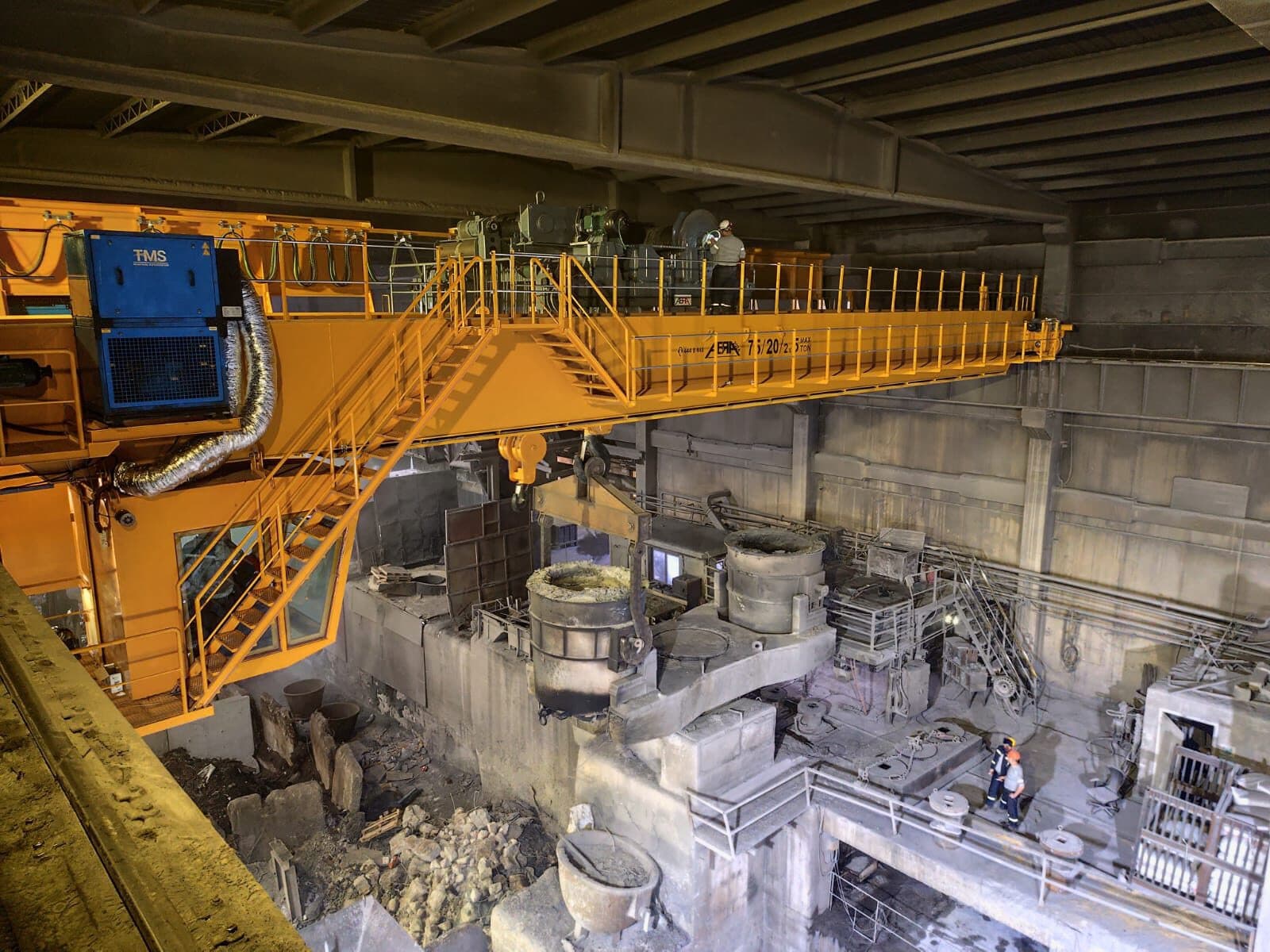
ABRA process crane with maintenance walkway working over a foundry casting floor

Process Cranes

When the crane is part of the process, its rating comes from the process. Give us the heat, the cycle and the load, and our engineering team sizes the machine to them.

In-housemanufacture — hoist unit, structure, cabin
Engineeredper process — heat, cycle, load spectrum
Since 2004manufacturing in İzmir
Founded 2004In-house manufacturingEN · FEM · ISO designCE marked2,500+ cranes installed

What is a process crane?

A process crane is an overhead travelling crane (EOT crane) engineered around a specific production process rather than serving a facility in general. The conditions of that process — temperature, chemical exposure, dust, hygiene requirements, cycle time and load spectrum — set the design, and the duty class follows from them. Because no two processes are alike, a process crane is engineered project by project rather than selected from a rating table.

“The process writes the specification.”

Where the line is

Process crane or standard overhead crane? Where the line is

A crane serving a facility lifts what comes, when it comes, and its duty class is set from an estimated average. A crane inside a process is production equipment: it repeats a defined move on a defined interval, and if it stops the line stops behind it.

That changes what the engineering has to answer. The duty class comes from a measured load spectrum, not an assumed one, because the cycle count over twenty years is the number that decides the structure. The conditions of the process are designed into the machine — ambient temperature, radiant heat, chemical or solvent exposure, abrasive or combustible dust, washdown and hygiene, corrosive atmosphere, or a classified zone; each of these changes component selection, material, protection class and lubrication. Positioning accuracy and control become part of the specification where the move has to land in the same place every time. And maintenance access is built into the structure, because a crane inside a line cannot wait for a shutdown to be serviced.

Where a standard build stops and a process build begins

CriterionStandard overhead craneProcess crane
RoleServes a facility; lifts what comesPart of the production line; the line waits for it
Duty classSet from an estimated averageCalculated from a measured load spectrum
CycleIrregular, operator-ledDefined and repeating, around the clock
EnvironmentNormal industrial conditionsHeat, chemical exposure, dust, washdown or a classified zone; protection engineered per project
Below-hookHook block, standardDesigned with the crane, against what it has to carry
MaintenanceScheduled during a stopPlatforms and access designed in
SpecificationCatalogue-basedEngineered per project
ABRA pageDouble girder overhead craneThis page

There is no fixed border between the two. Where a standard build answers the conditions, a standard crane is the right and more economical answer — the double girder overhead crane covers most heavy work. Where the process asks for something a standard build does not carry, the crane becomes a custom-engineered project. Send us the conditions and the cycle, and an engineer will work through which of the two you are looking at.

Our approach

Engineering the condition: environment, cycle and load behaviour

Three variables decide whether a process crane runs for decades or fatigues early.

The environment. Every process puts something on the crane that a general-purpose build does not have to carry. In a foundry or a heat-treatment line it is radiant heat, which reaches the hoist unit, the ropes and the electrics long before it reaches the operator. In a galvanising or chemical plant it is acid vapour and condensate, which decide the coating system and the material of every exposed part. In powder and bulk handling it is abrasive or combustible dust, which sets the protection class and the surface temperature limit. In food and pharmaceutical work it is washdown and hygiene. The protection is specified for the position of each component and engineered per project — at Kılıçlar Hurdacılık, for example, a ladle crane works in an 85 °C ambient.

The cycle. A crane that repeats the same move every few minutes runs up load cycles at a rate a general-purpose crane never reaches, so the duty class is calculated from your load spectrum and your running hours rather than an estimate. A duty class chosen one step too low shows up as a fatigue crack long before the crane is due for one — and by then the structure itself is the repair.

Load behaviour. How the load behaves on the hook belongs in the calculation. A liquid load swings; a charging load drops into the furnace abruptly; a long load carried on a beam loads two points at once; a suspended coil or roll wants to rotate. Inverter-based sway control and inverter (VFD) travel keep the load steady at the point where accuracy matters, which protects the structure as much as the operator.

The hoist unit takes more punishment than any other part of a process crane. It is built alongside the steel structure, the end carriages and wheel groups and the operator cabin in the same plant in İzmir — so when a component has to leave the standard build for your process, it can be changed at the drawing rather than at the supplier.

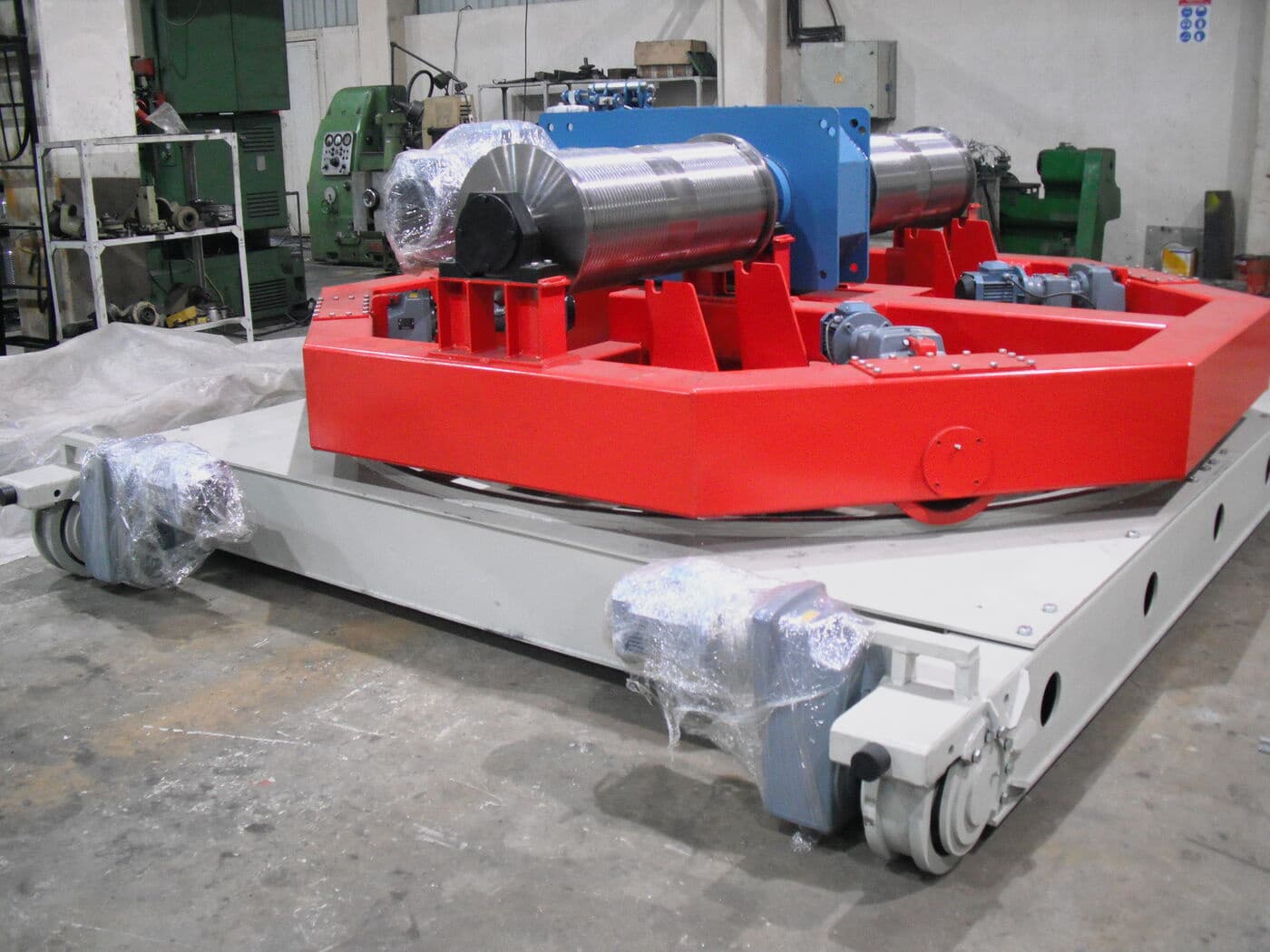
Purpose-built process trolley unit suspended under an overhead crane at the ABRA plant
Purpose-built process trolley under test at the ABRA plant, İzmir.

Technical data

Process crane specifications and equipment

Capacity, span, lifting height and duty class come out of your cycle and conditions, and are confirmed in engineering before anything is priced. Across the whole range we build from 250 kg to 160 t; where a process crane sits inside that range comes out of the calculation.

What is fixed is the platform underneath. Supply is 380–415 V / 50 Hz (60 Hz for export), with IP54 / IP55 protection on motor and panel. Motion runs under inverter (VFD) control, and an overload switch with a load cell is standard equipment.

ParameterValueConsequence / note
Lifting capacity (SWL)Per projectSet by the process. Company-wide build range: 250 kg – 160 t
SpanPer projectRunway geometry and the process layout decide it; the capacity-to-span pairing is calculated per project
Lifting height / hook pathPer projectPit depth, load height and clearance are taken from the site
Girder typeDouble girder as a ruleCarries the hook height, the cabin and the below-hook equipment. See double girder
Duty classDefined per project, at the high end of our build range (FEM 1Bm–5m / ISO M3–M8)Continuous process duty sits high in that range
Hoisting motionMain and auxiliary hoist where the process needs two independent motions; speeds set per projectSlow, accurate lowering wherever the load has to be placed rather than dropped
Motion controlInverter (VFD), with inverter-based sway controlSoft start and stop; the load stays steady and the structure takes less shock
Reeving (wire rope)2/1 · 4/1 · 6/1 · 8/1 · 12/2Selected for capacity, hook path and load-guidance requirements
Power supply380–415 V / 50 Hz (60 Hz for export)Matches local and export grids
Protection classIP54 / IP55 (motor and panel)Dust and moisture protection for production lines
Ambient temperatureStandard equipment range −10 … +50 °C; higher ambient engineered per projectA ladle crane at Kılıçlar works at 85 °C ambient
Overload protectionOverload switch + load cell, standardThe crane refuses a lift beyond its rating (overload protection under EN 14492-2)
ControlOperator cabin / radio remote / pendantCabin made in-house; where the conditions below the crane are hostile, the cabin is usually the right answer
Max wheel loadProvided per projectNeeded for runway beam and foundation verification
ATEXOption, engineered to the site’s zone map (gas Zone 1–2, dust Zone 21–22)Scope set against the specific ATEX code → Explosion-protected cranes
StandardsEN 13001 series · EN 15011 · EN 14492-2 · EN ISO 13849-1 / -2 · EN IEC 60204-32 · FEM 9.511 (complementary) · CE · ISO 9001Duty class stated per project
Send us your cycle and we’ll come back with the duty class.Let’s read your conditions together →

Equipment

Equipment and options

Every item below answers a problem a process throws at the crane, and each one is specified against your conditions rather than offered as a package.

Operator cabin (made in-house)

Where the process is hot, dusty or otherwise hostile below the crane, the operator needs to see the load from above and be shielded from what is under it. Fixed or travelling with the trolley; radio remote and pendant control are the alternatives. See operator cabins.

Redundant brake

If one brake circuit fails, the second holds the load. Specified where a dropped load would be a safety event rather than a production one.

Anti-collision sensing

Two cranes sharing one runway stop before they meet.

Maintenance platform and walkway

Routine maintenance is done on the crane, so the visit does not have to wait for a production stop.

Audible and visual warning

Movement is announced where hearing protection is worn.

Assisted automation

Position memory, target positioning and repeat moves for a cycle that never changes. The operator stays in control at every step; this is assisted automation. ABRA Crane Tracking adds the usage, condition and maintenance data layer.

ATEX option

Where a section of the plant is classified, the same crane can be engineered for gas Zone 1–2 or dust Zone 21–22. The build follows that site’s own zone map; details on the Explosion-protected cranes page.

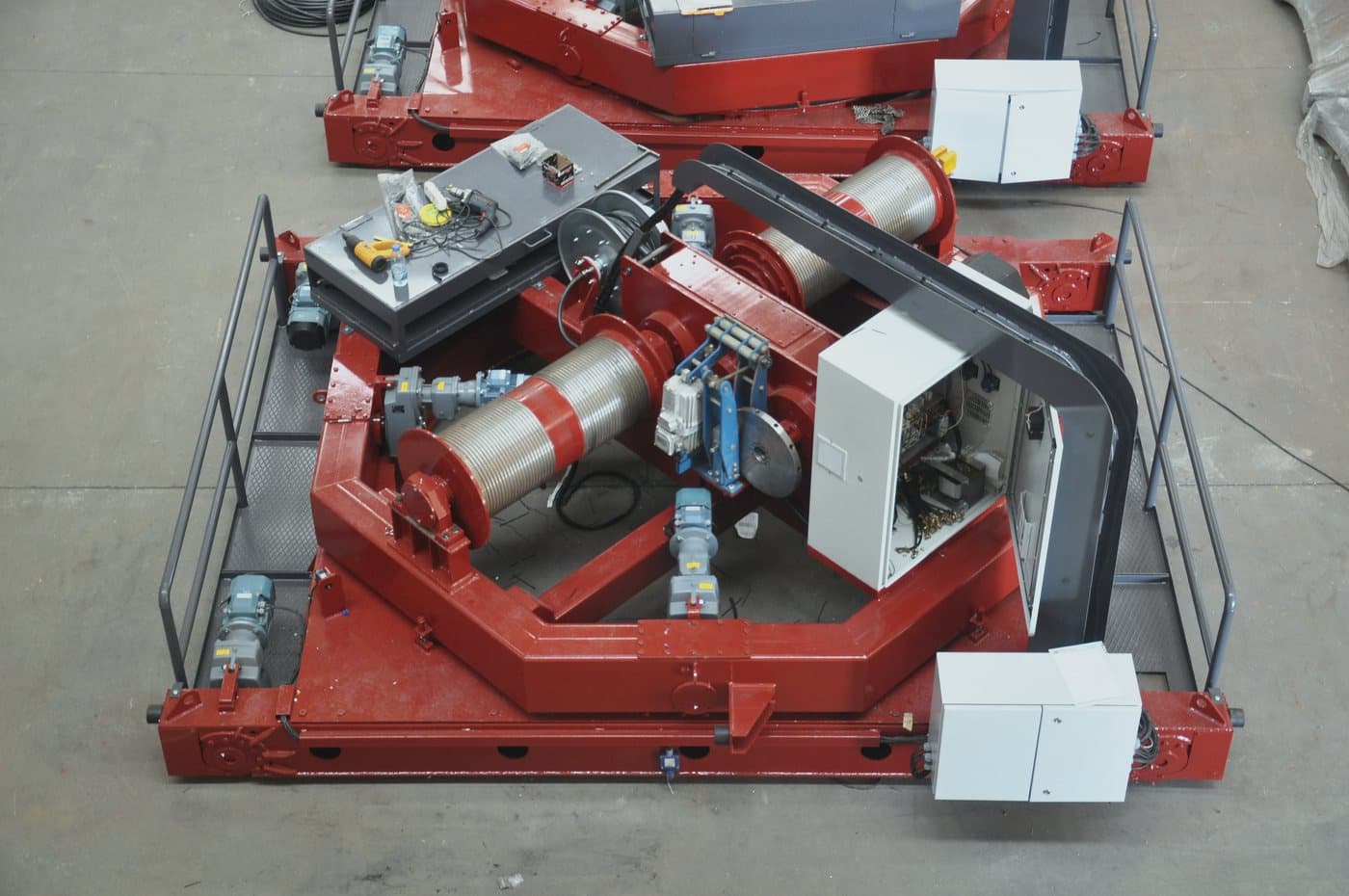
Custom-engineered crane trolley unit built at the ABRA plant
Custom-engineered trolley unit built at the ABRA plant, İzmir.

Applications

Where process cranes work

A process crane belongs wherever the crane is part of the production line rather than a service to it, and that is true across very different industries.

Ladle transport, scrap handling and charging duty, where radiant heat and a continuous cycle meet.

Foundries and heat treatment

Hot loads on a repeating cycle, with the structure designed for the thermal load as well as the mechanical one.

Galvanising and surface treatment

Acid vapour and condensate decide the coating system and the material of every exposed part.

Corrosive atmosphere, and often a classified section where the same crane is engineered under ATEX.

Paper and packaging

Roll and reel handling on a fixed cycle, frequently under assisted automation.

Turbine hall and fuel handling duty, where availability rather than capacity is the specification.

Cement and bulk materials

Abrasive dust and continuous duty in the same machine.

Automotive and heavy fabrication

Press, body and assembly lines where positioning accuracy is part of the cycle.

Waste and recycling

Sorting and feeding duty at the demanding end of the duty range.

Food and pharmaceutical

Washdown, hygiene and material requirements on top of the lifting duty.

Each sector page describes its own lifting conditions in detail.

Project process

How we work: from your process to a crane that runs it

A process crane is bought by a committee, so here is the whole route before anyone commits to it.

STEP 1

We read the conditions on site

Ambient temperature and radiant heat where there is any; chemical, solvent or dust exposure; humidity, washdown and hygiene requirements; whether any part of the area is classified; cycle time and load spectrum; runway geometry; what hangs under the hook and what the crane has to clear. A site review is where most of the real specification comes from, and it is where the conditions that are not in the enquiry usually surface.

STEP 2

Engineering and calculation

We set the duty class from the measured cycle, size the structure and the hoisting mechanism, choose materials and coating for the environment, and place whatever protection the conditions call for. Any deviation from a standard build is written down and flagged before you sign.

STEP 3

Manufacturing

Hoist unit, steel structure, end carriages and wheel groups, and the operator cabin are built in our own plant, on drawings your engineers have approved.

STEP 4

Installation and commissioning

Erection, load test and handover on your site, with your maintenance team present so they know the crane before they own it.

STEP 5

Maintenance and service

Scheduled maintenance under an annual contract, spare parts, modernisation and one number to call.

References

“Behind everything we say, ” there’s a real job.

2004manufacturing since, İzmir
16,000 m²facility
2,500+installed cranes
ISO M3–M8duty classes we build to
Steel & metal · 85 °C · 7/24

Kılıçlar Hurdacılık — a ladle crane at 85 °C

The condition: a steel mill working around the clock, an 85 °C ambient over the crane, and a ladle of molten metal on the hook.

The decision: a 75 / 25 + 25 t ladle crane with an auxiliary hoist for tipping, engineered and drawn for that installation. Heat protection was placed component by component. The customer walked our plant before deciding, and the decision was made on engineering.

The result: still running the same cycle.

Packaging · assisted automation

İkon Ambalaj — a repeating cycle under assisted automation

A double girder installation where a fixed, repeating storage cycle runs under assisted automation, with ABRA Crane Tracking recording usage and condition data. The operator stays in control of every move.

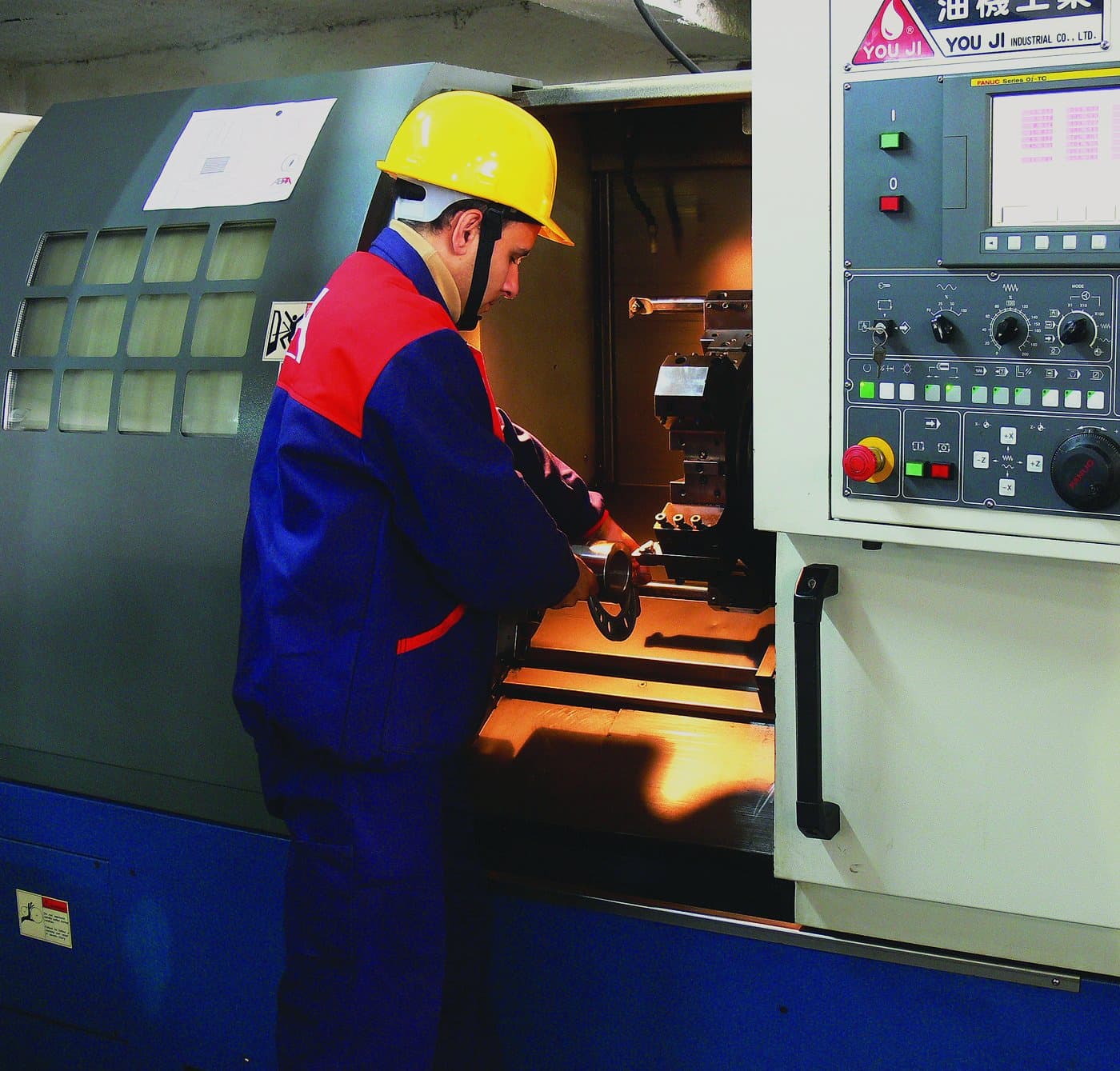
Hoist-unit machining at the ABRA plant
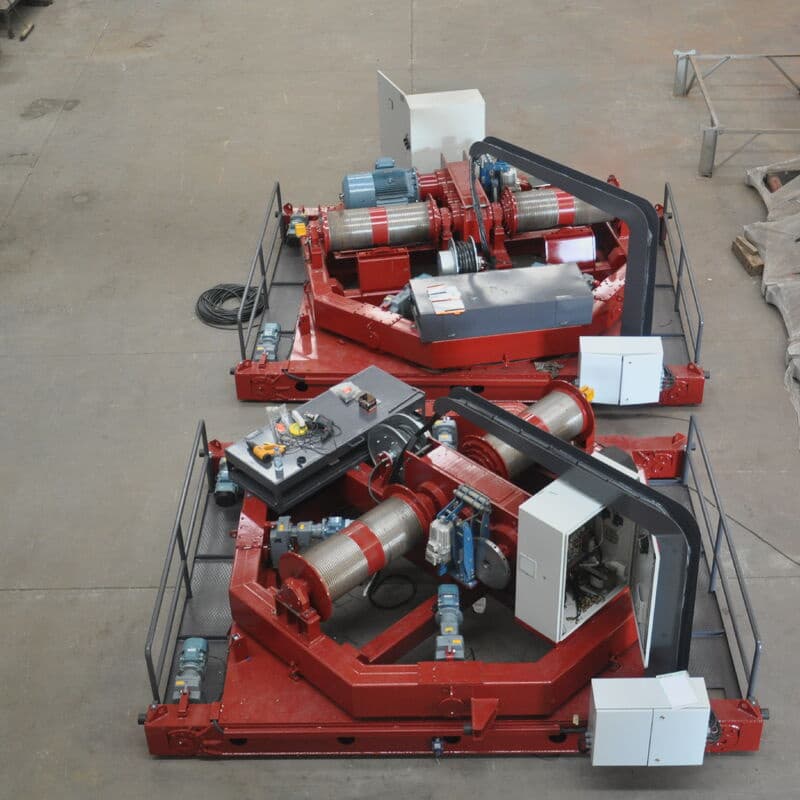
Custom-built crane trolley units ready for dispatch at the ABRA plant
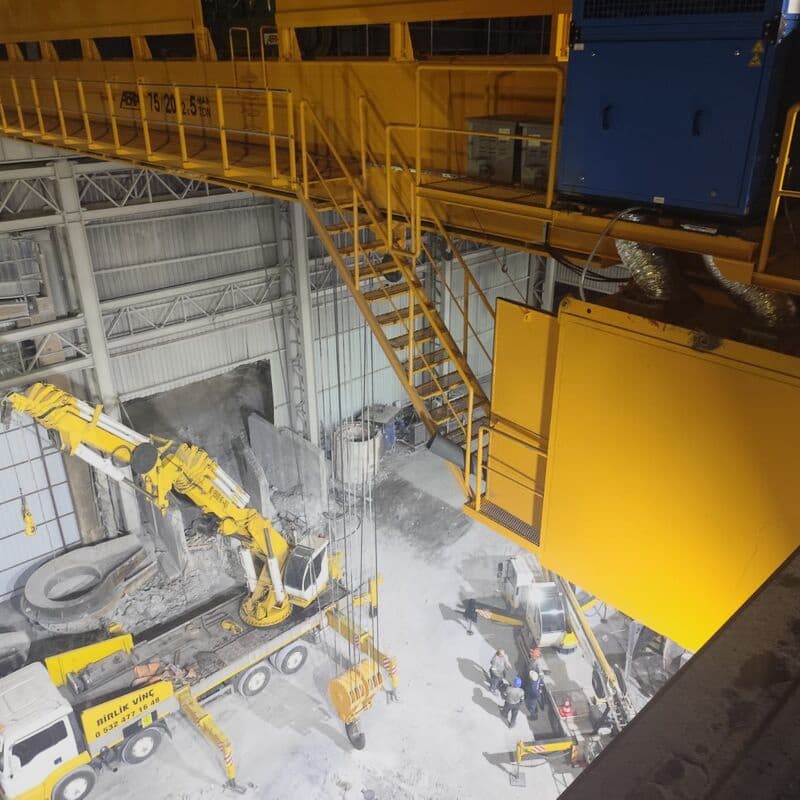
ABRA process crane installation seen from the crane walkway

From our plant to your line.

Send us your cycle and we’ll come back with the duty class. Let’s read your conditions together →

After-sales

Maintenance, parts and service

A process crane is a long-life asset, and its second decade decides what it really cost. Maintenance is agreed under an annual contract: 4 visits a year, spare parts from the plant that made them, and on-site response within 48 hours of a call, anywhere in Türkiye. Warranty is 2 years, fixed.

We also service, supply parts for and modernise other manufacturers’ cranes, and ABRA Crane Tracking can be retrofitted to them. Crane Contact Center 444 8 440.

48 hoursOn-site response, anywhere in Türkiye
2 yearsWarranty, fixed term
4 visits / yearStandard preventive maintenance contract
Any brandService, spares, modernisation and crane tracking retrofit

FAQ

Frequently asked questions

What is a ladle crane?

A ladle crane is a process crane that carries and tips a ladle of molten metal, usually between the furnace and the casting line. It has a main hoist for the load and an auxiliary hoist for tipping, high safety margins and very controlled lowering. Because it works in radiant heat on a repeating cycle, it is engineered to the temperature and the duty of that specific line.

What duty class does a steel mill or foundry crane need?

It comes from the load spectrum and the running hours; the maximum load on its own does not decide it. A crane lifting near capacity around the clock, or in continuous charging duty, needs a high duty class; a crane lifting occasionally does not. We build in the FEM 1Bm–5m (ISO M3–M8) range and set the class per project from your measured cycle. Write “FEM 5m” or “ISO M8” — the two systems are never merged.

Can a crane work at high ambient temperature?

Yes, with heat protection engineered for the position of each component. Our standard equipment range covers −10 … +50 °C; above that the specification is written for the site. The ladle crane we built for Kılıçlar Hurdacılık works in an 85 °C ambient, in continuous duty.

What can a process crane carry under the hook?

Most often a ladle or a lifting beam. We have installed many lifting-beam systems. Other below-hook equipment is defined per project, against the load and the cycle it has to survive. The below-hook choice changes the duty class and the structure above it, so it is decided during engineering.

Get a recommendation

Tell us what your line does

Send us the load, the cycle, the ambient temperature and what hangs under the hook. An engineer works through the duty class with you and, where it helps, comes to see the installation. No obligation.

Or call 444 8 440

Let’s read your conditions together

Your details are used only to answer your request

Designed and built to EN, FEM and ISO standards · CE marked · duty class defined per project (our build range: FEM 1Bm–5m / ISO M3–M8) · manufacturing in İzmir since 2004