444 8 440Request a review
Transfer Cars manufactured by ABRA Crane

Transfer Cars

The crane stops where its runway stops. A transfer car carries the load the rest of the way at floor level, on rails laid along the route you actually have, from 1 to 100 tonnes.

1–100 tstandard selection
Rail-guided or rubber-tyred
ATEX version available
Founded 2004In-house manufacturingEN · FEM · ISO designCE marked2,500+ cranes installed

What is a transfer car?

A transfer car is a motorised platform that carries heavy loads horizontally at floor level, usually on rails, between production halls or stations inside a plant. It does not raise the load; it moves it. Loading and unloading are done by whatever equipment already serves each end of the route.

An overhead crane works vertically and within its runway. A transfer car works horizontally and outside it. The two are complementary: the crane sets the load down on the car at one end, the car carries it across, and the equipment at the far end takes it off. Where a route crosses hall boundaries, columns or an aisle that a crane cannot span, the car is what closes the distance without extending the structure.

How it differs from an overhead crane

Type selection

When a transfer car is the right answer

The usual trigger is a distance that the existing handling equipment cannot cover without building something. Two halls with separate cranes and no shared runway. A machining line and a paint line at opposite ends of a plant. A fabrication too heavy or too awkward for a forklift, on a route that would otherwise have to stay clear all day.

The second trigger is repetition. Where the same load runs the same route several times a shift, a fixed rail route removes the aisle, the spotter and the manoeuvring space that a mobile alternative needs, and it puts the load down in the same place every time.

The third is the load itself. Long, wide or off-centre loads that sit badly on forks sit properly on a deck built for their footprint.

Where the route has to change often, or crosses traffic that cannot be interrupted, a rail route is the wrong tool and it is better to say so at the review than after the rails are down.

What the rails, the floor and the route have to be

This is the part that decides the project, and it is settled before the car is specified.

The rails carry the whole load through a small number of wheels, so the wheel load the car transfers into the slab is calculated and issued per project, along with the rail profile, the gauge, and the straightness and level tolerance the route has to hold. Rails set into the floor keep the route flush for forklift and foot traffic and need a trough and drainage; rails laid on the slab are simpler and change how everything else crosses the route.

The route itself has to be described end to end: its length and shape, where the car stops, what hands the load on at each stop, and where people and vehicles cross it. Doorways, expansion joints and fire lines all show up here rather than later.

Power supply is part of the same conversation, because it follows the route rather than the load: a short fixed run, a long continuous one and a branched route are not answered the same way, and the choice is made per project.

We work through the route, the rails and the loads with you as part of the quotation, and we put the figures the building side needs in writing.

Technical data

Technical specifications and capacity

Read each value with its consequence, because the deck is built around your load rather than chosen from a catalogue.

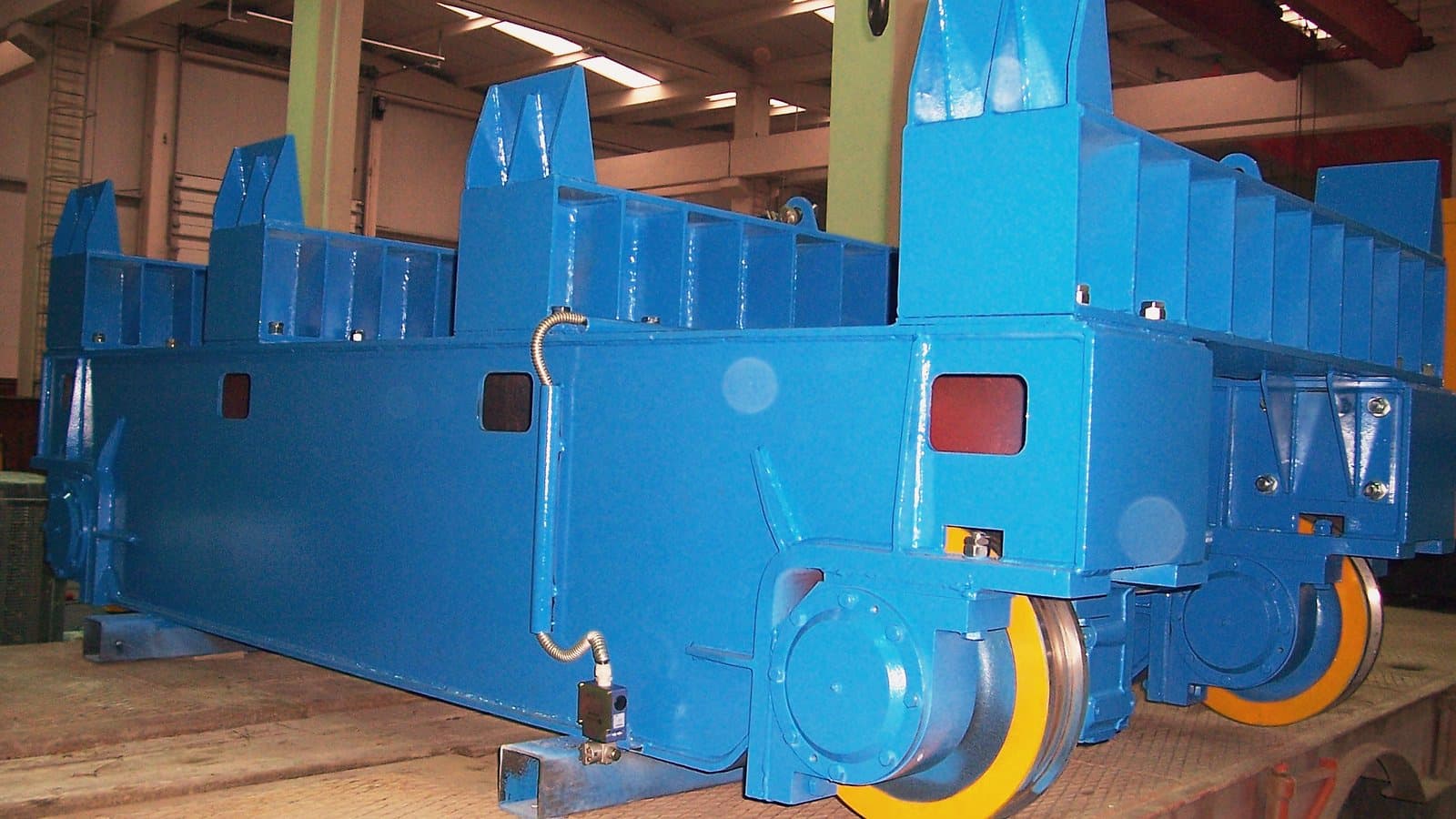
Our transfer cars are built from 1 to 100 tonnes, with the deck sized to the footprint of what it carries. Travel is inverter-controlled with two-speed operation and electronic braking, so the car accelerates and stops without shifting the load, and comes into a station slowly enough to place it. Supply is 380–415 V / 50 Hz, or 60 Hz for export, with IP54/IP55 protection on the motor and panel, and the car is built for ambient conditions from −10 to +50 °C. Deck type, travel speed, rail gauge and power supply are set per project against the route.

Transfer car — technical spec

ParameterValueConsequence / note
Load capacity1–100 t, built to the applicationDeck sized to the load's own footprint
GuidanceRail-guided, or rubber-tyred without railsRepeatable stopping position against route flexibility
DriveElectric motor drivenPer project
Travel controlInverter-controlled, two-speedSoft start and stop; slow approach into each station
BrakingElectronic brakingControlled stop, load stays put on the deck
ControlManual or radio remoteChosen by where the operator stands while the car moves
Safety equipmentArea scanner sensors at the route ends · ultrasonic sensors · bumpers · emergency stop · audible and visual warning while travelling · load securingEach tied to a specific risk in a hall where people work
Power supply380–415 V / 50 Hz (60 Hz for export)Matches local and export grids
Protection classIP54 / IP55 (motor + panel)Dust and moisture protection
Ambient temperature−10 … +50 °CPer project
Deck type and sizePer projectFlat deck or a seat built for the load
Travel speedPer projectSet by route length and cycles
Rail profile, gauge and tolerancesSpecified per projectIssued with the wheel loads
Wheel loads transferred to the slabCalculated and issued per projectThe figure the building side asks for first
Route length, stops and layoutPer projectStraight, L or U routes described at the review
Power supply method along the routeDefined per projectFollows route length and shape
ATEX versionGas Zone 1–2 / dust Zone 21–22, certified per project by a third-party notified bodySee Explosion-protected systems
Functional safety levelAt least PL c to EN ISO 13849-1; PL d or PL e where the project requires itStated per safety function; category and SIL are not claimed
StandardsEN 13001 series · CE · ISO 9001 · EN ISO 13849-1 / -2 · EN IEC 60204-32 · busbar to EN IEC 61439-1 / -6Per project

Transfer car and overhead crane — what each one does

Transfer carOverhead crane
Direction of movementHorizontal, at floor levelVertical, and along its own runway
Does it raise the load?No — it carries itYes
Where it can goAlong a rail route, across halls and past columnsOnly within the runway built for it
What it needs from the buildingRails, floor capacity at the wheels, a clear routeRunway, columns or brackets, clear height
Typical reason to choose itThe distance is outside any crane's runwayThe load has to be raised and placed
ABRA pagethis pageprocess cranes · overhead cranes

The speeds shown are standard values; other speeds are provided on request. Where a value depends on your site, it is written “per project” and confirmed with you.

Type routing

Rail-guided or rubber-tyred

Rail-guided is the normal answer where the route is fixed and repeated. The car runs on rails on a defined line, the position at each stop repeats, and the wheel loads go into the slab at known points. Heavy tonnage and frequent cycles both point this way.

Rubber-tyred, running without rails, answers the case where the route has to change, where the floor cannot take rails, or where a route crosses areas that must stay clear. It spreads the load over the floor differently and gives up the repeatable stopping position that rails provide.

Both are supplied with manual control or radio remote, chosen by where the operator needs to stand while the car is moving.

Equipment

Safety and control equipment

A transfer car moves at floor level, in the same space as people. Each item below is on the car because of the specific thing it prevents.

  • Area scanner sensors at the start and end of the rail route — the car detects an obstacle or a person on the route ahead and stops before reaching it.
  • Ultrasonic sensors — obstacle detection along the route, working with the scanners rather than instead of them.
  • Audible and visual warning while travelling — the car announces itself to a hall where people are working with their backs to it.
  • Bumpers — the mechanical last line at the ends of the route.
  • Emergency stop — on the car and on the control device.
  • Electronic braking — the car is brought to a controlled stop rather than dropped out of drive, which is what keeps an unsecured load from moving on the deck.
  • Inverter-controlled travel, two speeds — soft starts and stops, and a slow approach into each station.
  • Load securing on the deck — the load stays where it was set down, designed around its own footprint.
  • [Control options](/products/crane-controls) — manual control or radio remote.
  • ATEX version — where the route runs through a classified area, the car is engineered to that site's gas Zone 1–2 or dust Zone 21–22 map and certified by a third-party notified body, per project. The framework is set out on the explosion-protected systems page.

Manufacturing

“Built and tested in our plant before it goes onto your rails”

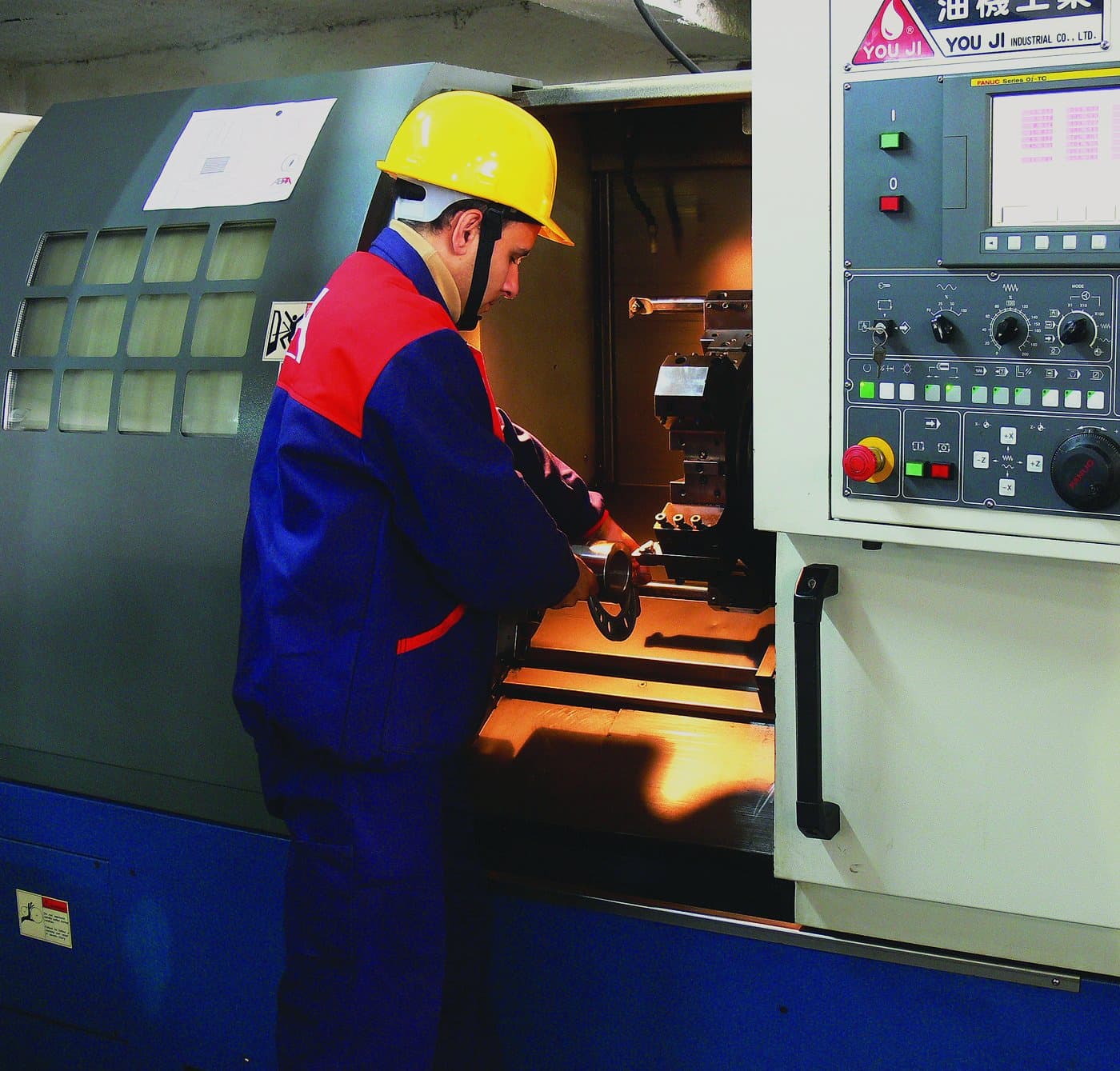
Machining at the ABRA plant in İzmir
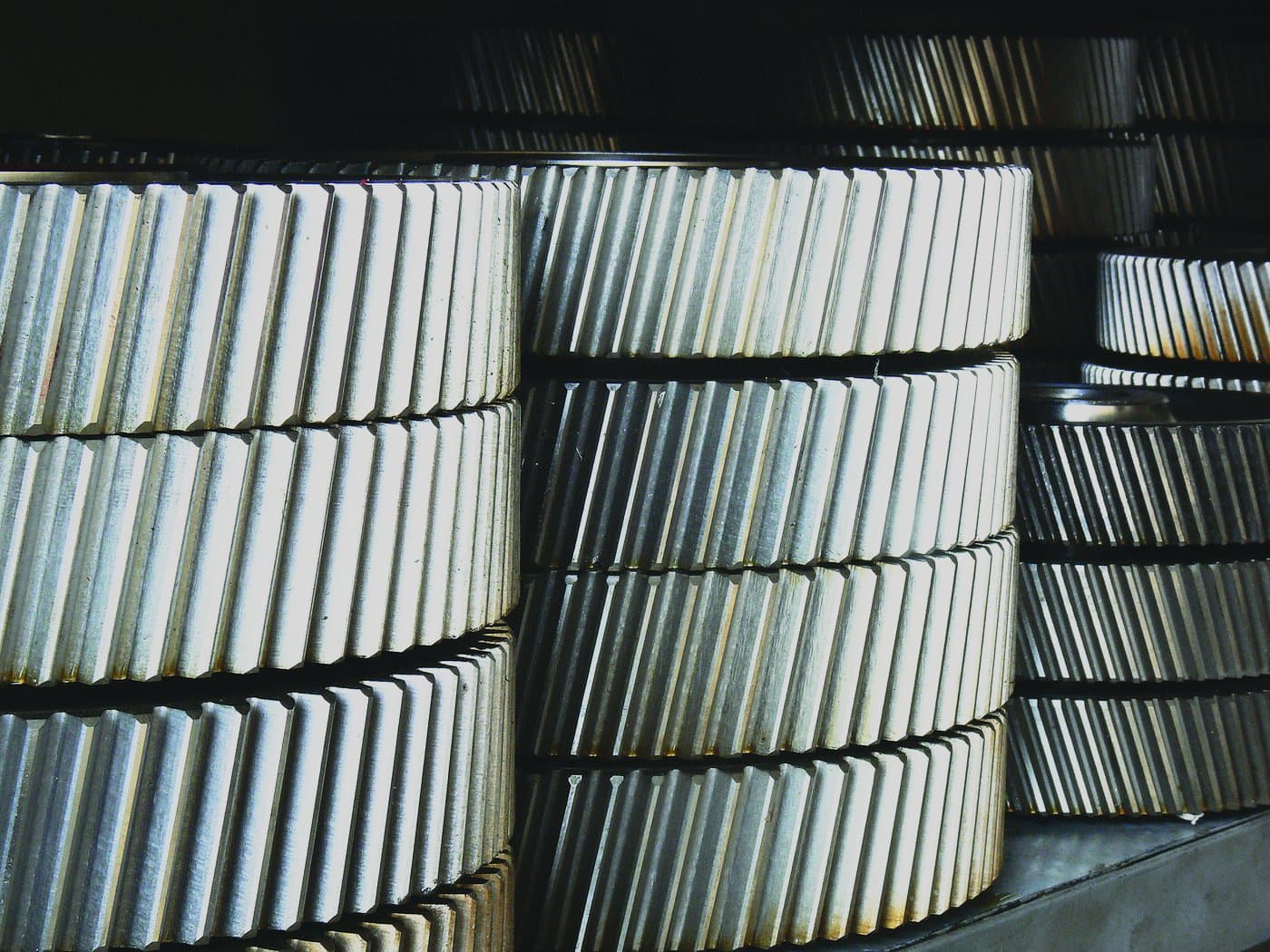
End carriage wheel groups machined at the ABRA plant
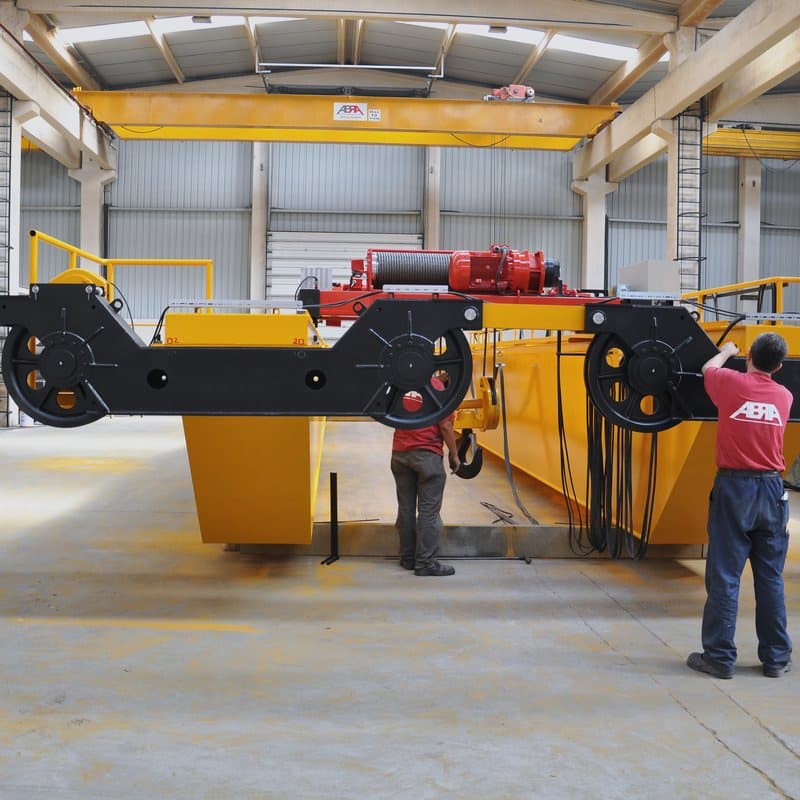
Hoist unit on test at the ABRA plant

Applications

Where transfer cars are used

Steel fabrication plants move finished assemblies between the welding and the paint hall. Machinery manufacturers move machine beds and frames between machining and assembly. Defence manufacturing uses them where the load is large and the route is fixed. Foundries and heavy industry use them between process stations, mining and cement plants for equipment moves during maintenance, automotive plants for die and fixture changes, and ports for moving loads between storage and handling areas.

After-sales

Maintenance, parts and service

Maintenance is agreed under an annual contract: scheduled maintenance with four visits a year as standard, spare parts, modernisation, and on-site response within 48 hours of a call anywhere in Türkiye, with a two-year warranty. One number: Crane Contact Center 444 8 440.

48 hoursOn-site response, anywhere in Türkiye
2 yearsWarranty, fixed term
4 visits / yearAnnual maintenance contract
Any brandService, spares and modernisation

FAQ

Frequently asked questions

What is the difference between a transfer car and an overhead crane?

A transfer car moves a load horizontally at floor level; an overhead crane raises it and moves it within its runway. The car does not raise anything, so each end of its route needs equipment that can load and unload it. The two work together: the crane puts the load on the car, the car carries it to where no runway reaches.

How much can a transfer car carry?

Ours are built from 1 to 100 tonnes, and the deck is sized to the footprint of what it carries rather than to the tonnage alone. What matters as much as the figure is how the load sits: a long or off-centre load changes the deck and the wheel loads even when the weight is unchanged. Send us the load and its dimensions with the route.

What do the rails and the floor have to be?

The rail profile, the gauge and the straightness and level tolerance are specified per project, and the wheel loads the car puts into the slab are calculated and issued with them. Rails can be set into the floor to keep the route flush for other traffic, or laid on the slab where that is not needed. We settle all of it during the site review, before the car is built.

Can a transfer car run without rails?

Yes, as a rubber-tyred car. It suits a route that has to change, a floor that cannot take rails, or an area that has to stay clear for other traffic. What it gives up is the repeatable stopping position that rails provide, and it puts its load into the floor differently. Which one is right comes out of the route rather than the tonnage.

Get a recommendation

Send us your route and we will work through it

Tell us the load and its dimensions, where it starts and where it has to get to, how many times a shift, and what handles it at each end. An engineer comes back with the deck, the rail specification and the loads your building side will ask for — no obligation.

Or call 444 8 440

Request a site review

Your details are used only to answer your request

Designed and built to EN, FEM and ISO standards · CE marked · duty class defined per project (our build range: FEM 1Bm–5m / ISO M3–M8) · manufacturing in İzmir since 2004