444 8 440Request a review
Hoists & Lifting Machines manufactured by ABRA Crane
Home › Industrial Cranes and Lifting Equipment › Hoists & Lifting Machines

Hoists & Lifting Machines

The hoist decides how long your crane keeps working. We machine, assemble and test ours in our own plant, sized to your load spectrum, your hook path and your duty class.

Made in-housemanufacturing in İzmir
250 kg – 160 tstandard selection
FEM 1Bm–5m / ISO M3–M8duty class range
Founded 2004In-house manufacturingEN · FEM · ISO designCE marked2,500+ cranes installed

What is a wire rope hoist?

A wire rope hoist is the lifting machine that sits on an overhead crane and does the actual lifting: a motor and drum wind a steel rope, and the rope reeving multiplies that pull into the load on the hook. The crane is the structure that moves it around the building; the hoist is the machine that raises the load.

Type selection

Which hoist suits your crane?

The hoist is chosen by where it sits on the crane, and that follows from your building rather than from a preference. A double girder hoist rides on a trolley on top of two girders, which is what you need for high capacity and the longest hook path. A single girder underhung hoist hangs from the lower flange of one beam, which suits a short building where every centimetre of hook height counts. A single girder side-mounted hoist carries the trolley on the side of the girder, gaining hook height and hook approach where the building is tight.

Capacity and duty class then sit on top of that choice. Send us the load, the hook path and how often the crane runs, and an engineer confirms the mounting and the class with you.

Our approach

The duty class is set for the machine that gets built

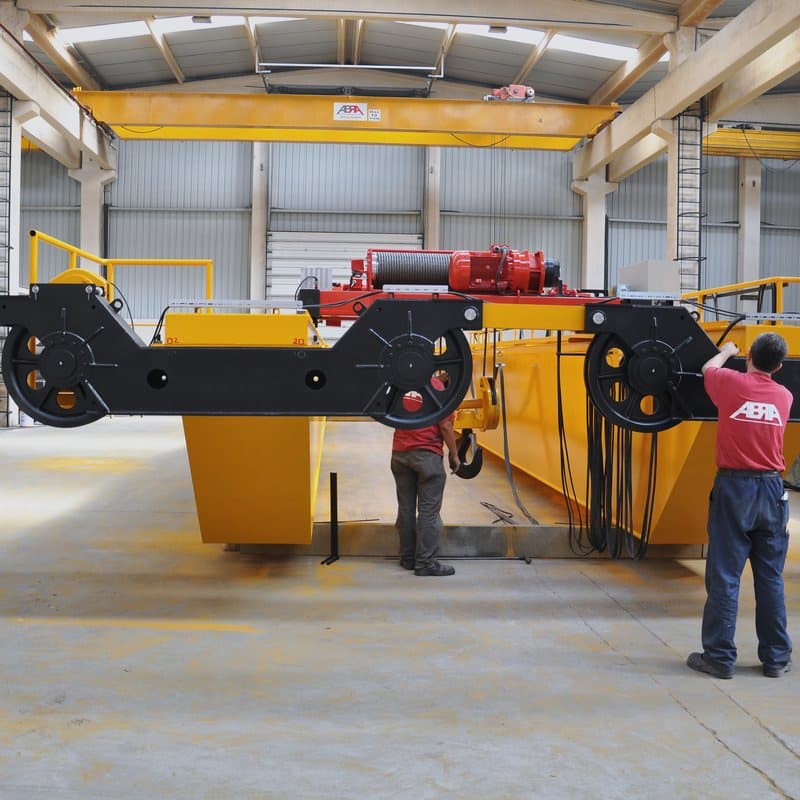
The hoist unit is machined, assembled and load-tested in our own plant in İzmir, alongside the steel structure, the end carriages and wheel groups, and the operator cabin that go onto the same crane.

That has a practical consequence for you. When the duty class is set, it is set for the machine we are about to build rather than selected from a supplier's fixed range, so the drum diameter, the reeving and the motor rating follow your load spectrum. And years later, when a rope, a brake pad or a whole hoist unit needs attention, the drawings and the people are in the same building.

Manufacturing

“From our plant to your hook”

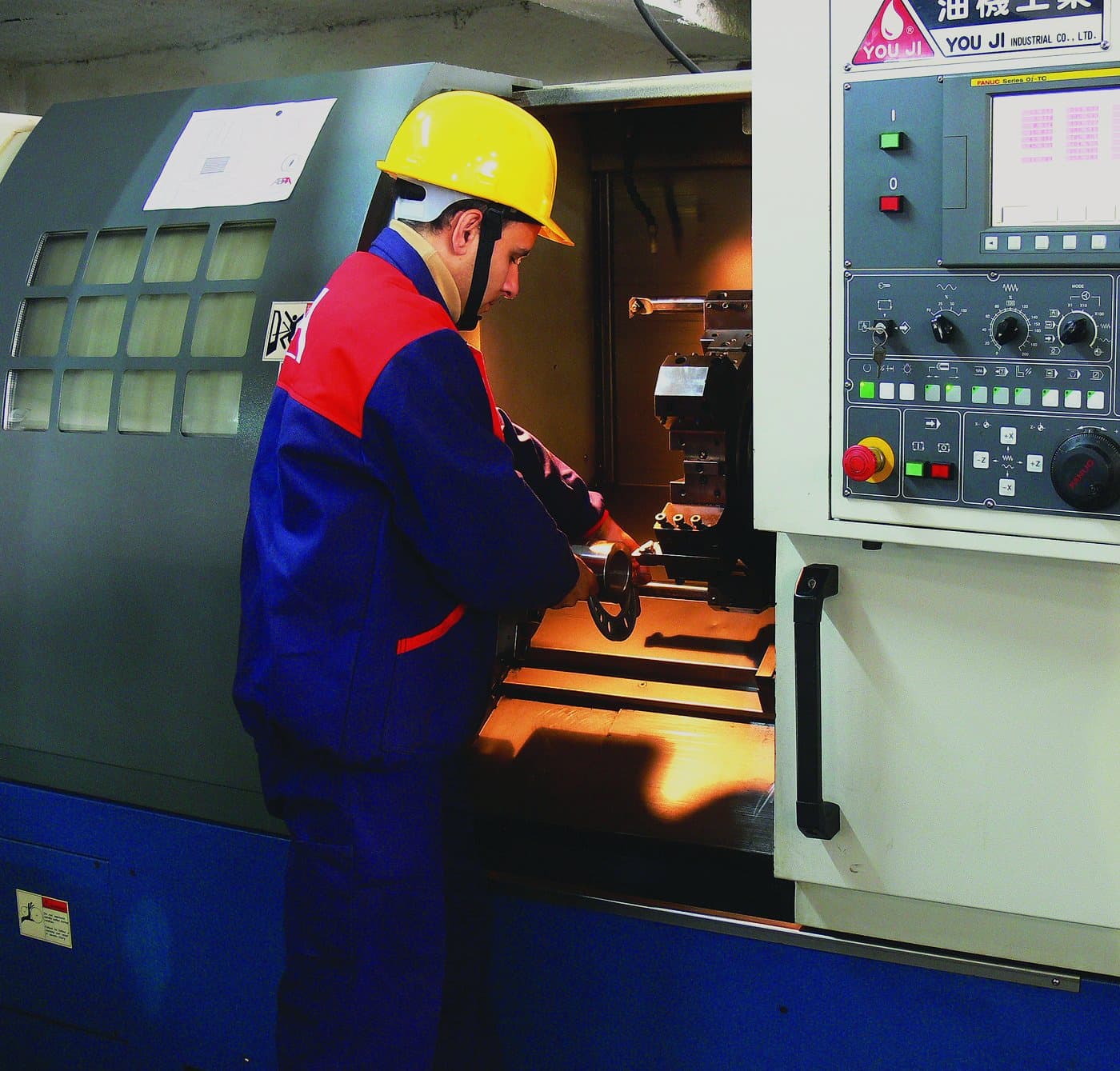
Machining at the ABRA plant in İzmir
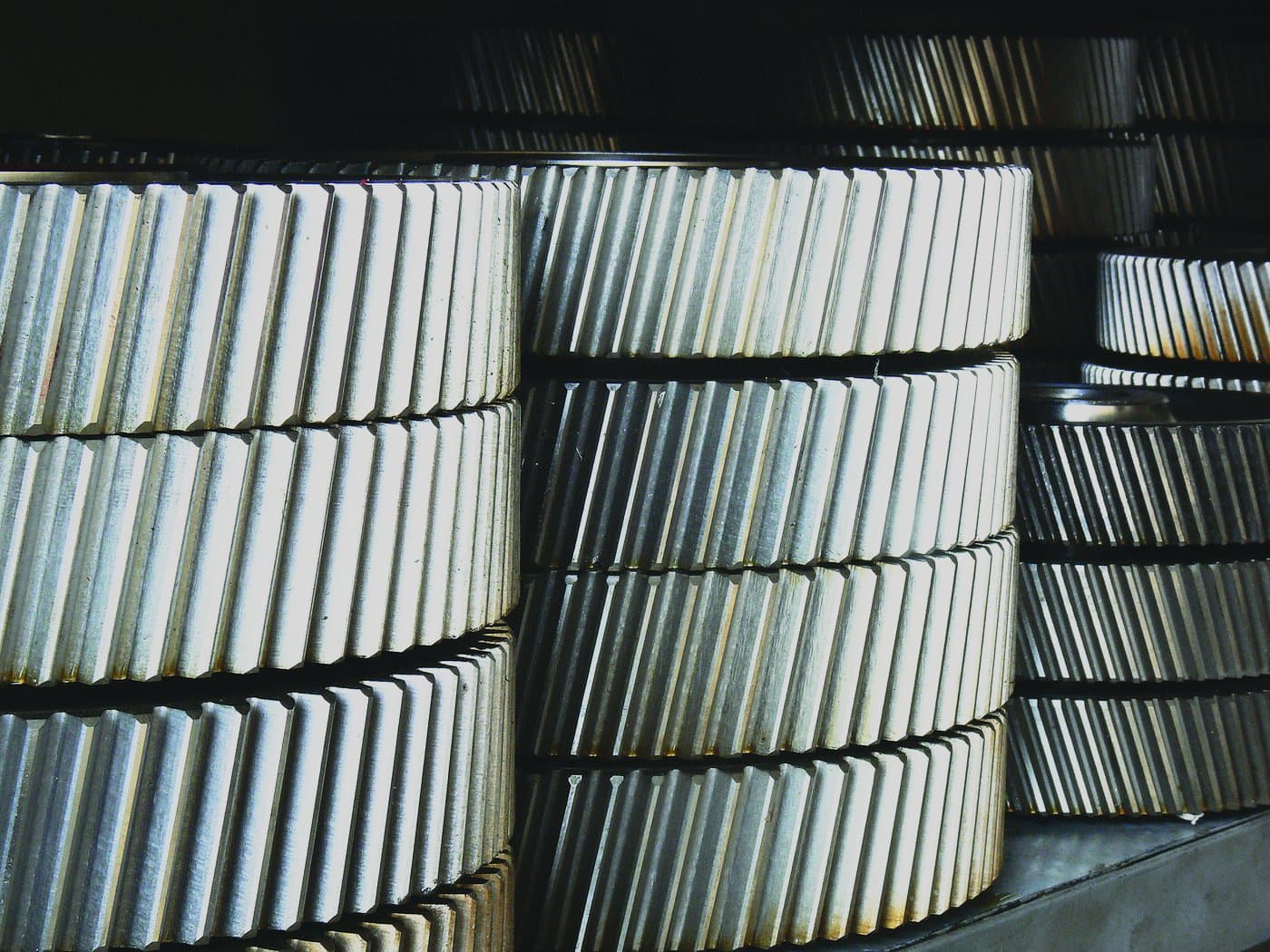
End carriage wheel groups machined at the ABRA plant
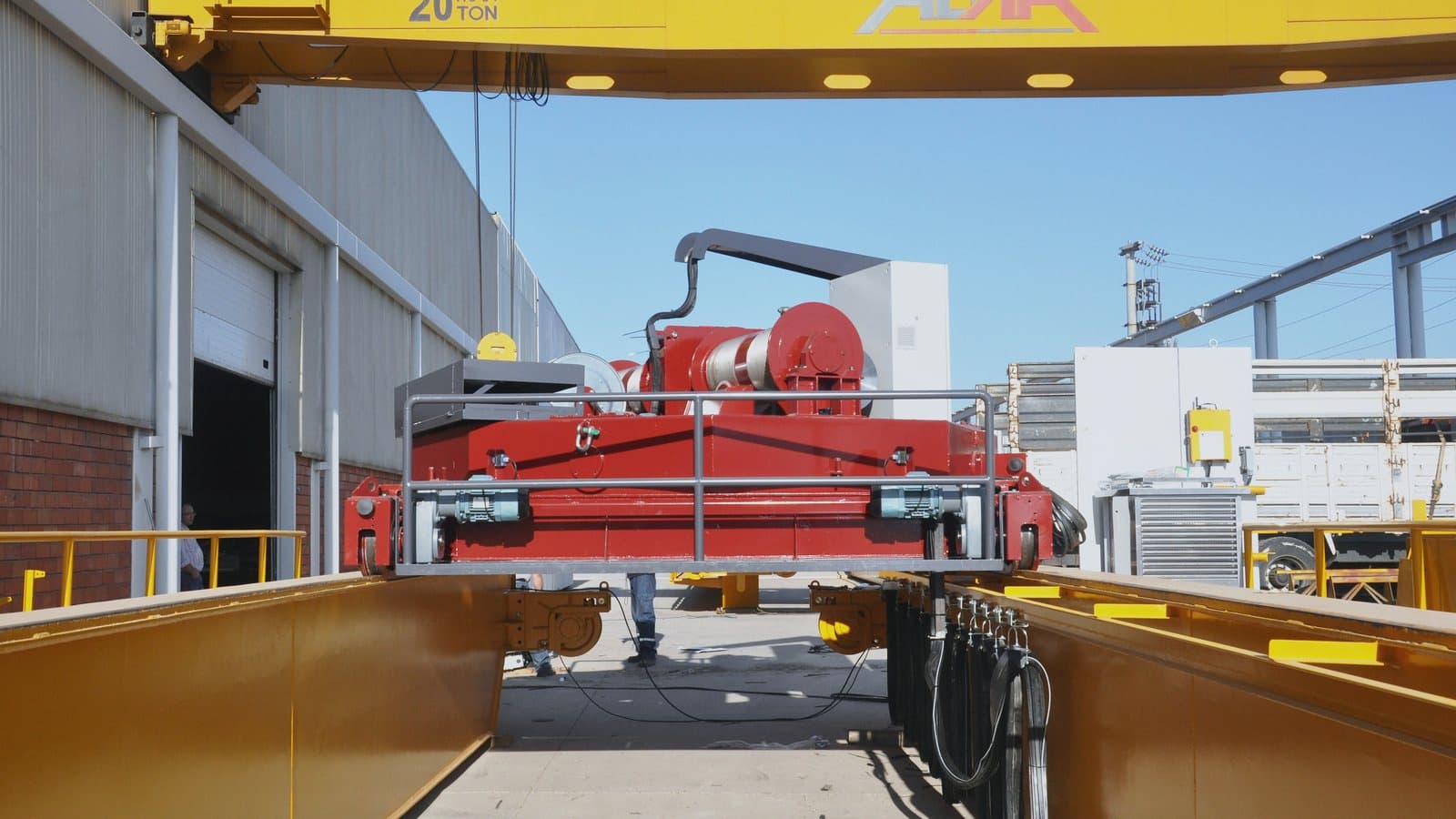
Hoist unit on test at the ABRA plant

Technical data

Technical specifications & capacity

Read each value with its consequence — that is how the machine is actually sized for your lift.

Our wire rope hoists cover 250 kg to 160 tonnes as a standard selection range, and above 160 t we engineer per project. The family runs across the full duty range from FEM 1Bm (ISO M3) for light single-shift work to FEM 5m (ISO M8) for continuous or severe duty. Hoisting is stepless under inverter control. Standard hoisting speed runs from 8 m/min on the light two-fall machines down to about 2.3 m/min at the top of the range, set by the series, the reeving and the duty class, with micro-speed for the last centimetres, so the load travels and then creeps into place. The reeving arrangement is chosen with the capacity and the hook path: 2/1, 4/1, 6/1, 8/1 and 12/2 are all available, and the choice changes drum length, rope life and how the hook behaves under load.

Hoist mounting types

CriterionDouble girder hoistSingle girder underhung hoistSingle girder side-mounted hoist
Where it sitsOn a trolley on top of two girdersHangs from the lower flange of one beamTrolley on the side of one girder
Hook pathLongestShorter, but maximised in a low buildingGains hook height and approach
Capacity bandUp to the top of the rangeLight to mediumLight to medium
Typical reason to chooseHeavy loads, long spans, cab or attachmentShort building, existing beam availableTight building, hook height is the constraint
ABRA pagedouble girder hoistunderhung hoistside-mounted hoist

Wire rope hoist — technical spec

ParameterValueConsequence / note
Lifting capacity (SWL)250 kg – 160 tWorkshop spot lifting to heavy process duty
Duty classFEM 1Bm–5m (ISO M3–M8), per projectSized to your load spectrum × running hours, not to peak load alone
Hoisting speedStepless, 2.3 – 8 m/min depending on series, reeving and duty class — 8 m/min on the light two-fall machines, about 2.3 m/min at the top of the rangeStandard values from the selection tables; micro-speed for accurate setting
Trolley travel speed4–16 m/min to 2 t · 5–20 from 3.2 to 20 t · 5–20/25 at 25–32 t · 5–20/25/30 from 40 tSet with the capacity and the cycle
Bridge travel speed5–20 m/min to 20 t · 5–20/25/30 from 25 tSet with the span and the cycle
SeriesBR23 · BR30 · BR33 · BR36 · BR46 · BR58 · BR68The series follows capacity, reeving and duty
Hoisting motor0.25 – 90 kWSized with capacity, speed and duty
Travel motor0.18 – 2 × 5.5 kWSingle or twin drive, set by the machine
Lifting height (machine)4 – 28 m standardLonger hook paths engineered per project
Machine weight139 – 25,250 kgCarried into the girder and runway calculation
Machine duty classFEM 1Am (ISO M4) or FEM 2m (ISO M5)Machine-level duty; crane-level duty runs FEM 1Bm–5m
BrakeSpring-applied electromagnetic brake — closes when power is cutHolds the load on power loss; release ≈ 0.3 s
Reeving2/1 · 4/1 · 6/1 · 8/1 · 12/2Sets drum length, rope life and hook behaviour
True vertical liftTwin-grooved drumHook rises straight; matters when landing into a fixture
Motion controlInverter (VFD)Soft start/stop, reduced sway, gentler on rope and structure
Overload protectionOverload switch + load cell, standardThe machine refuses a lift beyond its rating
Power supply380–415 V / 50 Hz (60 Hz for export)Matches local and export grids
Protection classIP54 / IP55 (motor + panel)Dust and moisture protection for industrial environments
Ambient temperature−10 … +50 °CCold-store to hot-process ranges
Hook path / lifting heightPer projectFollows building height and pit depth
ControlRadio remote / pendant / operator cabOperator cab made in-house
StandardsEN 14492-2 · EN 13001 series · ISO 4301-1 · FEM 9.511 (complementary) · EN IEC 60204-32 · CE · ISO 9001Duty class stated per project

Duty class reference

FEM (mechanism)ISO MTypical use
1BmM3Light, single shift
2mM5Medium/heavy, 1–2 shifts
4mM7Very heavy, 2–3 shifts
5mM8Continuous / severe (process duty around the clock)

The speeds shown are standard values; other speeds are provided on request. Where a value depends on your site, it is written “per project” and confirmed with you.

Equipment

Equipment & options

Each option answers a specific problem, not a feature list:

Overload protection (EN 14492-2)

An overload switch and load cell come as standard on every product we build, so the machine refuses a lift beyond its rating.

Inverter (VFD) control

Soft starts and stops on hoisting and travel, which reduces load sway and takes shock out of the rope and the structure.

Stepless hoisting

Inverter-controlled from zero, so the load travels quickly and then creeps into place under micro-speed.

True vertical lift (twin-grooved drum)

The hook rises straight instead of drifting sideways as the rope pays off, which matters when you are landing into a fixture or a machine bed.

Limit switches

Hoisting and travel limits defined per project.

ABRA Crane Tracking

The data layer: running hours, condition and maintenance data from the machine itself; see Crane Tracking.

Applications

Where these hoists work

The hoist is specified by the duty behind it. General manufacturing and machine building run light to medium classes on single shifts. Steel and metal service, foundries and cement plants run the high end of the range, where the machine lifts near capacity across shifts and the class has to carry it. Chemical, petrochemical and energy sites add the environment on top of the duty — for explosive atmospheres the same lifting machine is engineered as an explosion-protected system.

Project process

How we work: from enquiry to commissioning and service

A simple, four-step path so a committee can see the whole route before committing: 1. Tell us the lift (load, hook path, cycles per hour, shifts, environment) → 2. Engineering & quotation (we confirm the duty class, the reeving and the mounting, and flag any spec deviation before you sign) → 3. Manufacturing & testing (the hoist unit is machined, assembled and load-tested in our plant, then commissioned on site) → 4. Maintenance & service (scheduled maintenance under an annual contract, spare parts and modernisation).

After-sales

Maintenance, parts and service

Maintenance is agreed under an annual contract: 4 preventive visits a year, spare parts, modernisation and breakdown support across Türkiye within 48 hours of a call. Warranty is 2 years. We also service, supply parts for and modernise lifting machines from other makes. Crane Contact Center 444 8 440.

48 hoursOn-site response, anywhere in Türkiye
2 yearsWarranty, fixed term
4 visits / yearAnnual maintenance contract
Any brandService, spares and modernisation

FAQ

Frequently asked questions

What is low headroom, and when does it decide the machine?

Low headroom is the vertical space the machine itself takes up between the beam and the hook. In a short building it decides whether a lift is possible at all, because every centimetre the machine occupies is a centimetre the hook cannot climb. Where clear height is the constraint, the mounting arrangement is chosen for headroom first and capacity second. See single girder underhung hoists.

How much can a wire rope hoist lift?

Ours cover 250 kg to 160 tonnes. The figure you can actually run at depends on the reeving, the hook path and the duty class behind it, because a machine lifting near capacity across three shifts is sized differently from one lifting occasionally. Send us the load and the cycle and an engineer confirms the combination.

What does reeving mean, and why does it matter?

Reeving describes how the rope is run between the drum and the hook block — 2/1, 4/1, 6/1, 8/1 or 12/2. More rope falls share the load, which lets a given drum and motor lift more, but they also change drum length, hoisting speed and how the hook sits under load. It is one of the first things an engineer fixes when sizing the machine.

How is the duty class (FEM / ISO) selected for a hoist?

The class comes from your load spectrum and how many hours the machine runs, not from the maximum load alone. A hoist lifting near capacity across three shifts, or on continuous process duty, needs a high class (FEM 4m–5m / ISO M7–M8); a lighter single-shift machine needs less. We size the class to your real cycle so the machine does not fatigue early. See the duty class guide.

Get a recommendation

Talk to an engineer about your lifting machine

Send us the load, the hook path, the cycles and the environment. An engineer confirms the mounting, the reeving and the duty class with you — no obligation.

Or call 444 8 440

Request a technical review

Your details are used only to answer your request

Designed and built to EN, FEM and ISO standards · CE marked · duty class defined per project (our build range: FEM 1Bm–5m / ISO M3–M8) · manufacturing in İzmir since 2004