444 8 440Request a review
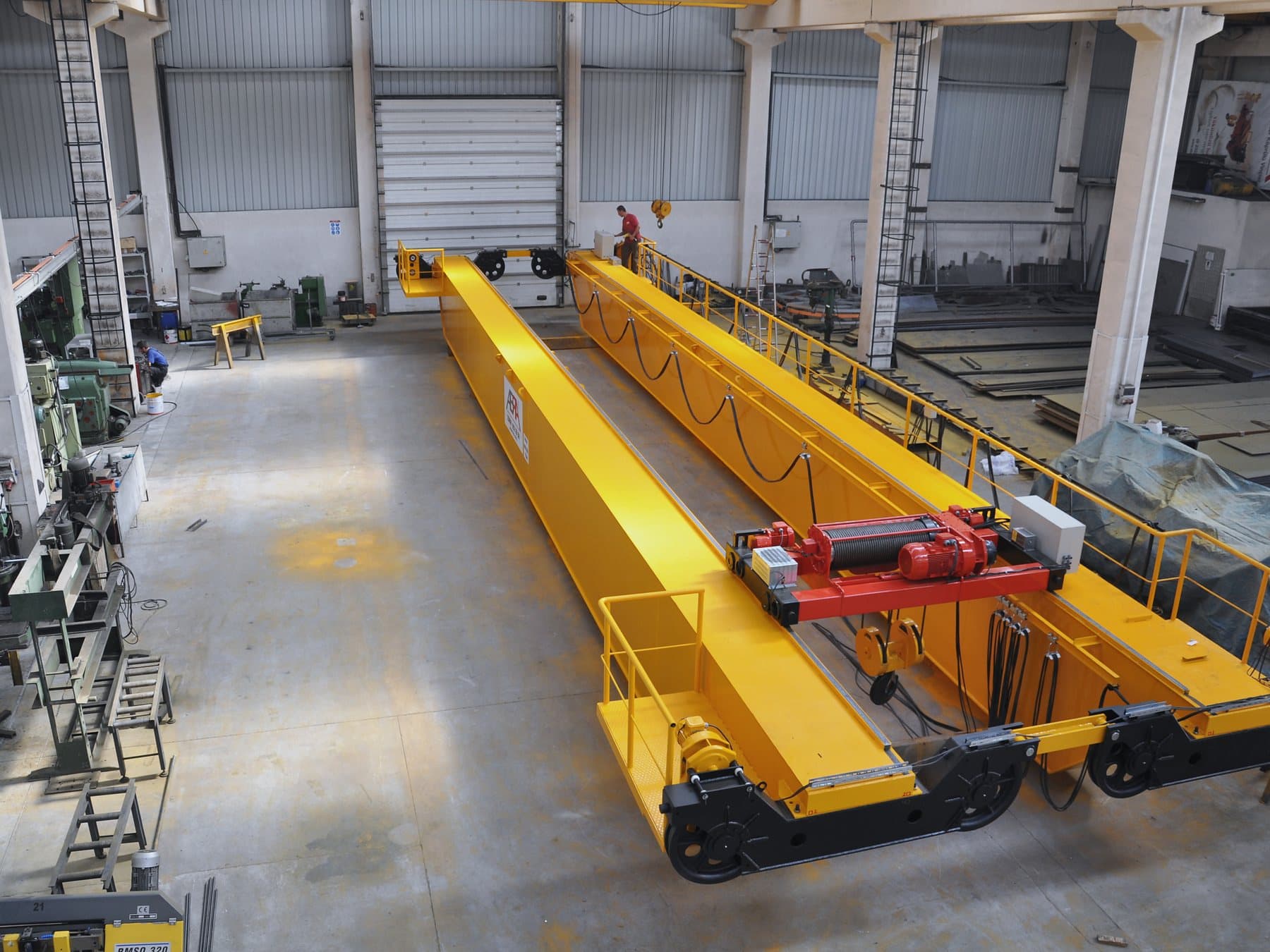
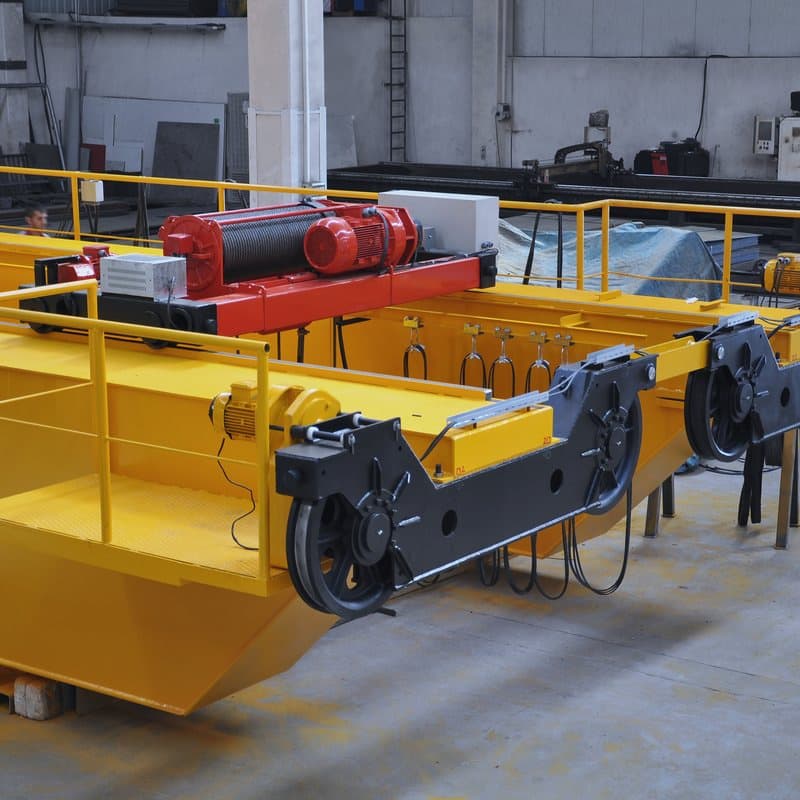
Double girder overhead crane, trolley top-running on two main girders, in a steel fabrication plant
Home › Industrial Cranes and Lifting Equipment › Overhead Cranes › Double Girder Overhead Crane

Double Girder Overhead Crane

For loads above 10 tonnes, long spans and continuous duty — where a single girder would fatigue. Engineered and manufactured in-house, from the hoist unit up.

Up to 160 tstandard selection — ideal above 10 t
FEM 1Bm–5mduty class (ISO M3–M8), per project
Since 2004manufacturing in İzmir
DIN · EN · FEMdesigned and built · CE marked
Founded 2004In-house manufacturingEN · FEM · ISO designCE marked2,500+ cranes installed

What is a double girder overhead crane?

A double girder overhead crane — also called a double girder EOT or overhead travelling crane — carries the load on a trolley running on top of two main girders. The top-running arrangement gives more hook path and more capacity for the same building, which is why it is specified for heavy loads, long spans and continuous duty.

Single vs double girder

When do you need a double girder crane?

Single girder and double girder are two different structures, not two rungs of the same ladder. A double girder is the answer when the load climbs past roughly 10–20 tonnes, when the span is long, when you need more hook path under the same roof, when the crane runs high-duty or multi-shift cycles, or when an operator cabin, a maintenance walkway or purpose-built below-hook equipment has to sit on the crane. Where those conditions are absent, a single girder does the same work with less structure and less cost.

Single girder vs double girder

CriterionSingle girder overhead craneDouble girder overhead crane
Typical capacity250 kg – 12 t10 t to hundreds of tonnes
SpanShort–mediumSuited to long spans
Lifting heightMore limitedHigher (trolley on top of the girders)
Duty classLight–mediumMedium–heavy / continuous
Maintenance walkway / cabUsually noneCan be fitted
Purpose-built below-hook equipmentLimitedSuitable
CostMore economicalHigher (for heavy work)
ABRA pageSingle girder overhead craneThis page

Threshold figures are industry/market context. ABRA double girder: 250 kg–160 t standard selection, 32 m span as standard, ideal above 10 t; exact capacity-to-span pairing is calculated per project.

Compare the two side by side on the single girder overhead crane page, or send us your load, span and cycle and an engineer will confirm which structure and duty class fit the work.Request a technical review →

Our approach

Sized to your work, not to a catalogue line

The decision on a double girder crane is rarely about the structure itself — it is about how well the machine is matched to the span, the duty class and the environment it will spend twenty years in. That matching happens in engineering: the load spectrum sets the duty class, the duty class sets the structure, and the environment decides materials, coating and protection.

Because the hoist unit, the steel structure, the end carriages and the operator cabin are built in the same plant, a change that comes out of that calculation is made on the drawing rather than negotiated down a supply chain. Years later, service, spare parts and modernisation come back to the same records.

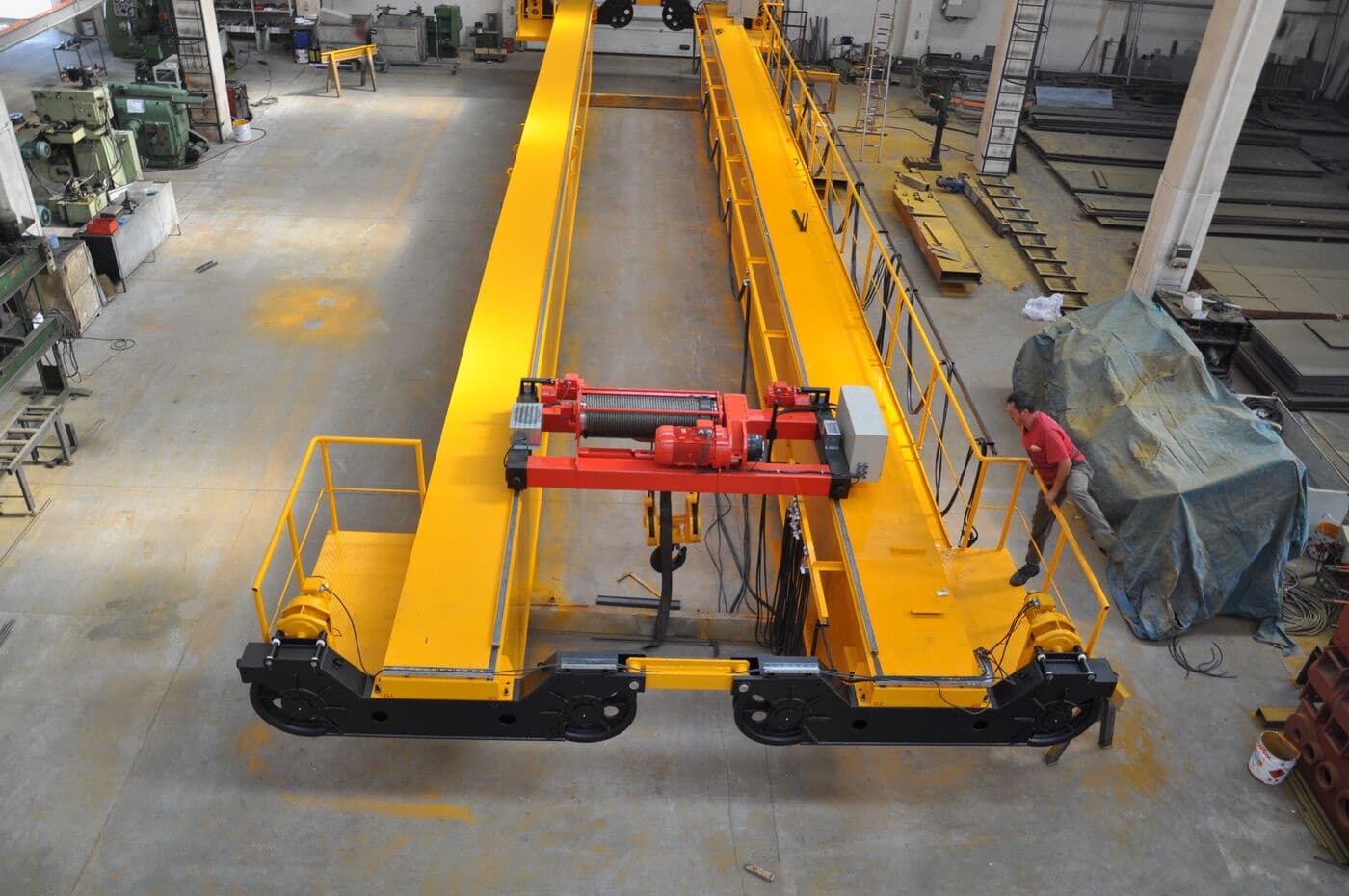
Double girder crane bridges with hoist units assembled on the ABRA plant floor in İzmir
Double girder bridges and hoist units on the ABRA plant floor, İzmir.

Technical data

Technical specifications & capacity

Read each value with its consequence — that is how the crane is actually sized for your building.

Our double girder cranes run from 250 kg to 160 tonnes as a standard selection, above which we engineer per project, and the type earns its place above about 10 tonnes. Span is 32 m as standard and lifting height up to 30 m; the exact capacity-to-span pairing is calculated per project, because a longer span lowers the capacity a given girder can carry. Motion runs on inverter (VFD) control for soft starts and precise, low-sway positioning. Hoisting is stepless with micro-speed positioning: 0–4 m/min as the standard speed, coming down to about 0–2.3 m/min at the top of the range.

ParameterValueConsequence / note
Lifting capacity (SWL)250 kg–160 t standard selection, above which we engineer per project; ideal above 10 tCovers standard workshop to heavy process duty
Where the girder choice changes1–12 t runs on a single or a double girder; from 12.5 t the crane is double girderThe decision is the duty and the hook path, not the load alone
Max span32 m as standard (capacity-dependent); longer spans as a special projectLonger span lowers capacity; exact pairing per project
Lifting height / hook pathup to 30 mSuits tall buildings and deep pits
Girder typeDouble girder (top-running)Higher hook height and capacity than single girder
Duty classFEM 1Bm–5m (ISO M3–M8), per projectSized to your load spectrum × running time (multi-shift or continuous process duty = higher class)
Hoisting speedStepless, inverter-controlled — 0–4 m/min standard; 0–3.5 / 0–3.6 at 6.3 · 12 · 12.5 · 16 t; 0–2.3 … 0–3.4 from 30 t to 160 tStandard crane speeds; micro-speed for setting the load
Trolley travel speed5–20 m/min to 20 t · 5–20/25 at 25–32 t · 5–20/25/30 from 40 tSet with the capacity and the cycle
Bridge travel speed5–20 m/min to 20 t · 5–20/25/30 from 25 tSet with the span and the cycle
Motion controlInverter (VFD)Soft start/stop, reduced load sway, gentler on structure
Power supply380–415 V / 50 Hz (60 Hz for export)Matches local and export grids
Protection classIP54 / IP55 (motor + panel)Dust and moisture protection for industrial environments
Ambient temperature−10 … +50 °CCold-store to hot-process ranges
Max wheel loadCalculated per project. Worked example to FEM 1.001-4: four wheels, Ø200 wheels, 20 m/min travel, 40 mm rail — R max 4,999 kg (≈ 49 kN), R min 2,499 kgThe runway beam, the columns and the foundations are verified against these
ControlRadio remote / pendant / operator cabOperator cab made in-house
StandardsEN 13001 series · EN 15011 · EN 14492-2 · EN ISO 13849-1 / -2 · EN IEC 60204-32 · FEM 9.511 (complementary) · CE · ISO 9001Duty class stated per project

The speeds shown are standard values; other speeds are provided on request. The exact capacity-span-height combination is calculated per project.

Duty class reference

FEM (mechanism)ISO MTypical use
1BmM3Light, single shift
2mM5Medium/heavy, 1–2 shifts
4mM7Very heavy, 2–3 shifts
5mM8Continuous / severe duty
Not sure which duty class your work needs?See the duty class guide →

Equipment

Equipment & options

Each option answers a specific problem, not a feature list:

Operator cabin (made in-house)

Where spans are long, duty is heavy or the conditions below the crane are hostile, the operator sees the load from above; fixed or travelling with the trolley. A cabin is one control option; the alternatives are pendant push-button or radio remote.

Assisted automation

Position memory, target positioning and anti-sway for precise, repeatable moves. The operator stays in control; this is assisted automation, not an operatorless mode. ABRA Crane Tracking can be added as the data layer.

Redundant brake

If one brake circuit fails, the second holds the load; specified for critical or heavy lifts.

Overload protection (EN 14492-2)

An overload switch and load cell come as standard, so the crane refuses a lift beyond its rating.

ATEX option

For explosive atmospheres, the same crane can be built as an explosion-protected system; see Explosion-protected cranes.

Applications

Where double girder cranes work

Heavy loadsLong spansContinuous duty

Steel and metal service — coil, billet and slab handling — foundries and heat treatment, cement and bulk materials, energy, mining, shipyards, machine building, paper and packaging, and automotive.

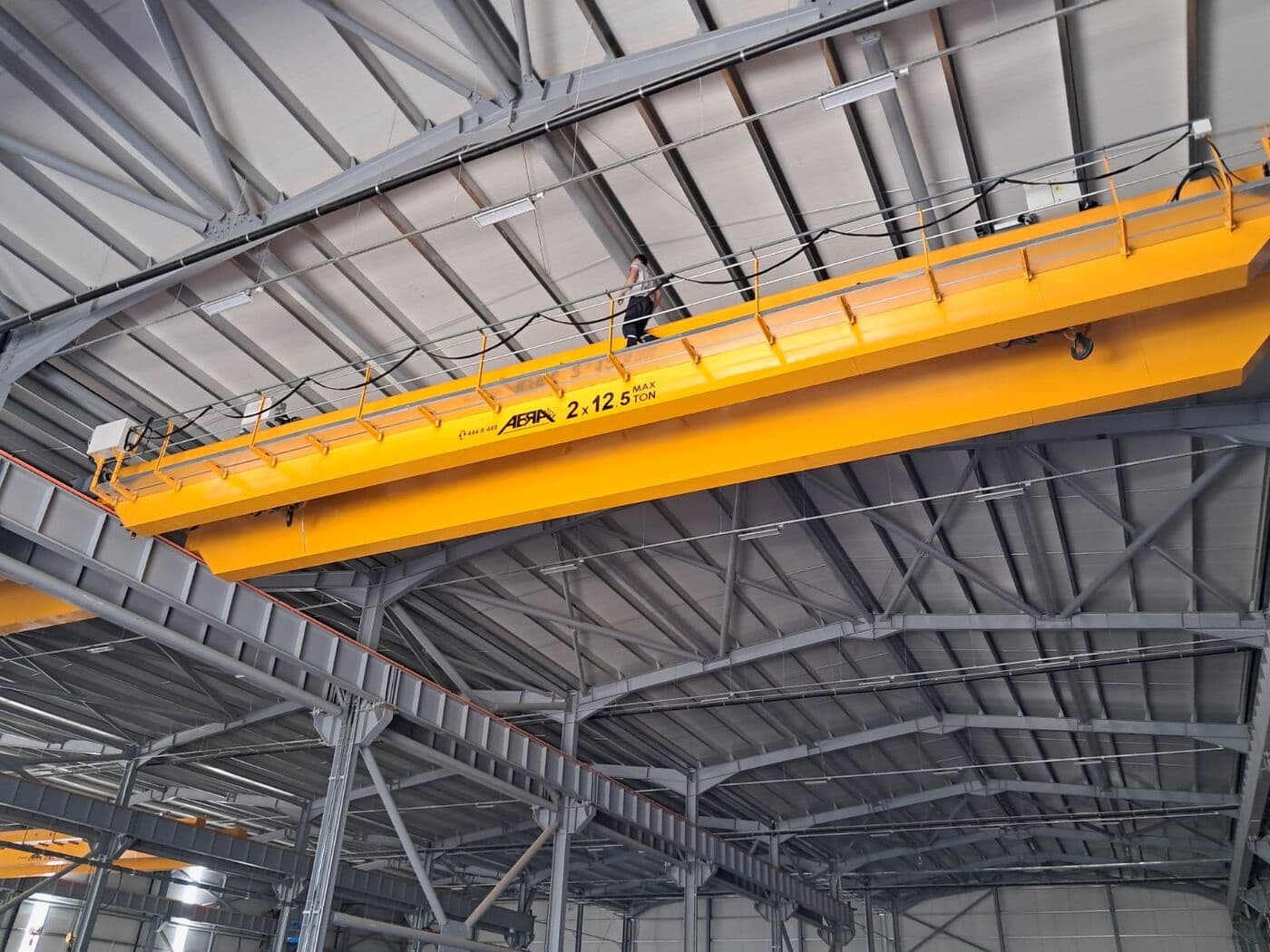
ABRA double girder overhead crane installed on a customer production line
ABRA double girder overhead crane on a customer production line.

Project process

How we work: from enquiry to commissioning and service

A simple, four-step path so a committee can see the whole route before committing:

STEP 1

Tell us the condition

Load, span, duty cycle, environment.

STEP 2

Engineering & quotation

We confirm the duty class and flag any spec deviation before you sign.

STEP 3

Manufacturing & installation

Hoist unit and steel structure built in our plant, then commissioned on site.

STEP 4

Maintenance & service

Scheduled maintenance under an annual contract, spare parts and modernisation.

References

“Behind everything we say, ” there’s a real job.

2004manufacturing since, İzmir
16,000 m²facility
2,500+installed cranes
ISO M3–M8duty classes we build to
Packaging · automation

İkon Ambalaj

A double girder installation with assisted automation, automated storage and ABRA Crane Tracking.

Scrap & metal · continuous duty

Kılıçlar Hurdacılık

A 75 / 25 + 25 t ladle crane running 7/24 at 85 °C ambient, in continuous duty.

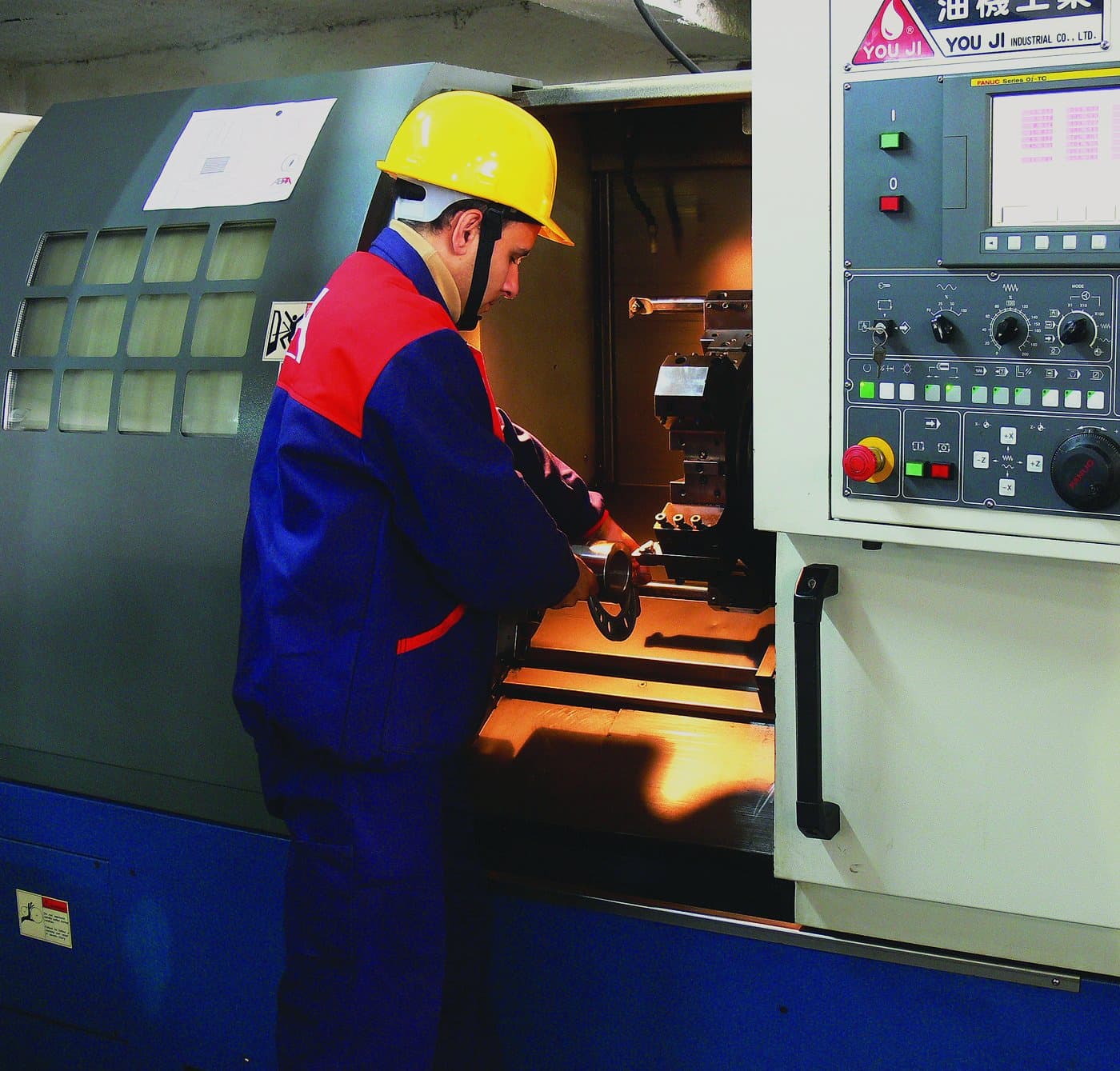
Hoist-unit machining at the ABRA plant
End carriage and wheel group fabrication at the ABRA plant
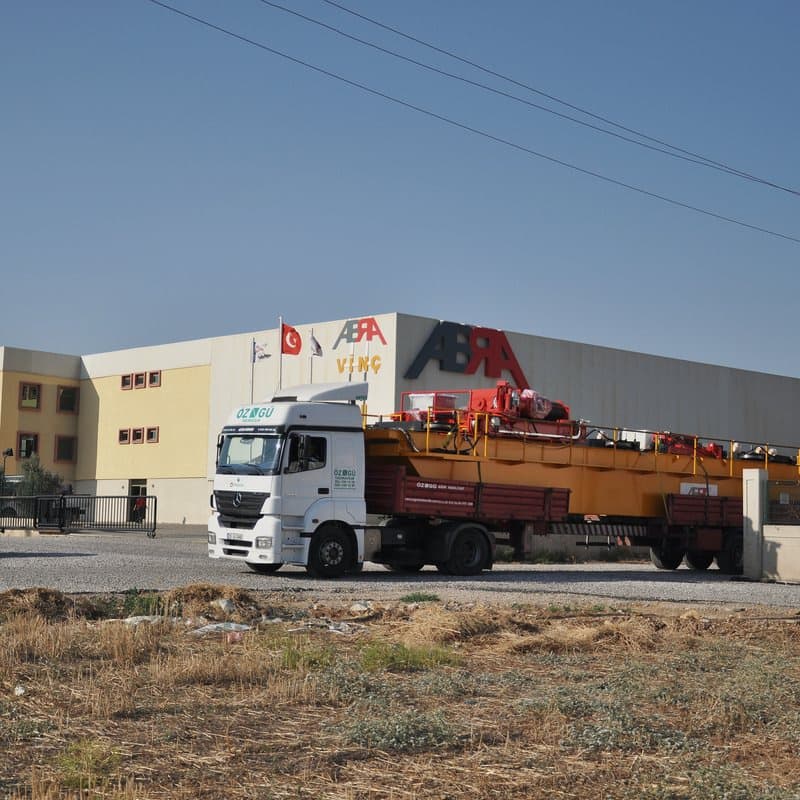
Double girder crane girder leaving the ABRA plant for site installation

From our plant to your line.

After-sales

Maintenance, parts and service

Maintenance is agreed under an annual contract: 4 preventive visits a year, spare parts, modernisation, and breakdown support across Türkiye within 48 hours of a call. Warranty is 2 years. We also service, supply parts for and modernise other manufacturers’ cranes. Crane Contact Center 444 8 440.

48 hoursOn-site response, anywhere in Türkiye
2 yearsWarranty, fixed term
4 visits / yearStandard preventive maintenance contract
Any brandService, spares, modernisation and crane tracking retrofit

FAQ

Frequently asked questions

What is the difference between a single girder and a double girder overhead crane?

On a single girder crane the trolley usually hangs under one beam; on a double girder crane it runs on top of two beams. The double girder version reaches greater lifting height and higher capacity, and it takes an operator cab, walkway or special attachment. As a rule of thumb, you move to a double girder above roughly 10–20 tonnes, over long spans, or for heavy continuous duty.

How much can a double girder overhead crane lift?

Our double girder cranes cover 250 kg to 160 tonnes, and the type is at its best above about 10 tonnes. The capacity you can run at a given span is calculated per project, because a longer span lowers the load a girder can carry. Send us your load and span and an engineer will confirm the combination.

How is the duty class (FEM / ISO) selected?

The duty class comes from your load spectrum and how many hours the crane runs, not from the maximum load alone. A crane lifting near capacity across three shifts, or on continuous process duty, needs a high class (FEM 4m–5m / ISO M7–M8); a lighter single-shift crane needs less. We size the class to your real cycle so the crane does not fatigue early. See the duty class guide.

Can a double girder crane be supplied for an explosive (ATEX) area?

Yes. The same double girder crane can be engineered as an explosion-protected system for gas Zone 1–2 and dust Zone 21–22, with the hoist unit and gearbox built in-house. Scope is defined per project against the specific ATEX code; details are on the Explosion-protected cranes page.

Get a recommendation

Talk to an engineer about your double girder crane

Send us your load, span, duty cycle and environment. An engineer confirms the right structure and duty class with you — no obligation.

Or call 444 8 440

Request a technical review

Your details are used only to answer your request

Designed and built to EN, FEM and ISO standards · CE marked · duty class defined per project (FEM 1Bm–5m / ISO M3–M8) — duty class guide →