Three decisions inside the machine decide how it behaves on your floor.
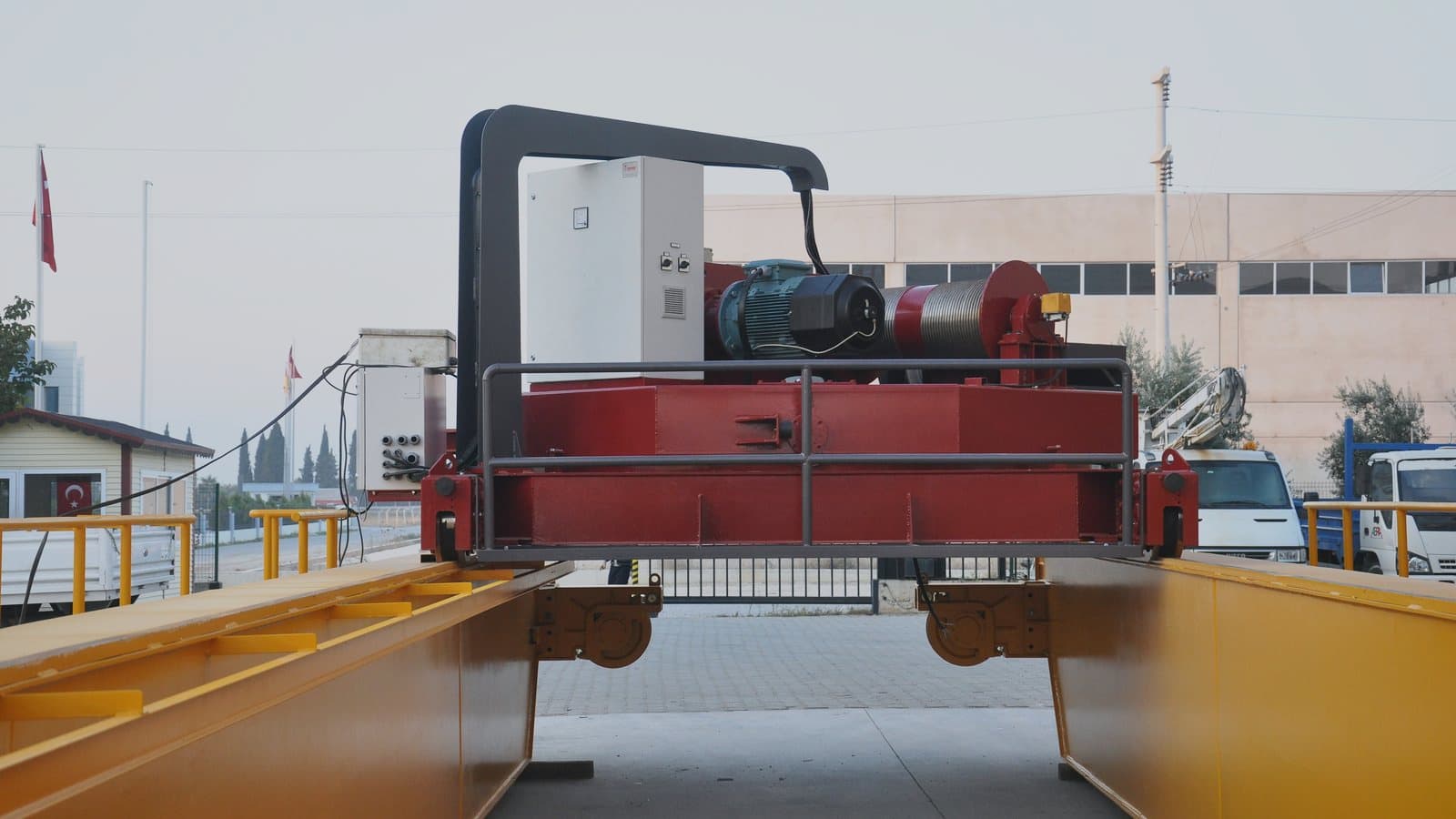
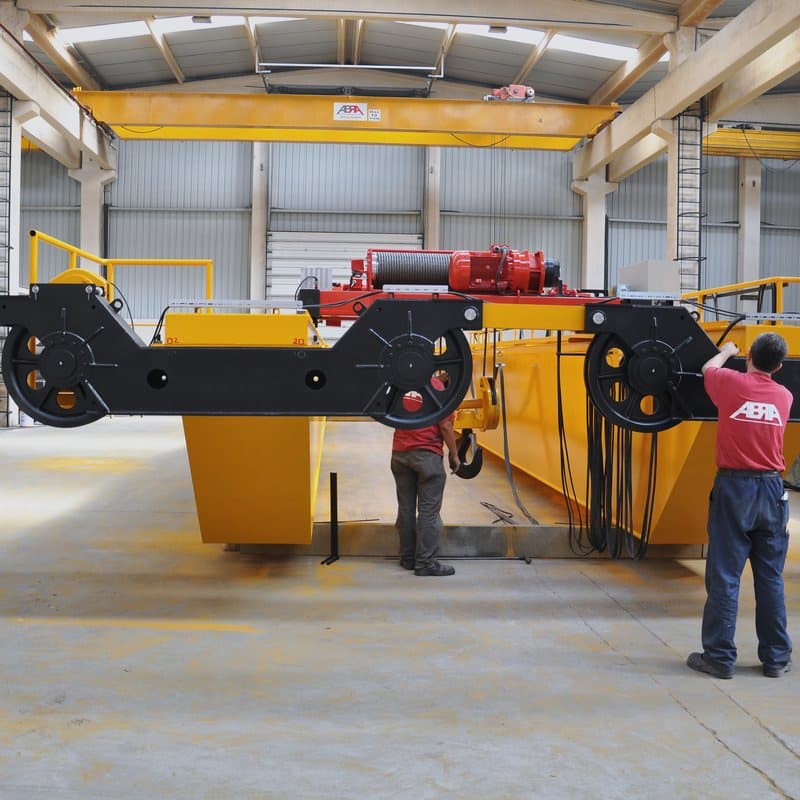
Reeving describes how the rope runs between the drum and the hook block: 2/1, 4/1, 6/1, 8/1 or 12/2. More rope falls share the load, which lets a given drum and motor lift more, but they also lengthen the drum and change the hoisting speed. It is one of the first things an engineer fixes when sizing the machine.
Drum and rope geometry set rope life. The ratio between drum diameter and rope diameter governs how sharply the rope is bent every cycle, and a machine running a high duty class needs more room there than one that lifts twice a shift.
True vertical lift comes from a twin-grooved drum, where the rope pays off from both ends at once. The hook rises straight instead of drifting sideways as the drum fills, which matters when you are landing into a fixture, a machine bed or a mould rather than onto open floor.