444 8 440Request a review
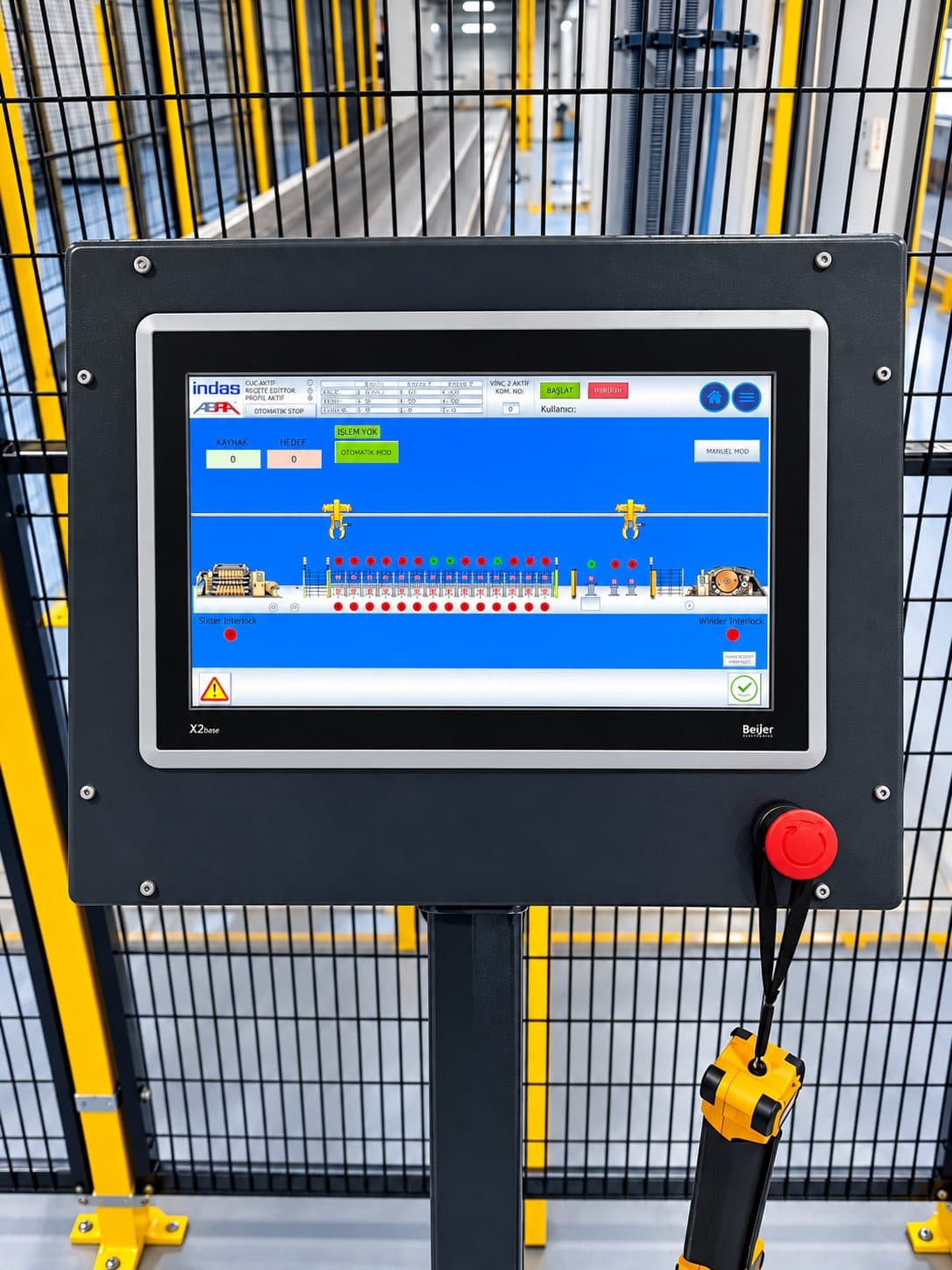
ABRA crane control panel with HMI screen
Home › Industrial Cranes and Lifting Equipment › ABRA Crane Tracking

ABRA Crane Tracking

Your crane's data plate says what it was designed for. Its controller knows what it has actually been doing. Crane Tracking reads running hours, load spectrum, overload events and brake use, and shows you the gap.

PLC-based
Retrofittable to other makes
Machine data, not location
Founded 2004EN · FEM · ISO designCE markedEurope · the Gulf · Africa · Central Asia · Latin America

What a crane monitoring system does

A crane monitoring system records how a crane is actually used and what condition it reports, and makes that visible without waiting for the next inspection. ABRA Crane Tracking does this from specially programmed PLC systems on the crane, logging operating time, loads, overload events, brake use and faults.

Monitoring

What it monitors

  • Faults and alerts — system faults and warning events are diagnosed and recorded as they happen, so a recurring fault is visible as a pattern rather than as a memory.
  • Operating time — total work cycles, and time under load separately from time running empty. Two cranes with the same hours can have had very different lives.
  • Load data — loads and overload events are logged continuously, both how often and at what weight. An overload that was cleared and forgotten is still in the record.
  • Load spectrum — the distribution of loads across the crane's service life, which is what turns hours into consumed duty.
  • Brake use — brake operation cycles, giving visibility of brake work rather than an assumption about it.
  • Maintenance planning — service timing and remaining time to the next maintenance, based on what the crane has done rather than on the calendar.
  • Duty class — whether the crane is being operated within the duty class it was designed for.
  • Data recording — operating data collected and stored continuously, on a closed internal network or, optionally, with secure remote access.

Scope

What it does not do

It is called Crane Tracking, so it is worth being exact about what is being tracked.

The system reads the machine. It does not locate the crane or the load in your building, and it is not a positioning system — there is no indoor positioning, no tags and no map. It does not identify or monitor operators, and it produces no record of who was driving. It does not watch your process or your throughput.

It also does not replace inspection or maintenance. Statutory obligations do not change because a crane is monitored; what changes is that the maintenance visit arrives knowing what the crane has been doing, so the time is spent on what the data points at.

Saying this plainly is deliberate. It is the first question a works council or a security review asks, and the honest answer removes it.

Design life

Design life: what the crane was built for, against what it has done

Every crane and hoist is built to a duty class, and that class is an assumption about two things: how many hours it will run, and how heavy the loads will typically be. Together they define a design life.

Real use almost never matches the assumption. A crane classed for light intermittent duty that ends up running a full shift at close to capacity consumes its design life several times faster than the plate implies — and one bought for heavy duty that turns out to be used lightly has far more life left than its age suggests. Age in years is not the measure. Consumed duty is.

Crane Tracking counts the real hours and the real load spectrum against the class the crane was designed for. That gives you two things the calendar cannot: a warning when the crane is being operated outside its class, which is a different problem from wear, and a view of how much design life is left before a general overhaul becomes the right decision.

That is also the answer to the question that usually arrives as a capex request. Monitoring frequently shows a crane has more life in it than assumed, which moves a replacement out rather than in. The duty class framework itself is explained on the duty class guide.

Data

Usage, condition and prediction: which one this is

Three different things get sold under one word, and they carry different weight.

Usage monitoring counts what the crane has done — hours, cycles, loads, overloads, brake operations — and measures it against the design assumption. It is arithmetic, and it is the most reliable of the three.

Condition monitoring measures the physical state of a specific component.

Prediction models the first two into a forecast. It is the weakest of the three and the most oversold.

Crane Tracking is a usage and status system with maintenance planning on top of it. It tells you what the crane has done, what it reported, and what that means for the next service — not a failure date. Where a specific component needs its condition measured, that is an inspection task and it belongs in the maintenance programme rather than in a dashboard.

Applications

Where the data goes

Data is collected and recorded continuously and can stay on a closed internal network — inside your plant, on your own infrastructure, with nothing leaving the site. Where you want visibility from elsewhere, secure remote access is available as an option.

That choice matters more than it looks. It means the system can be commissioned without a decision about external connectivity, and that decision can be made later on its own merits, by the people who own it.

Retrofit

Fitting it to a crane you already have

Crane Tracking can be fitted to a crane already in service, including one built by another manufacturer — the same brand independence that applies to our service and spare parts.

How much it can read depends on what the crane's control system already provides. On a crane with modern controls, most of the data set comes from the control system itself. On an older crane, some of it has to be instrumented, and some of it may not be worth instrumenting. We look at the existing controls and say which of the eight areas above you would actually get, before anything is quoted — a shorter list honestly stated is worth more than a full one that turns out to be empty.

Technical data

Technical data

Table A — What Crane Tracking does and does not do

ABRA Crane Tracking
Records running hours and work cyclesYes
Separates time under load from time running emptyYes
Logs loads lifted and builds a load spectrumYes
Logs overload events, count and weightYes
Logs brake operationsYes
Records faults and warning eventsYes
Flags operation outside the designed duty classYes
Supports maintenance planning and remaining service timeYes
Locates the crane or the load in the buildingNo — this is not a positioning system
Identifies or monitors operatorsNo
Monitors your process or throughputNo
Replaces statutory inspection or maintenanceNo
Predicts a failure dateNo — it reports consumed duty and service timing

Table B — Technical and commercial

ItemValue
BasisSpecially programmed PLC systems on the crane
Data collectionContinuous
AccessClosed internal network; secure remote access optional
Fitted toABRA cranes and cranes of other manufacturers
Retrofit data scopeDepends on the existing control system — assessed per crane
Sensors addedPer crane, where the control system does not already provide the data
AlertingPer project
Commercial modelPer project
Data retention and exportPer project
Reporting cadencePer project

FAQ

Frequently asked questions

Does Crane Tracking track where the crane or the load is?

No. It reads the machine, not positions: running hours, cycles, loads lifted, overload events, brake operations and faults. There is no indoor positioning, no tags and no map, and it does not identify operators or record who was driving. If you need load positioning, that is a different system and a different conversation.

Does it replace my inspections or my maintenance contract?

No. Statutory obligations are unchanged, and scheduled maintenance still happens. What changes is what the visit knows: the crane's real hours, its load spectrum, its overload events and its brake use are already on the table, so the time is spent on what the data points at instead of on rediscovering it.

Can it be fitted to a crane another manufacturer built?

Yes, and to a crane already in service. How much of the data set you get depends on what the existing control system provides — on a modern control most of it comes straight from the controller, on an older crane some of it has to be instrumented. We look at the controls first and tell you which parts you would actually get before quoting.

How does it tell me how much life my crane has left?

By counting what the crane has actually done against what its duty class assumed it would do. The class encodes an expected number of hours at an expected load spectrum; Crane Tracking measures both for real. That gives a view of consumed design life and a warning when the crane is being run outside its class — which is a different problem from wear, and often more urgent.

Get a recommendation

See what your cranes have actually been doing

Tell us the crane, its age and how it is controlled today — including cranes we did not build. We will say which of the eight monitored areas you would get on that crane, and show you the data from one that already has it.

Or call 444 8 440

Span, site conditions, drawings or anything else that helps

We process the data in this form to answer your enquiry. Details: Personal Data Protection Notice · Privacy Policy.

Designed and built to EN, FEM and ISO standards · CE marked · duty class defined per project (our build range: FEM 1Bm–5m / ISO M3–M8) · manufacturing in İzmir since 2004