444 8 440Request a review
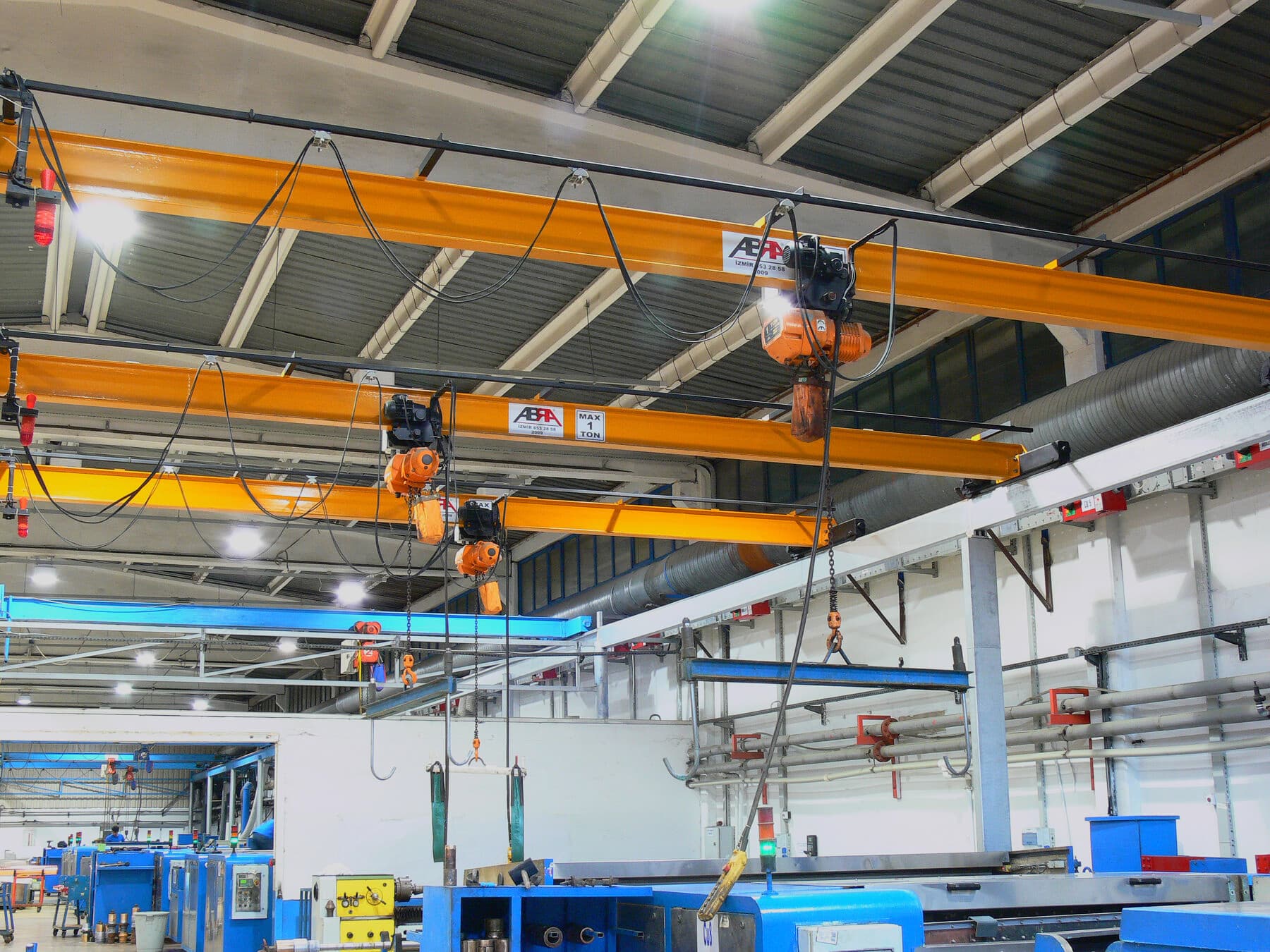
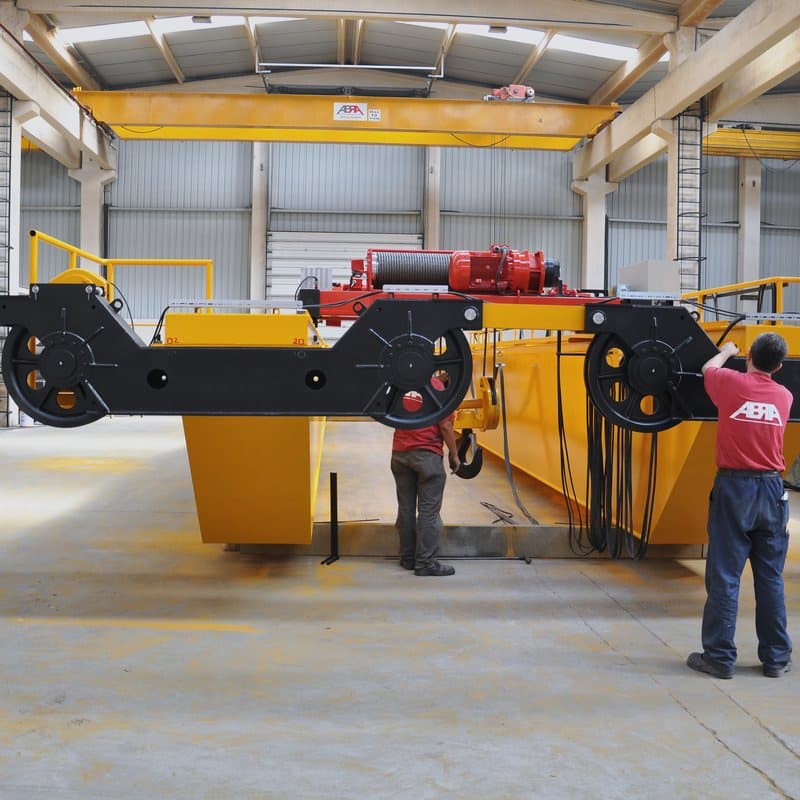
Single girder overhead crane working in a machine shop, hoist travelling along one main girder, manufactured by ABRA
Home › Industrial Cranes and Lifting Equipment › Overhead Cranes › Single Girder Overhead Crane

Single Girder Overhead Crane

From 250 kg to 12 tonnes, on 30 m spans as standard: the crane most workshops actually need, sized so you pay for the work and not for spare structure.

250 kg – 12 tstandard selection · 30 m span
In-housemanufacture — hoist unit, structure, end carriages
Since 2004manufacturing in İzmir
Founded 2004In-house manufacturingEN · FEM · ISO designCE marked2,500+ cranes installed

What is a single girder overhead crane?

A single girder overhead crane (a single girder EOT or bridge crane) carries the load on a hoist that travels along one main girder. The girder bridges two runway beams and travels the length of the runway. Less structure means less dead weight, which suits light to medium loads and moderate spans.

“The right size is an engineering decision before it is a budget decision.”

Right-sizing

When is a single girder overhead crane the right choice?

Up to 12 tonnes as a standard selection, on 30 m spans as standard and on light to medium cycles, one girder carries the work with less dead weight above it. That weight is paid for twice: once in the crane, and again in the runway beams, the columns and the foundations that have to hold it.

The real questions are what the crane has to lift, how often it lifts it, and how much hook height the building will give you.

Where a double girder is the right structure instead

  • the load sits at or above the top of the single girder range,
  • a long span and a high capacity have to work together,
  • the crane runs heavy continuous or multi-shift cycles,
  • you need an operator cab, or a walkway along the girder for maintenance access,
  • purpose-built below-hook equipment has to hang under the hook,
  • or the hook has to reach higher than one girder allows.

Recognise two or three of those and the double girder overhead crane is the honest answer. Recognise none, and a double girder is structure you would be buying twice over. Either way we will say which one we think it is before you order.

Single girder vs double girder overhead crane

CriterionSingle girder overhead crane (this page)Double girder overhead crane
Capacity (ABRA build range)250 kg – 12 t250 kg–160 t
Where it fitsLight to medium loads, moderate spans, headroom at a premiumHeavy loads, long spans, continuous or multi-shift duty
Span30 m as standard32 m as standard (at 100 t)
Lifting height / hook pathUp to 30 mUp to 30 m, with more hook height for the same building
Dead weight on the runwayLower, so runway and columns can be lighterHigher, and designed for
Duty classLight to medium duty in the FEM 1Bm–5m / ISO M3–M8 rangeMedium to heavy and continuous duty in the same range
Operator cab / girder walkwayControl by pendant or radio remoteThe structure that takes a cab and a walkway
Below-hook equipment (ladle, lifting beam)Standard hook block workDesigned for it
InvestmentSized to light and medium workSized to heavy and continuous work
ABRA pageThis pageDouble girder overhead crane

Both types are built to the same duty class range and the same standards. What changes is how much structure the work needs. Exact capacity-to-span pairing is calculated per project.

Our approach

Built in-house: the hoist unit inside your single girder crane

On a single girder crane the hoist unit is most of the machine. It sets the duty class in practice, and it is where a crane first shows its age.

We build ours in our own plant in İzmir, along with the bridge structure and the end carriages and wheel groups that carry it.

That decision shows its value years after commissioning. A wear part comes from the people who drew it, and a duty class question reaches the engineer who calculated it. When the crane is modernised years later, the team doing the work still has the file.

The same plant builds a 75 / 25 + 25 t ladle crane that works in an 85 °C ambient. A workshop crane at the light end of this range is a smaller calculation, and it is run the same way.

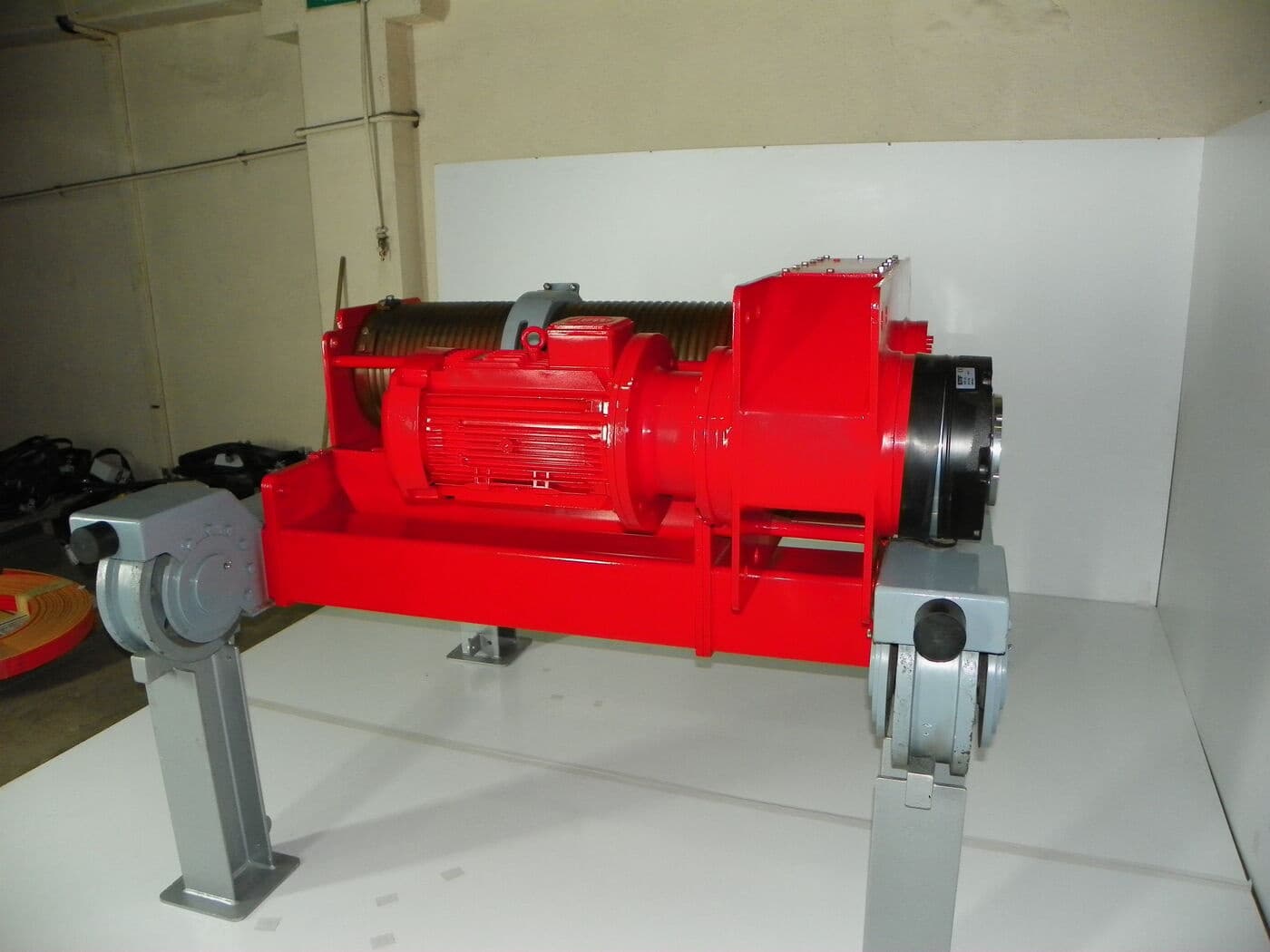
Wire rope hoist unit assembled at the ABRA plant in İzmir
Wire rope hoist unit on the ABRA plant floor, İzmir.

Technical data

Single girder overhead crane specifications and capacity

Read every value with its consequence; that is how the crane gets sized for the building it will work in.

Our single girder cranes run from 250 kg to 12 tonnes as a standard selection (larger per project), with 30 m spans as standard and a hook path up to 30 m. Capacity and span are paired in engineering, because a longer span lowers the load one girder can carry at the same duty class. Hoisting is stepless, inverter-controlled, with micro-speed positioning: 0–4 m/min as the standard speed and 0–3.5 m/min at 6.3 and 12 t, so the load travels at speed and sets down accurately.

Travel motions run under inverter (VFD) control: the trolley at 4–16 m/min up to 2 t and 5–20 m/min from 3.2 t, the bridge at 5–20 m/min up to 20 t and 5–20/25/30 from 25 t.

ParameterValueConsequence / note
Lifting capacity (SWL)250 kg – 12 tCovers workstation lifting up to medium production duty
Span30 m as standard (capacity-dependent); longer spans as a special projectA longer span lowers the capacity one girder can carry; pairing per project
Lifting height / hook pathup to 30 mSet by the building; the running type decides how much of it you keep
Girder typeSingle girder, top-running or underslungUnderslung frees floor space beside the columns and gains hook height
Duty classFEM 1Bm–5m (ISO M3–M8), per projectSized to your load spectrum × running hours; the maximum load alone will not set it
Hoisting speedStepless, inverter-controlled — 0–4 m/min standard, 0–3.5 m/min at 6.3 and 12 tStandard crane speeds; micro-speed at the set-down point
Where the girder choice changes1–12 t runs on a single or a double girder; from 12.5 t the crane is double girderThe decision is the duty and the hook path, not the load alone
Trolley travel speed4–16 m/min to 2 t · 5–20 m/min from 3.2 tSet with the capacity and the cycle
Bridge travel speed5–20 m/min to 20 t · 5–20/25/30 from 25 tSet with the span and the cycle
Motion controlInverter (VFD)Soft start and stop; less sway, less shock into the structure and the building
Reeving (wire rope)2/1 · 4/1 · 6/1 · 8/1 · 12/2Selected for capacity, hook path and load guidance
Power supply380–415 V / 50 Hz (60 Hz for export)Matches local and export grids
Protection classIP54 / IP55 (motor and panel)Dust and moisture protection for production buildings
Ambient temperature−10 … +50 °CUnheated workshop to hot summer conditions
Overload protectionOverload switch + load cell, standardThe crane refuses a lift beyond its rating (overload protection under EN 14492-2)
ControlRadio remote / pendantThe operator can stand clear of the load and see the set-down point
Max wheel loadCalculated per project. Worked example to FEM 1.001-4: four wheels, Ø200 wheels, 20 m/min travel, 40 mm rail — R max 4,999 kg (≈ 49 kN), R min 2,499 kgThe runway beam, the columns and the foundations are verified against these
ATEXOption, engineered to the site’s zone map (gas Zone 1–2, dust Zone 21–22)Scope set against the specific ATEX code → Explosion-protected cranes
StandardsEN 13001 series · EN 15011 · EN 14492-2 · EN ISO 13849-1 / -2 · EN IEC 60204-32 · FEM 9.511 (complementary) · CE · ISO 9001Duty class stated per project

The speeds shown are standard values; other speeds are provided on request. The exact capacity–span–height combination is calculated for your building.

Send us your load, span and headroom, and we’ll come back with the type and the duty class.Request a technical review →

Running type

Top-running or underslung: which single girder crane fits your building

This is the decision most buyers underestimate, and the building usually settles it.

Top-running. The end carriages ride on rails on top of the runway beams, which sit on brackets or columns. This is the configuration that carries the higher capacities and the longer spans in this range, and it is where most buildings end up.

Underslung (under-running). The crane hangs from the lower flange of the runway beams, and those beams can be carried by the roof structure. It frees the floor beside the columns and lets the hook work closer to the wall. The supporting steel has to be checked for the loads first.

Side-mounted trolley. The trolley is mounted to the side of the girder to gain hook height where the roof is tight. Detail on the single girder side-mounted hoist page; the underslung machine has its own page too, the single girder underhung hoist.

Top-running — rails on top of the runway beamsUnderslung — hung from the lower flangehookhook · closer to the roof

Top-running and underslung single girder overhead crane — sectional comparison showing hook height gained under a low roof.

Running typeHow it runsWhat it gives youWhat it asks of the building
Top-runningEnd carriages on rails on top of the runway beamsThe higher capacities and longer spans of this rangeRunway beams on brackets or columns, sized for the wheel loads
Underslung (under-running)Crane hangs from the lower flange of the runway beamsFree floor beside the columns; the hook works closer to the wallThe roof or supporting steel has to carry the loads
Side-mounted trolleyTrolley mounted to the side of the girderHook height where the roof is tightGirder and approach geometry checked for the mounting

In a low building the hook height you gain from the right configuration is the difference between lifting the load and moving it another way.

Monorail systems

A monorail carries the hoist along one fixed beam that follows a set route: down a production line, from a workstation to a dispatch area, or out through a wall opening. There is no bridge crossing the building, so the hook works on that line only. It suits repeat moves on a fixed path, where an overhead crane would cover floor the work never uses.

Our monorail hoists run up to 12 t as a standard selection; above 12 t we engineer per project. The underhung machine covers 250 kg to 6.3 t (BR23 and BR30 series) and the side-mounted machine 1.6 to 12 t (BR33 and BR36 series). The beam and its supports are calculated for your building and your route.

Equipment

Equipment and options: inverter control, safety and ATEX

Each item below answers a specific problem on the floor.

Inverter (VFD) motion control

Soft starts and stops, so the load sways less and the structure and the building take less shock. It also makes accurate positioning possible at low speed.

Inverter-based sway control

The load settles faster over the set-down point, which shortens the cycle and reduces the nudging that damages what is on the floor.

Overload protection (EN 14492-2)

An overload switch and a load cell are standard equipment, so the crane refuses a lift beyond its rating.

Hoisting and travel limit switches

The motion stops at the end of its path before it reaches the mechanical end stop.

Radio remote or pendant control

With a radio remote the operator can stand clear of the load and see the set-down point.

Assisted automation

Position memory, target positioning and repeat moves where the crane runs the same route all day. The operator stays in control at every step; this is assisted automation. ABRA Crane Tracking adds the usage, condition and maintenance data layer.

Redundant brake

A second brake circuit holds the load if the first fails; specified where the load or the route makes that necessary.

ATEX option

Where a section of the plant is classified, the crane can be engineered for gas Zone 1–2 or dust Zone 21–22, against that site’s own zone map. See explosion-protected (ATEX) cranes.

Deeper detail on controls, anti-sway and safety devices sits on the crane control and safety systems page.

Applications

Where single girder overhead cranes work

A single girder crane earns its place wherever the load is within its range and the structure above it can be kept light — which covers a very wide set of buildings, from a two-man workshop to a production hall running three shifts.

Machining and fabrication areas lift raw stock in and finished parts out. Assembly and production lines feed stations along a fixed route, which is where assisted automation starts to pay. Warehouses and dispatch areas load and unload vehicles at modest weights through the shift. Maintenance workshops pull motors, drive units and dies out of machines and put them back. Packaging, plastics, textile, food and light metal work run high move counts, so there the duty class matters more than the tonnage. Water treatment, energy and municipal plants use it for pump, valve and screen handling.

Where the environment adds something the structure has to answer — corrosive atmosphere, dust, washdown, or a classified zone — the same crane is engineered for it rather than replaced.

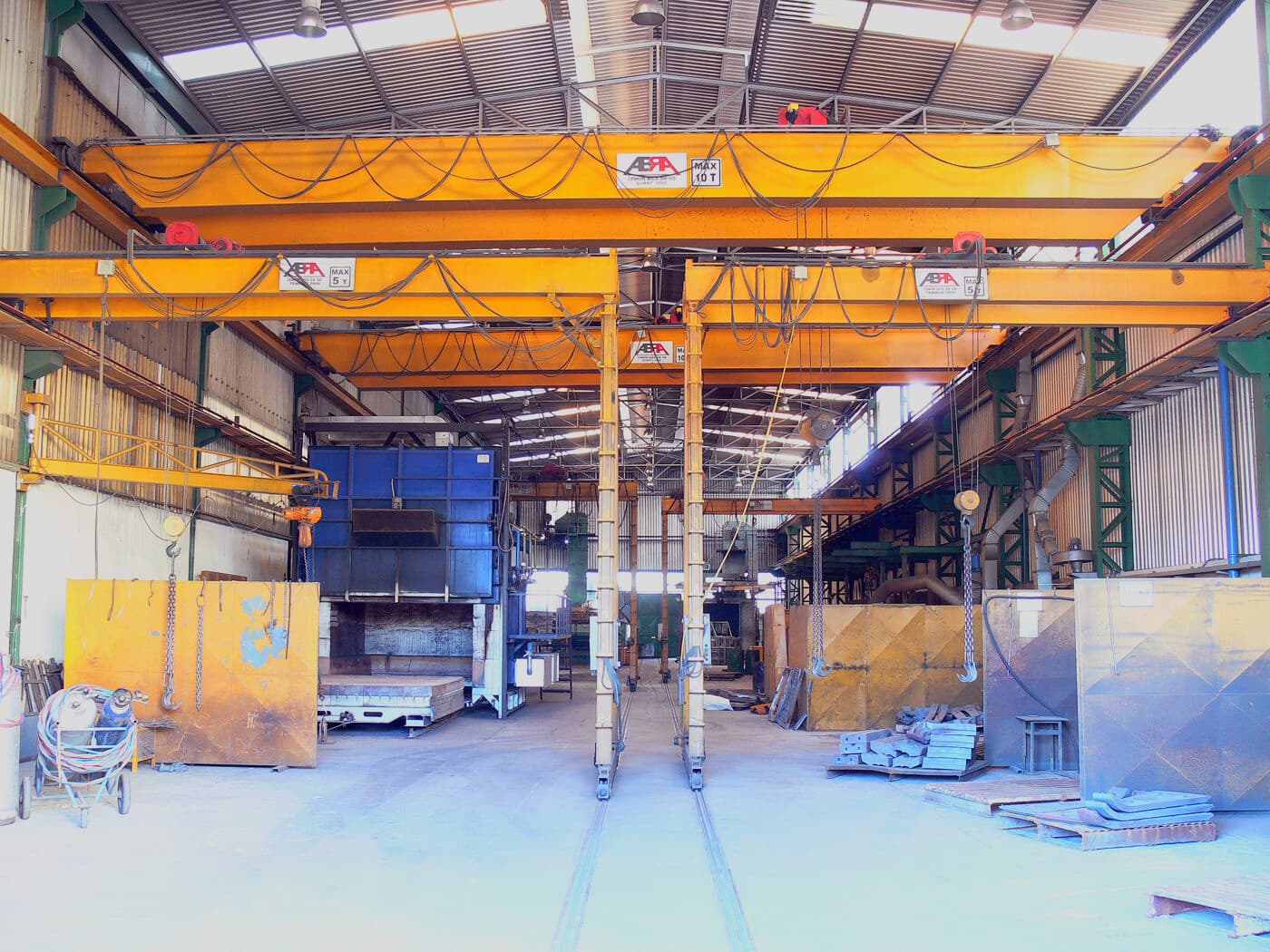
ABRA single girder overhead cranes serving a machining and fabrication workshop
ABRA single girder cranes over a machining and fabrication floor.

Project process

How we work: from your conditions to a crane that runs

Four steps, so a committee can see the whole route before it commits to anything.

STEP 1

Tell us the conditions

Load, span, hook height, the cycle, and what the runway or the roof structure can carry. Photographs and a general arrangement or site drawing are usually enough to start.

STEP 2

Engineering and quotation

We confirm the duty class, settle top-running or underslung, and give you the wheel loads your civil engineer needs for the runway and the foundations. Any deviation from a standard build is written down before you sign.

STEP 3

Manufacturing and installation

Hoist unit, steel structure, end carriages and wheel groups are built in our plant, then erected, load-tested and commissioned on your site.

STEP 4

Maintenance and service

Scheduled maintenance under an annual contract, spare parts, modernisation, and one number to call.

The delivery date is the one written in your quotation.

References

“Behind everything we say, ” there’s a real job.

Steel & metal · 85 °C · 7/24

Kılıçlar Hurdacılık — the same engineering department, one range up

The condition: a steel mill running around the clock, an 85 °C ambient over the crane, molten metal on the hook.

The build: a 75 / 25 + 25 t ladle crane of our own manufacture, drawn for that installation, with heat protection placed component by component.

The result: in continuous duty on the same cycle.

Why it belongs on this page

That crane is a long way from a workshop machine. Behind the one that runs your line sit the same team, the same plant and the same calculation method.

2004manufacturing since, İzmir
16,000 m²facility
2,500+installed cranes
ISO M3–M8duty classes we build to

Most of those cranes do ordinary work in ordinary buildings, which is exactly the point of this page.

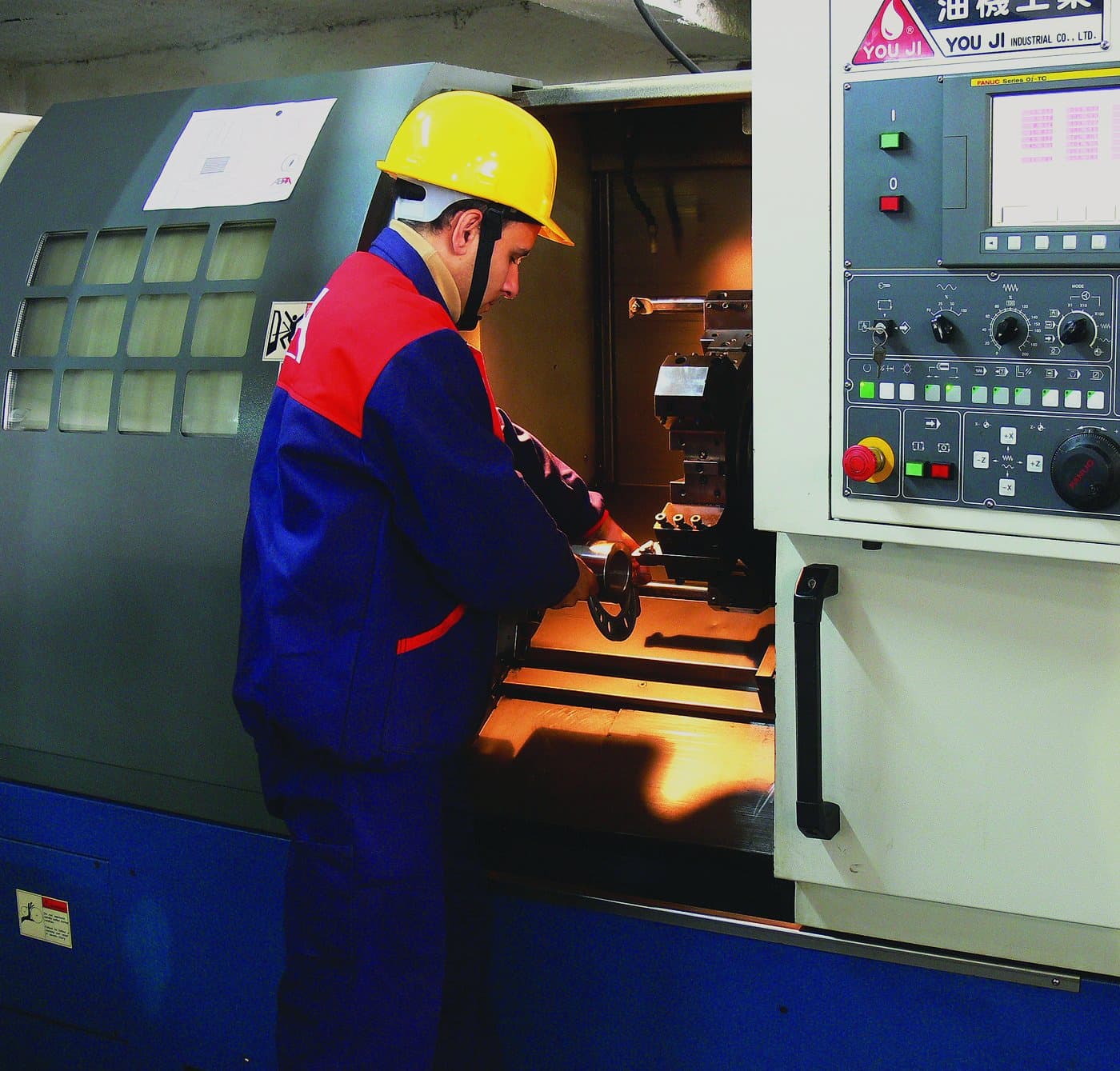
Hoist-unit machining at the ABRA plant
Crane end carriage wheels machined in-house
Wire rope hoist trolley on load test at the ABRA plant

Built on our floor before it works on yours.

After-sales

Maintenance, parts and service

A workshop crane is bought once and lived with for decades, so the second decade decides what it really cost. Maintenance is agreed under an annual contract: 4 visits a year, with parts from the plant that made them. On-site response is within 48 hours of a call, anywhere in Türkiye, and the warranty is 2 years.

We also service, supply parts for and modernise other manufacturers’ cranes, and ABRA Crane Tracking can be retrofitted to them. Crane Contact Center 444 8 440.

48 hoursOn-site response, anywhere in Türkiye
2 yearsWarranty, fixed term
4 visits / yearStandard preventive maintenance contract
Any brandService, spares, modernisation and crane tracking retrofit

FAQ

Frequently asked questions

What is the difference between a single girder and a double girder overhead crane?

A single girder crane carries its hoist on one main girder; a double girder crane carries a trolley running on two. The double girder version reaches more hook height for the same building, handles higher capacities and longer spans, and takes an operator cab, a maintenance walkway or below-hook equipment such as a ladle or a lifting beam. A single girder crane puts less dead weight on the runway and the columns, which is why it fits light and medium work up to 12 tonnes as a standard selection.

How much can a single girder overhead crane lift?

Ours cover 250 kg to 12 tonnes as a standard selection (larger per project), with 30 m spans as standard and a hook path up to 30 m. Capacity and span are paired in engineering: a longer span at the same duty class lowers the load one girder can carry. Above 12 t we engineer the crane per project. Send us the load, the span and the cycle and an engineer will confirm the combination.

Top-running or underslung — which single girder crane should I choose?

The building usually decides. A top-running crane sits on rails above the runway beams and carries the higher capacities and longer spans of this range. An underslung crane hangs from the lower flange of the runway beams, frees the floor beside the columns and lets the hook work closer to the wall, once the supporting steel has been checked for the loads.

What determines the price of a single girder overhead crane?

Five things, in roughly this order: capacity, span, duty class, the running type your building needs, and the control and safety equipment on it. Duty class is the one buyers miss — a crane that runs continuously at part load needs a higher class than its tonnage suggests, and a class set one step low turns into a fatigue repair later. We size those together and put the figures in the quotation, so you can see what the price is actually buying.

What is the difference between a monorail and a single girder overhead crane?

A monorail hoist travels along one fixed beam, so the hook follows a single line. A single girder overhead crane adds a bridge that travels the length of the runway, so the hook covers the whole area between the runways. Our monorail hoists run up to 12 t as a standard selection, and above 12 t we engineer per project.

Get a recommendation

Tell us what the crane has to lift

Send us the load, the span, the hook height you have and how often the crane will run. An engineer confirms the type, the running configuration and the duty class with you — no obligation.

Compare single vs double girder →
Or call 444 8 440

Request a technical review

Your details are used only to answer your request

Designed and built to EN, FEM and ISO standards · CE marked · duty class defined per project (our build range: FEM 1Bm–5m / ISO M3–M8) · manufactured in İzmir since 2004