444 8 440Request a review
Single Girder Underhung Hoists manufactured by ABRA Crane
Home › Industrial Cranes and Lifting Equipment › Single Girder Underhung Hoists

Single Girder Underhung Hoists

When the roof is low and every centimetre of hook height counts, the machine hangs under the beam instead of sitting on it. We check what your beam can carry before anything is fitted.

Made in-housemanufacturing in İzmir
Low headroom
Beam checked per project
Founded 2004In-house manufacturingEN · FEM · ISO designCE marked2,500+ cranes installed

What is an underhung hoist?

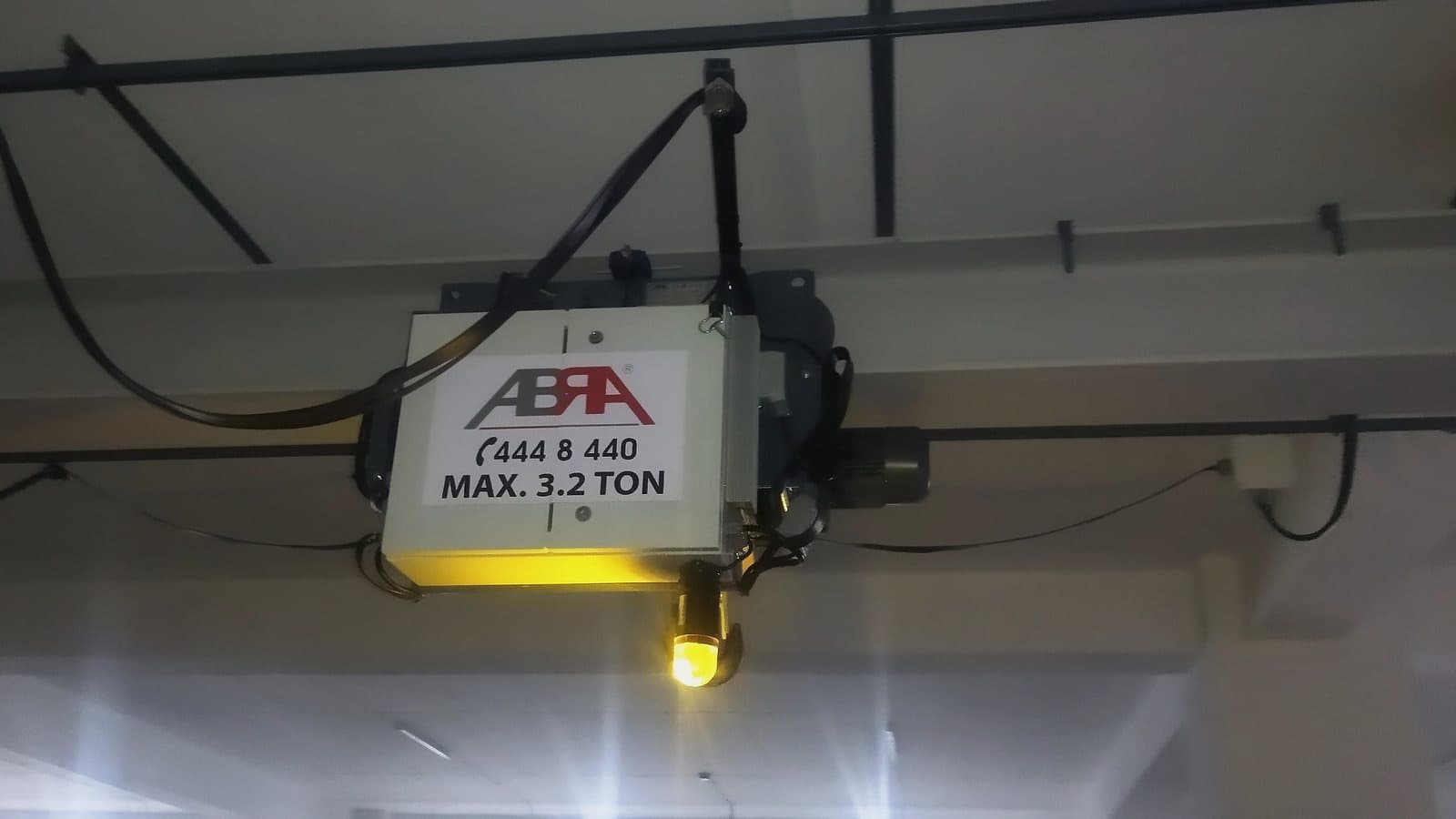
An underhung — or underrunning — hoist is a lifting machine whose trolley wheels run on the lower flange of a beam, so the machine hangs below the beam rather than sitting on top of it. That arrangement keeps the whole assembly low and leaves more of the building height available as hook path.

Type routing

Underhung or top-running?

Both machines lift the same way. What differs is how much of your building they use up.

A top-running machine sits on a trolley above the girders. It carries the highest capacities and the longest hook paths, and it needs the height to do it.

An underhung machine hangs from the lower flange. The whole assembly sits lower, so in a short building the hook ends up higher than a top-running arrangement would allow. There is a second advantage that often decides it: an underhung machine can run on a beam that is already in your building, so there may be no separate runway to build at all.

The trade is capacity and hook path. Above a certain load and duty, the top-running arrangement is the one that carries the work.

What your beam has to be

This is the question that decides whether an underhung machine is possible at all, and it belongs before the hoist specification rather than after it.

The trolley wheels run on the lower flange, so three things about that flange matter: how wide it is, how thick it is, and whether the beam behind it can carry the load and the moving wheel loads that come with it. A profile that looks adequate can still be the wrong flange width for the trolley, or too thick at the tip for the wheel to sit properly.

We check the beam profile and flange width your building can take against the trolley before anything is fitted, and we say plainly when an existing beam will not do the job. Where a new runway beam is needed, that is far better established at quotation stage than on installation day.

Manufacturing

“From our plant to your beam”

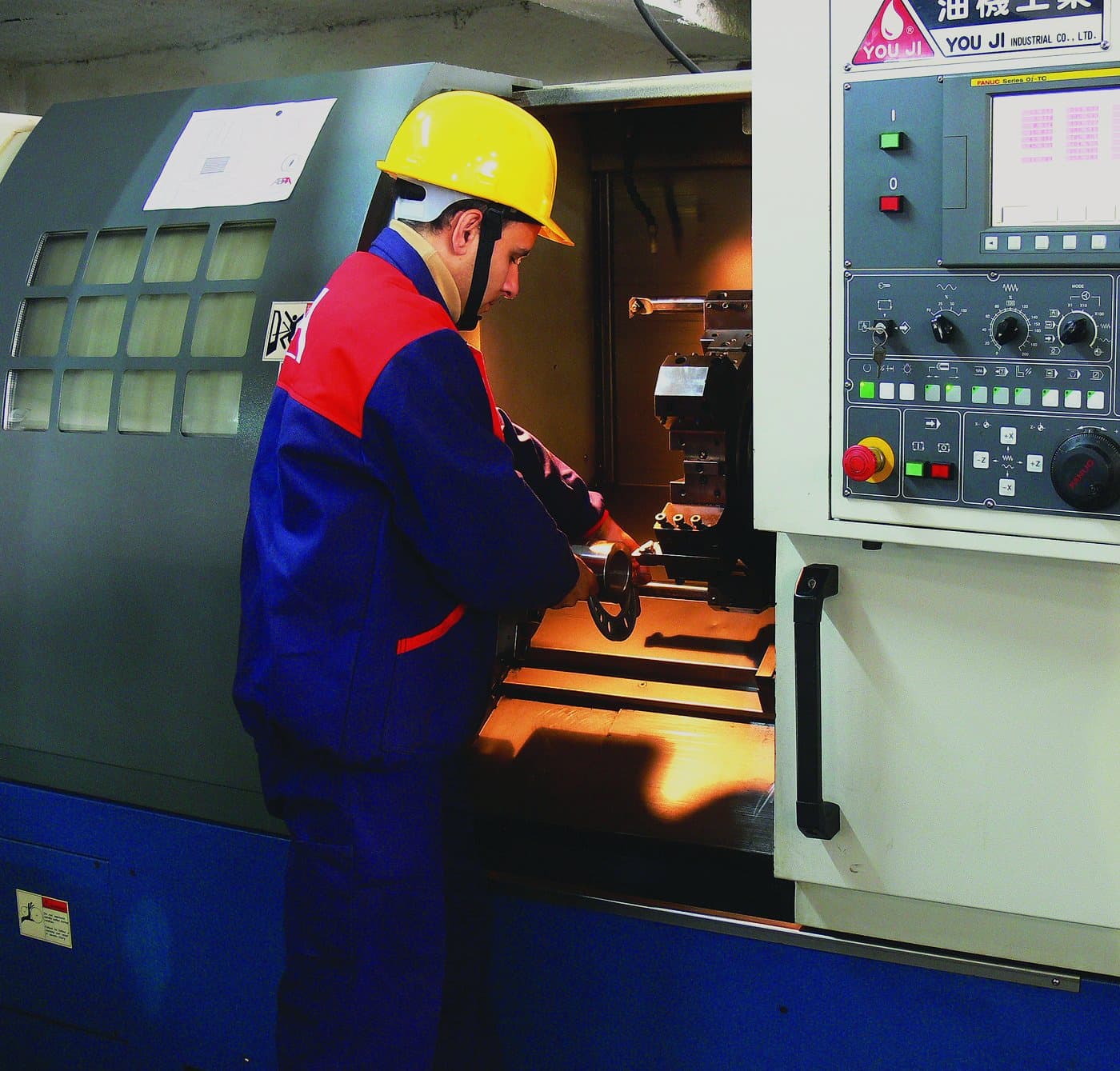
Machining at the ABRA plant in İzmir
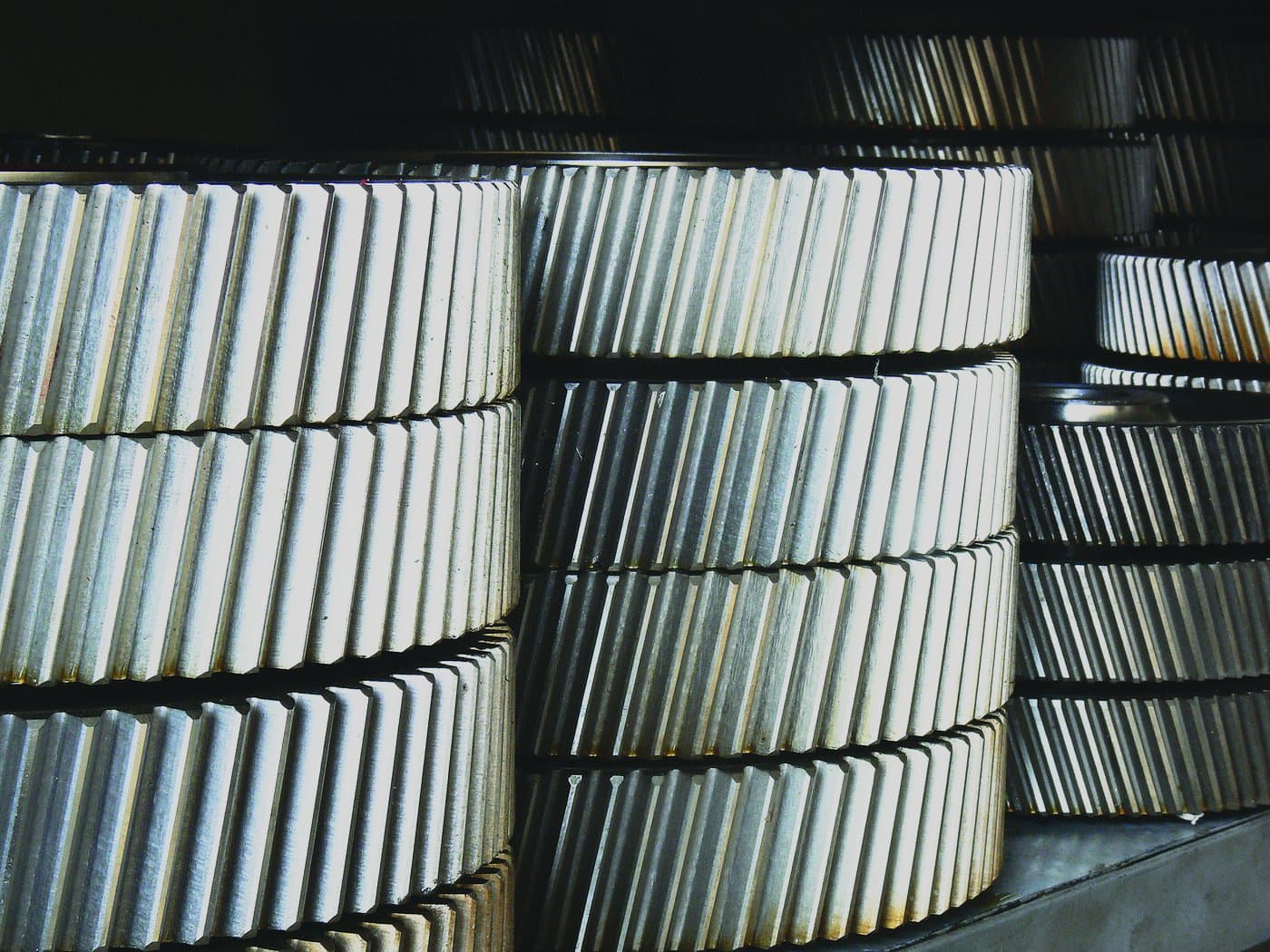
End carriage wheel groups machined at the ABRA plant
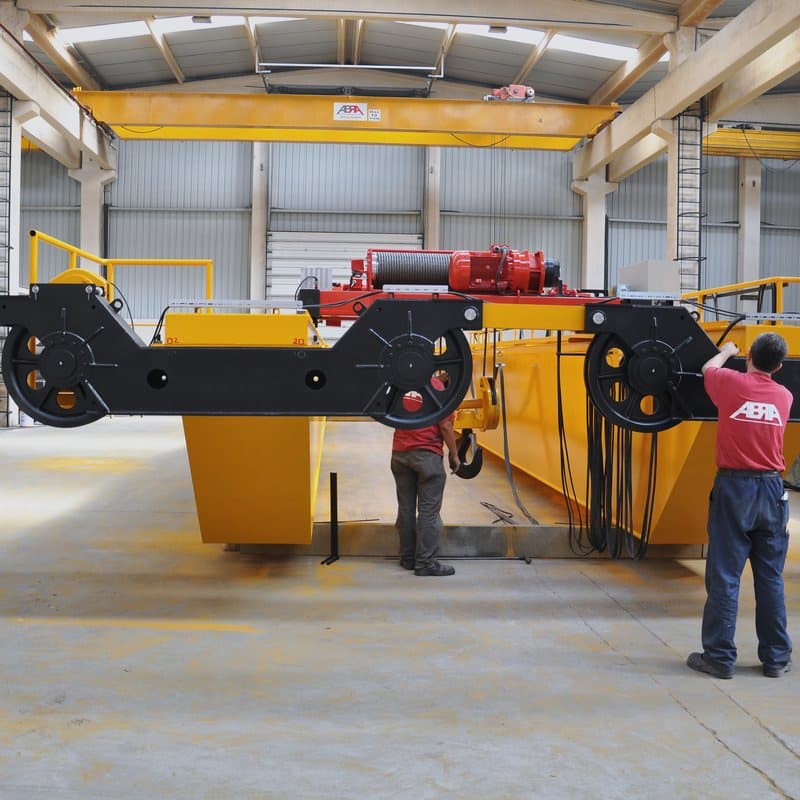
Hoist unit on test at the ABRA plant

Technical data

Technical specifications & capacity

Read each value with its consequence — that is how the machine is actually sized for your building.

Our wire rope hoists cover 250 kg to 160 tonnes as a family, and the underhung mounting works in the lighter part of that band, because the flange it runs on sets a practical ceiling. Hoisting is stepless under inverter control, 3.5 to 8 m/min, set by the series, the reeving and the duty class, in two speeds, so the load travels quickly and then creeps for accurate setting, and the duty class is set per project across the FEM 1Bm–5m (ISO M3–M8) range. The capacity your beam will actually support is confirmed by calculation, not chosen from a table.

Underhung vs top-running

CriterionUnderhung (underrunning) hoistTop-running hoist
Where the wheels runOn the lower flange of the beamOn rails on top of the girder(s)
Effect on hook heightAssembly sits low — more height stays as hook pathAssembly sits high — uses building height
RunwayCan often use a beam already in the buildingNeeds a runway built for it
Capacity band250 kg – 6.3 t on the underhung selection tableCarries the top of the range
What has to be checked firstBeam profile, flange width and thicknessRunway beam and wheel loads
Typical reason to chooseShort building; hook height is the constraintHeavy loads and long hook path
ABRA pagethis pagedouble girder hoist

Single girder underhung hoist — technical spec

ParameterValueConsequence / note
Lifting capacity (SWL)250 kg – 6.3 t underhung; the hoist family runs to 160 t on other mountingsThe flange the trolley runs on sets the practical limit
Duty classFEM 1Bm–5m (ISO M3–M8), per projectSized to load spectrum × running hours
Hoisting speedStepless, 3.5 – 8 m/min depending on series, reeving and duty classStandard values from the selection tables; micro-speed for accurate setting
Trolley travel speed4–16 m/min to 2 t · 5–20 m/min from 3.2 tSet with the capacity and the cycle
Series (underhung mounting)BR23 · BR30The series follows capacity, reeving and duty
Lifting height (machine)4 – 28 m standardLonger hook paths per project
Machine duty classFEM 1Am (ISO M4) or FEM 2m (ISO M5)Crane-level duty runs FEM 1Bm–5m
BrakeSpring-applied electromagnetic brake — closes when power is cutHolds the load on power loss; release ≈ 0.3 s
Reeving2/1 · 4/1 · 6/1 · 8/1 · 12/2Sets drum length, rope life and hoisting speed
Beam profile it runs onChecked per projectThe trolley has to match the flange, not just the load
Flange width / max thicknessChecked per projectDecides whether an existing beam can be used
Hook path / lifting heightPer projectFollows clear height under the beam
Motion controlInverter (VFD)Soft start/stop, less shock into the flange
Overload protectionOverload switch + load cell, standardThe machine refuses a lift beyond its rating
Power supply380–415 V / 50 Hz (60 Hz for export)Matches local and export grids
Protection classIP54 / IP55 (motor + panel)Dust and moisture protection for industrial environments
Ambient temperature−10 … +50 °CCold-store to hot-process ranges
ControlPendant / radio remoteChosen by where the operator stands
ATEX versionAssessed per projectSee Explosion-protected cranes
StandardsEN 14492-2 · EN 13001 series · ISO 4301-1 · FEM 9.511 (complementary) · EN IEC 60204-32 · CE · ISO 9001Duty class stated per project

The speeds shown are standard values; other speeds are provided on request. Where a value depends on your site, it is written “per project” and confirmed with you.

Equipment

Equipment & options

Overload protection (EN 14492-2)

An overload switch and load cell come as standard on every product we build, so the machine refuses a lift beyond its rating.

Inverter (VFD) control

Soft starts and stops on hoisting and travel, which reduces sway and takes shock out of the flange the trolley runs on.

Stepless hoisting

Inverter-controlled from zero, so the load travels quickly and then creeps into place under micro-speed.

Limit switches

Hoisting and travel limits defined per project.

ABRA Crane Tracking

Running hours, condition and maintenance data from the machine itself; see Crane Tracking.

Control

Pendant push-button or radio remote, chosen by where the operator needs to stand.

Applications

Where underhung hoists work

Underhung machines earn their place where the building is the constraint. Older workshops and converted buildings often have usable steel already in the roof but very little clear height. Machining and assembly buildings use them over a single station where a top-running arrangement would eat the hook path. Maintenance and service areas use them because the lift is occasional and the height is precious. And in a building with a main overhead crane above, an underhung machine on a lower beam handles the small, frequent lifts.

Project process

How we work: from enquiry to commissioning and service

STEP 1

Tell us the building

(load, hook path needed, clear height, the beam you have or the runway you are planning, how often it lifts) → 2. Engineering & quotation (we check the beam profile and flange against the trolley, confirm the duty class, and say plainly if the existing steel will not do it) → 3. Manufacturing & installation (machine built and load-tested in our plant, then fitted and tested on the beam) → 4. Maintenance & service (scheduled maintenance under an annual contract, spare parts and modernisation).

After-sales

Maintenance, parts and service

Maintenance is agreed under an annual contract: scheduled maintenance (4 visits a year under contract), spare parts, modernisation and breakdown support across Türkiye within 48 hours of a call, and a 2-year warranty. We also service, supply parts for and modernise lifting machines from other makes. One number: Crane Contact Center 444 8 440.

48 hoursOn-site response, anywhere in Türkiye
2 yearsWarranty, fixed term
4 visits / yearAnnual maintenance contract
Any brandService, spares and modernisation

FAQ

Frequently asked questions

What is the difference between an underhung and a top-running hoist?

A top-running machine sits on a trolley above the girder; an underhung machine hangs from the lower flange and its wheels run along that flange. The underhung arrangement sits lower, so in a short building the hook ends up higher. The top-running arrangement carries higher capacities and longer hook paths.

Can an underhung hoist run on a beam that is already in my building?

Often, and that is one of the main reasons to choose one. It depends on the beam profile, the flange width and thickness, and whether the beam can carry the load and the moving wheel loads. We check all of that against the trolley before anything is fitted, and we say plainly when a new runway beam is needed instead.

How much can an underhung hoist lift?

Our wire rope hoists cover 250 kg to 160 tonnes as a family, and the underhung mounting works in the lighter part of that band because the flange it runs on sets a practical limit. The figure your specific beam will support is confirmed by calculation. Send us the load and the beam you have.

Does an underhung hoist really gain me hook height?

Yes, and it is usually the reason the arrangement is chosen. Because the machine hangs below the beam rather than sitting above it, less of the clear height is spent on structure and more of it stays available as hook path. In a low building that difference decides whether a lift is possible at all.

Get a recommendation

Talk to an engineer about your underhung hoist

Send us the load, the hook path you need and the beam you have. An engineer checks the profile and flange against the trolley and confirms the duty class — no obligation.

Or call 444 8 440

Request a technical review

Your details are used only to answer your request

Designed and built to EN, FEM and ISO standards · CE marked · duty class defined per project (our build range: FEM 1Bm–5m / ISO M3–M8) · manufacturing in İzmir since 2004