Three situations bring people to this arrangement, and they are worth naming before any specification is written.
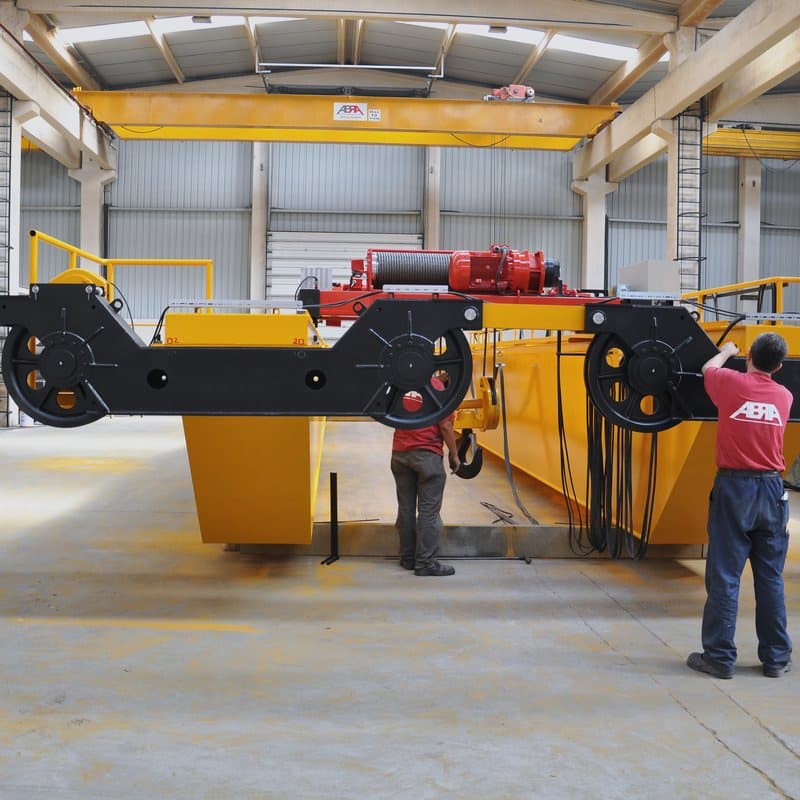
The first is a building whose height is already spent. The clear height is what it is, the roof structure cannot move, and the lift the process needs is higher than the current hook reaches. Side mounting recovers height from the geometry rather than from the building.
The second is an existing runway. Where the runway steel and its elevation are fixed and the requirement has grown, changing where the machine meets the girder is a smaller intervention than changing the structure around it. That makes this arrangement a common answer in modernisation work.
The third is span. On a long single girder the section has to be deep enough to carry the span, and a deep girder normally eats the hook path underneath it. With the machine beside the girder, depth stops competing with hook height, so a longer single-girder span stays workable.
What side mounting does not do is add capacity. The load now sits off the girder centreline, and that limit is discussed in the eccentric-load section below.